| Piú viste - A Tribute To Mars Global Surveyor |
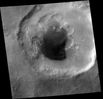
Craters-Rabe_Crater-I-M0203079-00.jpgThe "Pitted" West Floor of Rabe Crater - The Area (1) - (Original NASA/MGS/MSSS b/w Frame)77 visiteImage ID (picno): M02-03078
Image start time: 1999-06-22 - T04:56:09.09 SCET
Image width: 1024 pixels
Image height: 3200 pixels
Line integration time: 0,7231 millisec
Pixel aspect ratio: 1,60
Compression type: MOC-PRED-X-5
Longitude of image center: 326,11°W
Latitude of image center: 44,24°S
Scaled pixel width: 2,77 mt
Scaled image width: 2,85 Km
Scaled image height: 14,4 Km
Solar Longitude (Ls): 158,39°
Local True Solar Time: 14,80 decimal hours (such as--->14:48 MLT)
Emission angle: 0,26°
Incidence angle: 65,43°
Phase angle: 65,36°
North azimuth: 94,16°
Sun azimuth: 47,45°
Spacecraft altitude: 371,30 Km
Slant (--->inclinazione) distance: 371,30 Km
|
|

Craters-Unnamed_Crater_in_Utopia_Planitia.JPGFeatures of Utopia Planitia (Original NASA/MGS/MSSS b/w Frame)77 visiteCaption originale:"This MGS-MOC image shows a dark-toned, cratered Plain in South/West Utopia Planitia. Large, light-toned, windblown Ripples reside on the Floors of many of the depressions in the scene, including a long, linear, Trough".
Location near: 30,3° North Lat. and 255,3° West Long.
Image width: ~3 Km (~1,9 mi)
Illumination from: lower left
Season: Northern Winter
|
|

Terra_Cimmeria-Gullies-PIA02919-2.jpgGullies in Terra Cimmeria (Original RAW Frame)77 visiteDue splendide immagini che immortalano l'incredibile conformazione di questa Regione Marziana attraversata da canyons e crepacci.
Nell'immagine precedente, fate attenzione a non confondere - come già fanno in molti, assecondando le "visioni" (questa volta detto in senso non positivo...) del Prof. Hoagland - i letti semi-fangosi ed in parte sabbiosi di antichi fiumi e torrenti, ora ricoperti di Side-Winders (ossìa delle dune dalle forme sinuose le quali ricordano le tracce lasciate sulle sabbie da un particolare tipo di serpente) con gli ormai - tristemente - famosi "translucent tunnels" (ossìa, secondo il Prof. Hoagland ed i suoi adepti) delle costruzioni in simil-plexiglas o in cristallo, del tutto analoghe ai nostri tunnels, ma con la variante che, su Marte, esse non servono ad attraversare le montagne, ma scorrono sulla superficie del Pianeta).
Cerchiature Bianche: non serve essere Geologi per vederlo: questi cracks sulla fiancata del rilievo maggiore inquadrato sono estremamente recenti.
|
|

Troughs-Olympica_Fossae-MGS-02.jpgThe Troughs of Olympica Fossae (2 - Original NASA/MGS/MSSS b/w Frame)77 visiteCaption originale:"This MGS-MOC image shows a complex pattern of intersecting and overlapping Troughs in the Olympica Fossae Region of Northern Tharsis. Some combination of Floods, Lava Flows and faulting/tectonic activity contributed to this scene, followed by mantling by dust. Dark Streaks on Slopes in the Troughs were formed by Dust Avalanches".
Location near: 24,8° North Lat. and 114,8° West Long.
Image width: ~3 Km (~1,9 mi)
Illumination from: lower left
Season: Northern Winter
|
|

Volcanic_Features-Collapse_Pit_Chain-Tharsis_Tolus-MGS.JPGCollapse Pit-Chain near Tharsis Tholus (Original NASA/MGS/MSSS b/w Frame)77 visiteCaption NASA originale:"This MGS-MOC mage shows a portion of a Chain of Collapse Pits on a Lava and Dust-covered Plain, North/West of Tharsis Tholus —one of the many volcanic constructs in the Tharsis Region of Mars.
Pit chains, such as this one, are associated with the collapse of surface materials into subsurface voids formed by faulting and expansion — or extension — of the bedrock".
Location near: 16,4° North Lat. and 92,6° West Long.
Image width: ~3 Km (~1,9 mi)
Illumination from: lower left
Season: Northern Winter
|
|

Aeolian_Features-Windstreaks-V17253016-00.jpgWindstreaks, Pseudo-Windstreaks and Surface Striations (1 - False Colors)77 visiteUn grazie di cuore al Dr Gianluigi Barca per aver selezionato (assieme a molti altri) questi 3 frames MGS che, in accordo a quanto dice la NASA, dovrebbero tutti rappresentare dei "Windstreaks".
Ebbene, pur rendendoci conto si quanto spinosa sia la questione dei rilievi superficiali aventi una natura (presumibilmente) eolica, a noi sembra opportuno cercare di non "ammassare" sotto la medesima categoria una serie di fenomeni "visivamente" (e, forse, SOLO visivamente...) simili - talvolta, magari, anche MOLTO simili.
Una serie di fenomeni che, in realtà, potrebbero non solo essere il frutto di eventi sostanzialmente DIVERSI, ma che potrebbero anche costituire la rappresentazione visibile (quella che noi chiamiamo Evidenza Oggettiva) di un medesimo evento il quale, tuttavia, dopo aver influito sulla superficie del Pianeta Rosso (modellandola) in un certo modo all'atto del suo verificarsi, si è poi esaurito ed ha quindi lasciato che le sue tracce/conseguenze, in un certo senso, si evolvessero e degradassero, in accordo alle Leggi del Tempo ed agli accadimenti geologici ed atmosferici propri della realtà in cui esso ebbe a verificarsi.
Una storia di "nascita", "evoluzione" - "invecchiamento", se si vuole... - ed "estinzione", in fondo. Una storia che ci rammenta che tutto, in questo Universo (a nostro parere, ovviamente), ha una origine, si evolve - cambiando - e quindi si deteriora e scompare: sulla Terra, su Marte, nelle Stelle e Galassie più lontane.
Una storia molto simile a quella degli Esseri Umani, se volete...MareKromium
|
|

North_Polar_Features-Chasma_Boreale-PIA07195-01-PCF-LXTT.jpgFeatures of Chasma Boreale (Natural Colors; credits for the additional process. and color.: Dr Paolo C. Fienga - Lunexit Team) 77 visitenessun commentoMareKromium
|
|
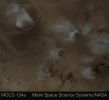
Tharsis_Montes-MGS1.jpgJust clouds and fogs over Tharsis?77 visiteUno spettacolare frame Mars Global Surveyor, inviatoci dall'Amico e Partner, Dr Alessio Feltri, ci offre una spettacolare visione di "fumi" che sovrastano la Provincia Vulcanica di Tharsis.
Secondo la NASA si tratta di nuvole (prevalentemente costituite da vapore acqueo) e nebbie. E noi diciamo che "può darsi", anzi: è molto probabile che sia così.
Ma ora osservate questa immagine e mettetela in correlazione al recente frame Mars Express che sembrava rappresentare uno spettacolare pennacchio sollevatosi da una delle caldere del vulcano Arsia Mons (diciamo "sembrava" poichè, a parte il Gruppo Lunexit, NESSUN ALTRO si è pronunciato sull'evento!).
Siamo davvero certi che quanto si vede in questo frame sìano solo nuvole e nebbie?
Siamo davvero certi che la Provincia Vulcanica di Tharsis sia "inerte"?
Osservate attentamente la forma delle "nebbie" che sovrastano e circondano i diversi camini vulcanici ripresi e poi provate a rispondere a questa "semplice" domanda: che cosa stiamo guardando?...MareKromium
|
|
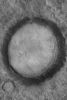
Craters-Unnamed_Impact_Crater-PIA07836.jpgUnnamed Impact Crater wth "Black Rim" (Original NASA/JPL/MSSS b/w Frame)76 visiteCaption NASA originale:"This MGS-MOC image shows a nearly-filled (and very old) impact crater on the Northern Plains".
Location near: 47,3° North Lat. and 294,0° West Long.
Image width: ~3 Km (~1,9 mi)
Illumination from: lower left
Season: Northern Summer
|
|

Thaumasia_Region-The_Electric_Dunes-00.jpgThaumasia Dunes: the brightest dunes of Mars (CTX Frame)76 visiteTre frames che ci mostrano delle "dune" nella Regione di Thaumasia (n.b.: è la NASA che parla di dune, allorchè descrive l'oggetto di queste immagini ma noi, a dire il vero, non abbiamo la minima idea di che cosa esattamente stiamo guardando in questo frame...) la cui riflettività - o albedo - è, semplicemente, strepitosa e, nel contempo, tale da generare dubbi e domande.
Sono questi, forse, i presunti ed enigmatici 'tubi' metallici (in effetti questi corpi luminescenti possono anche assomigliare a delle reti di tubazioni...) che coprono parte della superficie di Marte e che lasciano supporre l'esistenza di una qualche forma di colonizzazione occorsa in passato o ancora in divenire?
O si tratta di dune ricoperte di ghiaccio d'acqua?
O magari di semplici dune quarzifere?
Che cosa stiamo guardando?!?...
|
|

Craters-Unnamed_South_Polaer_Buried_Crater-PIA04147.jpgFilled and Buried Unnamed Crater in the South Polar Region (Original NASA/MGS/MSSS b/ Frame)76 visiteOriginal caption:"This MGS-MOC image shows a Circular Depression and a suite of eroding Mesas of CO2 - features occuring in the South Polar Residual Cap of Mars. The eroding CO2 creates landforms reminiscent of 'Swiss Cheese'. The Circular Feature might indicate the location of a filled, Buried Impact Crater".
Location near: 86,8° South Lat. and 111,0° West Long.
Image width: width: ~3 Km (~1,9 mi)
Illumination from: upper left
Season: Southern Spring
|
|
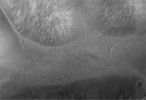
Chaotic_Terrain-Aram_Chaos-R2200155-02.jpgThe "Many Faces" of Aram Chaos (3 - EDM n. 2 - Original NASA/MGS/MSSS b/w Frame)76 visiteUna speculazione ulteriore del Dr Skipper è che una possibile forma di Civiltà Indigena Marziana stia cercando di "salvare il salvabile", ossìa - impiegando sistemi e tecnologie che non riusciamo a comprendere (nè a vedere) - stia tentando in tutti i modi di mantenere almeno un minimo di acque correnti sulla superficie di Marte.
"If so and there are actually extensive civilization populations on Mars, it may seem strange at first blush that so many of them appear to be so focused on water on such a generally arid planet to the point of even getting in the water that is left with their developments. On the other hand, if these populations have historically been part of this drying planetary reality for a very long time and have a historical memory base of more water plentiful times, it may be understandable that they may a bit compulsively try to preserve as much as possible a current semblance of the older loved conditions. Of course there may be other reasons as well"
|
|
| 512 immagini su 43 pagina(e) |
 |
|
|
|
|
28 | |
|
|
|
|








