| Piú viste - A Tribute To Mars Global Surveyor |

South_Polar_Features-South_Polar_Cap-PIA04287.jpgThe South Pole of Mars (Original NASA/MGS/MSSS b/ Frame)80 visiteOn 8 September 2005 (UT), the MGS-MOC resumed imaging of Mars after a nearly 2-week hiatus to recover the spacecraft from a glitch that put MGS into a protective "safe mode". The MOC was turned on during MGS orbit 29053, while the spacecraft was flying across day side of the Planet. MOC then resumed taking pictures on the next orbit. Shown here is a portion of the first picture acquired following MOC turn-on. The image shows a view of the Martian South Polar Region, as it appeared on September 8, 2005. The image was taken by MOC's red wide angle camera. In this case, the spacecraft began imaging Mars as it passed across the southern terminator, at the bottom of the image. MGS then flew southward, over the Polar Cap, then northward toward the Equator. The Equatorial Region is further north than the area shown here. The equatorial region is further north than the area shown here. The image not only provided the MOC team a confirmation that MOC imaging has resumed, this particular image, in the map-projected form shown here, is being used by the team to assist in setting the exposures for MOC narrow angle camera images that will be acquired from the south polar region over the next several days.
|
|

Volcanic_Features-Collapse_Pit-PIA06416.jpgCollapse Pit in Tractus Fossae (Original NASA/MGS/MSSS b/w Frame)80 visiteOriginal Caption:"This MGS-MOC image shows a 1,5 meters (5 feet) per pixel view of a large Collapse Pit in the Tractus Fossae portion of the Tharsis Region of Mars. Such collapses usually occur along faults formed by expansion and pulling apart of the Planet's Upper Crust".
Location near: 22,5° North Lat. and 101,4° West Long.
Image width: width: ~3 Km (~1,9 mi)
Illumination from: lower left
Season: Northern Autumn
|
|

Troughs-Olympica_Fossae-MGS-02.jpgThe Troughs of Olympica Fossae (2 - Original NASA/MGS/MSSS b/w Frame)80 visiteCaption originale:"This MGS-MOC image shows a complex pattern of intersecting and overlapping Troughs in the Olympica Fossae Region of Northern Tharsis. Some combination of Floods, Lava Flows and faulting/tectonic activity contributed to this scene, followed by mantling by dust. Dark Streaks on Slopes in the Troughs were formed by Dust Avalanches".
Location near: 24,8° North Lat. and 114,8° West Long.
Image width: ~3 Km (~1,9 mi)
Illumination from: lower left
Season: Northern Winter
|
|

Craters-Unnamed_Crater.jpgOn the edge... (Original NASA/MGS/MSSS b/w Frame)80 visiteCaption NASA originale:"This MGS-MOC image shows gullies on the Wall of a Martian South Mid-Latitude Unnamed Impact Crater. The Channels in each Gully head beneath an eroding overhang of layered rock, providing support for the hypothesis that some (if not all) Martian Gullies result from release of groundwater to the Surface".
Location near: 33,0° South Lat. and 213,4° West Long.
Image width: ~3 Km (~1,9 mi)
Illumination from: upper left
Season: Southern Autumn
|
|

Volcanoes-The_FootPrint_Volcano-C-MGS.jpgThe "Footprint Volcano" (EDM taken from the Original NASA/MGS/MSSS b/w Frame) 80 visitenessun commento
|
|

Chasmas-Melas_Chasma-03.jpgSample scarp edge in layered unit in Melas Chasma or... Frozen Waterfalls on Mars? (3)79 visitePrima di entrare nel dettaglio dei commenti (che svolgeremo avvalendoci di qualche ingrandimento delle aree più controverse di questa Regione), Vi invitiamo ad andare a controllare direttamente il frame MGS originale (o la 'striscia', se preferite...) all'indirizzo che Vi abbiamo fornito con la prima sezione di questo panorama Marziano. In effetti, per capire quanto sia difficile svolgere attività di ricerca in questo campo noi riteniamo importante che Voi Lettori guardiate anche l'insieme, cioè la 'totalità', e non solo la singola 'porzione'.
Perchè?
Perchè, la maggior parte delle volte, quello che distingue un semplice e diffuso (ma non particolarmente intenso) interesse da una passione che, con il tempo, può diventare un lavoro, è proprio la capacità di intuire e cogliere - prima - e di vedere ed elaborare - poi - usando una 'striscia' simile a migliaia di altre, quel dettaglio che, un giorno, potrebbe aver costituito uno dei primi mattoni nella costruzione dell'Edificio della Nuova (e "Libera") Scienza.
|
|

Chasmas-Eos_Chasma-M1200712-00.jpgDustfalls in Eos Chasma (1 - Original NASA/MGS/MSSS b/w CTX Frame)79 visitenessun commento
|
|

South_Polar_Features_-_The_Lake-A1-M0901354-00.jpgSouth Polar Lake? (CTX Frame)79 visiteUn nuovo rilievo che, ancora una volta, ci fa pensare ad un grandissimo Lago Marziano situato - ancora una volta (ed è questa la coincidenza più significativa, a nostro parere) nell'area Sud-Polare del Pianeta Rosso.
In questo frame MGS-MOC, il presunto 'Grande Lago' è già chiaramente visibile nella porzione inferiore dell'immagine.
Una prima, ma sostanziale, puntualizzazione possiamo già farla, anche senza aver ancora visto il detail mgnf di questo fantastico rilievo Sud-Polare: se ciò che stiamo osservando è, come sembra davvero essere, un 'lago', allora un ulteriore 'dato tecnico' che forse varrebbe la pena di studiare con maggiore attenzione potrebbe essere quello riguardante il presunto 'effetto-serra' che, da qualche anno, sembra interessare Marte in maniera molto consistente.
I Poli di Marte, come testimoniano svariate immagini Viking, MGS e MARS Express, si stanno ritraendo.
|
|
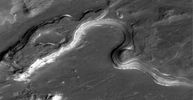
Craters-Holden_Crater-5-M0302733Det.jpgThe "White Cliffs of Holden Crater"79 visiteEd a chiusura della panoramica sul fondo del Cratere Holden, ecco un detail mgnf (courtesy of MU) che ci mostra, sia pure rovesciate di 180° rispetto all'angolo visuale della Sonda MGS (rovesciamento effettuato solo per consentirVi una visione migliore dello spettacolo), le "Bianche Scogliere del Cratere Holden" - Marte.
|
|

Volcanoes-Arsia_Mons-01-PIA04294.jpgArsia Mons and its "clouds" (1) - 19 June 2001, Ls 180° (Extremely Saturated Natural Colors; credits NASA/JPL/MSSS)79 visiteVariazioni e ripetitività climatiche osservate sulla Regione dove sorge il grande vulcano Arsia Mons.
Original caption:"A wide angle view taken by the Mars Orbiter Camera on NASA's Mars Global Surveyor. At intervals of approximately one Mars year apart, similar spiral dust clouds over a volcano named Arsia Mons can be seen. This image was taken on June 19, 2001, such as the first day of Southern Winter on Mars".
|
|
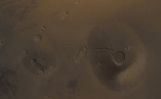
Volcanoes-Ceraunius_Tholus-MGS.jpgCeraunius, from atop (possible Natural Colors; credits: Dr Paolo C. Fienga - Lunexit Team)79 visitenessun commentoMareKromium
|
|

Mars-02.jpgMars' Solar Longitude 145° (2) - Acidalia Region and Mare Erythraeum78 visitevedi il commento al frame precedente
|
|
| 512 immagini su 43 pagina(e) |
 |
|
|
|
|
27 | |
|
|
|
|








