| Piú viste - A Tribute To Mars Global Surveyor |

Craters-Unnamed_Crater_in_Argyre_Planitia-M1000443Det.jpgUnnamed (and small) Crater in Argyre Planitia (Original NASA/MGS/MSSS b/w Frame)105 visitenessun commento
|
|
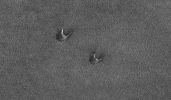
North_Polar_Regions-Dunes.jpgNorth Polar Dunes (Original NASA/MGS/MSSS b/w Frame)105 visiteCaption originale:"This MGS-MOC image shows two "Barchan Dunes" in the North Polar Region of Mars. The orientation of the Dunes, with the steep faces pointed toward the South-East, indicates that the winds responsible for their formation blew from the North-West. At the time this image was acquired by MOC, the dunes and surrounding plains were covered by seasonal carbon dioxide frost".
Location near: 73,8° North Lat. an 40,8° West Long.
Image width: ~3 Km (~1,9 mi)
Illumination from: lower left
Season: Northern Winter
|
|

South_Polar_Features-Swiss_Cheese-PCF-LXTT.jpgSouth Polar Features: Swiss-Cheese Terrain (Natural Colors; credits for the additional process. and color.: Dr Paolo C. Fienga - Lunexit Team)105 visitenessun commentoMareKromium
|
|

Thaumasia_Region-The_Electric_Dunes-03.jpgThaumasia Dunes: the brightest dunes of Mars (EDM n.2)104 visiteDa questa immagine, la luminosità di queste "dune" appare davvero in maniera inequivocabile. La prudenza, come sapete, non è mai troppa, ma la nostra sensazione è che stiamo guardando del ghiaccio o del metallo. L'immagine è stata ottenuta da un'altezza di 370 Km e sono le 14:48 MLT (cioè l'ora locale del luogo ripreso). Il Sole, a quell'ora, è decisamente alto sull'orizzonte e quindi la possibilità che l'albedo elevatissima di queste strutture dipenda proprio da un fenomeno di riflessione diretta della luce solare ci sembra, tutto sommato, accettabile.
Ciò che non ci sembra accettabile è l'atteggiamento della NASA riguardo a questo e ad altri fenomeni similari (ed eclatanti): un atteggiamento di TOTALE INDIFFERENZA.
Ma questa, come sapete, è tutta un'altra storia...
|
|

Marte_Vallis-MGS-PCF-LXTT.jpgThe alleged "Frozen Ocean" of Marte Vallis (Natural Colors; credits for the additonal process. and color.: Dr Paolo C. Fienga - Lunexit Team)104 visitenessun commentoMareKromium
|
|

South_Polar_Features-Summer-02.jpgSouth Polar Summer (Absolute Natural Colors; credits for the additional process. and color.: Dr Paolo C. Fienga - Lunexit Team)104 visitenessun commentoMareKromium
|
|

Acidalia_Region-M0300102-00.jpgBizarre-looking Troughs in Acidalia Region (1 - Original NASA/MGS/MSSS b/w CTX Frame)103 visiteLa NASA vede solo degli antichi canali, ormai totalmente secchi (dried out troughs), i quali presentano, nel loro letto, le curiose dunette che ormai conosciamo bene e che sembrano caratterizzare l'intero Pianeta Rosso. Altri vedono delle strutture tipo 'Gallerie Translucide' o, comunque, dei rilievi assolutamente anomali ed inspiegabili.
Le immagini, in questo caso, sono quello che sono: ed è troppo difficile esprimere un'opinione che non abbia il sapore del 'tirare ad indovinare'. Guardate i frames e poi maturate le Vostre opinioni. Provare ad andare oltre le sensazioni - in questo caso - ci sembra davvero difficile ed azzardato...
|
|

Acidalia_Region-M0300102-02.jpgBizarre-looking Troughs in Acidalia Region (2 - Original NASA/MGS/MSSS b/w - EDM n.2)103 visiteQuesto detail mgnf, a ben guardarlo, ci porta a 'sponsorizzare' - ebbene si: semel in anno... - la tesi NASA sull'origine fluviale di questi rilievi ma i dubbi, comunque, restano.
A proposito: avete mai notato che la NASA, quando interpreta un frame in chiave convenzionale (e cioè riconducendo i rilievi che esso mostra e rappresenta a delle casistiche tipicamente "terrestri" - quali colline, alvei di fiumi prosciugati, terreni franosi, crepacci e canyons etc.), non ha MAI dubbi sulla bontà della propria interpretazione?
Peccato che sui frames 'controversi' o, comunque, di non agevolissima interpretazione, gli Scienziati NASA (ed anche ESA, diciamo la verità) non si pronunciano praticamente MAI!...
|
|
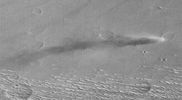
Aeolian_Features-Dust_Devil-Daedalia_Planum-M0803122Det~0.jpgDust Devil in Daedalia Planum (EDM - Original NASA/MGS/MSSS b/w Frame)103 visitenessun commento
|
|

Craters-South_Polar_Crater-M0702775Det.jpgUnnamed South Polar Crater (Original NASA/MGS/MSSS b/w Frame)103 visitenessun commento
|
|

Volcanoes-Pavonis_Mons-PCF-LXTT.jpgPavonis Mons (Enhanced and Saturated Natural Colors; credits for the additional process. and color.: Dr Paolo C. Fienga - Lunexit Team)103 visiteCaption NASA originale:"This Mars Global Surveyor (MGS) Mars Orbiter Camera (MOC) wide angle color composite image, obtained in December 2003, shows the middle of the three Tharsis Montes, Pavonis Mons.
This is a broad shield volcano - similar to the volcanoes of Hawaii - located on the Martian Equator at approx. 113° West.
The Volcano Summit is near 14 Km (~8,7 mi) above the Martian Datum (such as 0 elevation); the central caldera (crater near center of image) is about 45 Km (~28 mi.) across and about 4,5 Km (~2.8 mi.) deep. Sunlight illuminates the scene from the lower left".MareKromium
|
|

Craters-Pollack_Crater-00.jpgThe "White Rock" inside Pollack Crater (NASA/JPL/MSSS)102 visiteCaption NASA originale:"White Rock" is a ridged mound that was first seen and informally named "White Rock" in pictures from the Mariner 9 orbiter in 1972. In black-and-white photos, the feature appears much brighter than its surrounding terrain, giving the impression that the material is white. Later analyses of Mariner 9, Viking and MGS data showed that the feature isn't actually white: it is somewhat red and reflects only about 20-25% of the sunlight that falls upon it (a white surface would reflect 100%). Located in Pollack Crater, a 95 Km wide impact basin at 7.9°S, 334.7°W, White Rock is the light-red/orange feature with the rectangular white box drawn on it in the context view. The light-toned material that gives White Rock its name forms steep cliffs with valleys between them covered by dark, windblown, rippled sand".
|
|
| 512 immagini su 43 pagina(e) |
 |
|
|
|
|
18 | |
|
|
|
|








