| Piú viste - A Tribute To Mars Global Surveyor |
South_Polar_Features-Summer-01.jpgSouth Polar Summer (Absolute Natural Colors; credits for the additional process. and color.: Dr Paolo C. Fienga - Lunexit Team)109 visitenessun commentoMareKromium
|
|
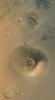
Volcanoes-Ceraunius_and_Uranius-E14-1248-1249_ceraunius50.jpgCeraunius and Uranius (Over-Saturated Natural Colors; credits: NASA/MGS/MSSS)108 visiteCaption NASA originale:"Acquired in March 2002, this Mars Global Surveyor (MGS) Mars Orbiter Camera (MOC) wide angle view shows the martian volcanoes, Ceraunius Tholus (lower) and Uranius Tholus (upper). The presence of impact craters on these volcanoes, particularly on Uranius Tholus; indicates that they are quite ancient and are not active today. The light-toned area on the southeastern face (toward lower right) of Ceraunius Tholus is a remnant of a once more extensive deposit of dust from the global dust storm events that occurred in 2001. The crater at the summit of Ceraunius Tholus is about 25 Km (15,5 mi) across. Sunlight illuminates the scene from the lower left".
|
|

Aeolian_Features-DD_and_Dust_Storms-2003_06_02-00.jpgDust Storms and Dust Devils between Syria Planum and Claritas Fossae (Enhanced Natural Colors; credits: NASA/MGS/MSSS)108 visiteCaption NASA originale:"This color-enhanced composite of Mars Global Surveyor (MGS) Mars Orbiter Camera (MOC) wide angle images shows dust-raising events (small dust "storms" and a few very large dust devils) in the Syria/Claritas Region around 2 p.m. MLT on May 21, 2003. The Region is southwest of the Labyrinthus Noctis, near 14°S, 108°W. Sunlight illuminates the scene from the left; winds were blowing from the west/southwest when the picture was taken. This composite was constructed from a full-resolution (240 meters per pixel) red wide angle image and a much lower resolution (7,5 Km per pixel) blue wide angle image acquired at the same time".
|
|
South_Polar_Features-Crater_with_Ice-A-M1000628-01.jpgSouth Polar Crater with residual Ice (EDM)108 visite...urtano vigorosamente con i "dati ufficiali" sul Pianeta Rosso così come forniti dalla NASA.
Tutto ciò premesso, la domanda di chiusura è facile (e la conoscete anche Voi): che cosa stiamo guardando?
|
|

Earth_and_Moon_from_Mars-00.jpgEarth and Moon from Mars107 visiteCaption originale:"This is the first image of Earth ever taken from another planet that actually shows our home as a planetary disk. Because Earth and the Moon are closer to the Sun than Mars, they exhibit phases, just as the Moon, Venus, and Mercury do when viewed from Earth. As seen from Mars by MGS on 8 May 2003, Earth and the Moon appeared in the evening sky. The MOC Earth/Moon image has been specially processed to allow both Earth (with an apparent magnitude of -2.5) and the much darker Moon (with an apparent magnitude of +0.9) to be visible together. The bright area at the top of the image of Earth is cloud cover over central and eastern North America. Below that, a darker area includes Central America and the Gulf of Mexico. The bright feature near the center-right of the crescent Earth consists of clouds over northern South America. The image also shows the Earth-facing hemisphere of the Moon, since the Moon was on the far side of Earth as viewed from Mars.The slightly lighter tone of the lower portion of the image of the Moon results from the large and conspicuous ray system associated with the crater Tycho.
|
|

Earth_and_Moon_from_Mars-01.jpg"Us", from Mars (EDM)107 visitevedi il commento al frame precedente
|
|

Slope_Streaks-MGS-PIA06846.jpgAs Time Goes By... (Original NASA/MGS/MSSS b/w Frame)107 visiteUn'interessantissimo frame che ci mostra "come passa il tempo" (e come cambiano le cose...) su Marte. La stessa zona (Memnonia region - 5,9° South Lat. and 162,2° West Long.) a distanza di quasi 5 anni. Noi vediamo delle differenze palesi del paesaggio ed altre, per così dire, un pò "più sottili", che richiedono una certa attenzione per essere individuate (ma che sono individuabili!). Provateci anche Voi a trovarle!...
|
|

Craters-Unnamed_Crater-Southern_Regions.jpgUnnamed Crater covered by Fog (Original NASA/MGS/MSSS b/w Frame)107 visiteCaption NASA originale:"Craters near the edge of the retreating South Polar Seasonal Frost Cap often have fog in them, this time of year. This MGS-MOC wide angle red image was acquired on July 13, 2003. It shows an Unnamed Crater, roughly 36 Km across, that is enveloped in Fog.
This picture was taken as a context frame for a high resolution view that was intended to show Dunes on the Floor of the Crater. That high resolution view was frustrated by thick Fog that hid the Dunes from view. This wide angle context frame shows that winds from the lower right (South/East) were blowing over the Crater, causing the Fog to bunch up in a wavy, rippled pattern. Winds streaming off the South Polar Cap toward the North create a variety of patterns in the Fogs formed by Water Ice or Vapor as the Seasonal Cap retreats during Southern Spring.
This picture shows an area located at about 66,4° South Lat. and 208,6° West Long; sunlight illuminates the scene from the upper left (North/West)".
|
|

North_Polar_Features-Chasma_Boreale-PIA07195-00-PCF-LXTT.jpgFeatures of Chasma Boreale (Original NASA/MGS/MSSS b/w Frame) 106 visiteCaption NASA originale:"This Mars Global Surveyor (MGS) Mars Orbiter Camera (MOC) image shows dark Sand Dunes in the North Polar Region of Mars. They are streaming away (toward the left) from a low escarpment at the edge of an outlier of Polar Water Ice (the bright area on the right). The picture covers an area about 3 Km (1.9 mi) wide and is located near 80,7° North Lat. and 80,2° West Long.. Sunlight illuminates the scene from the lower left".
|
|

Craters-Unnamed_Crater-MGS-PIA06877.jpgUnnamed Crater in Lycus Sulci (Original NASA/MGS/MSSS b/w Frame)105 visiteUn Cratere da impatto Senza Nome giace nell'area immediatamente ad Ovest di Lycus Sulci ed a Nord-Ovest del Monte Olympus. Spettacolare il livello di dettaglio raggiunto nella ripresa delle pareti del Cratere che, nella sua interezza, copre un'area di circa 3 Km quadrati.
|
|

Dunes-Dark_Dunes-Noachis_Terra-PIA07351-00.jpgDark Dunes in Noachis Terra (Original NASA/JPL/MSSS b/w Frame)105 visiteCaption NASA originale:"This MGS-MOC image shows low albedo Sand Dunes on the floor of a crater in Southern Noachis Terra".
Location near: 52.5° South Lat. and 336.9° West Long.
Image width: ~~3.0 Km (~1.9 mi)
Illumination from: upper left
Season: Southern Autumn
|
|

Terra_Meridiani-E0200373-01.jpgBizarre-looking Features in Terra Meridiani (Original NASA/MGS/MSSS b/w M0705535 - EDM n.1)105 visiteLa natura craterica del rilievo, dopo il detail mgnf, ci sembra difficile da mettere in dubbio; tuttavia la conformazione/configurazione di questo Crater Cluster, unita alla luminosità apparente dei bordi dei crateri che lo formano, rendono l'immagine - come spesso accade... - accattivante ed oltremodo misteriosa.
In realtà, usando un pizzico di immaginazione, potremmo anche vedere un agglomerato - ben illuminato! - di costruzioni a forma di igloo: molti Ricercatori, esaminando immagini come queste, sovente si addentrano in profonde e pericolose costruzioni speculative per il piacere (forse un pò perverso) di sorprendere e di stimolare dei contraddittori...
A noi però sembra più interessante ed importante rimanere pragmatici e limitarci a sottolineare questa ennesima Singolarità Marziana!
|
|
| 512 immagini su 43 pagina(e) |
 |
|
|
|
|
17 | |
|
|
|
|








