| Piú viste - Mars through the Viking Orbiters |
![vo1_mg01n104[1]-PCF-LXTT-01.jpg](albums/userpics/10060/small_vo1_mg01n104%5B1%5D-PCF-LXTT-01.jpg "Nome del file=vo1_mg01n104[1]-PCF-LXTT-01.jpg
Dimensione del file=299KiB
Dimensioni=1408x2128
Aggiunta il=Nov 07, 2011")
vo1_mg01n104[1]-PCF-LXTT-01.jpgThe "Tharsis' Montes" (Absolute Natural Colors; credits for the additional process. and color.: Dr Paolo C. Fienga - Lunexit Team)164 visiteThe alignment of the 3 Shield Volcanoes that make up the Tharsis Montes is clearly evident in this view. The 3 Volcanoes are named Ascraeus Mons, Pavonis Mons and Arsia Mons, going from North to South. The 3 Volcanoes are each somewhat smaller than Olympus Mons, varying from about 350 to 450 Km (approx. 210 to 270 mi) in horizontal extent and each rising about 15 Km (approx. 9 miles) above the surrounding Plains.
The Tharsis Montes are located on the crest of a broad uplift of the Martian Crust so that their Summits are at about the same elevation as the Summit of Olympus Mons.
The "Fractures" to the South/East of Pavonis Mons, are known as "Noctis Labyrinthus"; this Region merges with the enormous Valles Marineris Canyon System to the East. The white patches around the lower Flanks of the Volcanoes are thin Clouds that commonly occur near them.MareKromium
|
|
![vo2_479b71[1]-PCF-LXTT.jpg](albums/userpics/10060/small_vo2_479b71%5B1%5D-PCF-LXTT.jpg "Nome del file=vo2_479b71[1]-PCF-LXTT.jpg
Dimensione del file=80KiB
Dimensioni=1063x990
Aggiunta il=Lug 05, 2011")
vo2_479b71[1]-PCF-LXTT.jpgFrame Viking Orbiter 2 n. 479b71 (Natural Colors; credits for the additional process. and color.: Dr Paolo C. Fienga - Lunexit Team)163 visitenessun commentoMareKromium
|
|
![vo1_038a02[1]-PCF-LXTT.jpg](albums/userpics/10060/small_vo1_038a02%5B1%5D-PCF-LXTT.jpg "Nome del file=vo1_038a02[1]-PCF-LXTT.jpg
Dimensione del file=109KiB
Dimensioni=980x1072
Aggiunta il=Giu 13, 2011")
vo1_038a02[1]-PCF-LXTT.jpgFrame Viking Orbiter 1 n. 038a02 (Natural Colors; credits for the additional process. and color.: Dr Paolo C. Fienga - Lunexit Team)162 visitenessun commentoMareKromium
|
|
![vo1_529a22[1]-PCF-LXTT.jpg](albums/userpics/10060/small_vo1_529a22%5B1%5D-PCF-LXTT.jpg "Nome del file=vo1_529a22[1]-PCF-LXTT.jpg
Dimensione del file=76KiB
Dimensioni=1072x980
Aggiunta il=Giu 09, 2011")
vo1_529a22[1]-PCF-LXTT.jpgFrame Viking Orbiter 1 n. 529a22 (Natural Colors; credits for the additional process. and color.: Dr Paolo C. Fienga - Lunexit Team)159 visitenessun commentoMareKromium
|
|
![vo1_035a64[1]-PCF-LXTT.jpg](albums/userpics/10060/small_vo1_035a64%5B1%5D-PCF-LXTT.jpg "Nome del file=vo1_035a64[1]-PCF-LXTT.jpg
Dimensione del file=173KiB
Dimensioni=975x1079
Aggiunta il=Giu 09, 2011")
vo1_035a64[1]-PCF-LXTT.jpgFrame Viking Orbiter 1 n. 035a64 (Natural Colors; credits for the additional process. and color.: Dr Paolo C. Fienga - Lunexit Team)155 visitenessun commentoMareKromium
|
|
![vo1_097a62[1]-PCF-LXTT.jpg](albums/userpics/10060/small_vo1_097a62%5B1%5D-PCF-LXTT.jpg "Nome del file=vo1_097a62[1]-PCF-LXTT.jpg
Dimensione del file=89KiB
Dimensioni=1075x977
Aggiunta il=Giu 13, 2011")
vo1_097a62[1]-PCF-LXTT.jpgFrame Viking Orbiter 1 n. 097a62 (Natural Colors; credits for the additional process. and color.: Dr Paolo C. Fienga - Lunexit Team)155 visitenessun commentoMareKromium
|
|
![vo1_022a54[1]-PCF-LXTT.jpg](albums/userpics/10060/small_vo1_022a54%5B1%5D-PCF-LXTT.jpg "Nome del file=vo1_022a54[1]-PCF-LXTT.jpg
Dimensione del file=110KiB
Dimensioni=1069x983
Aggiunta il=Giu 09, 2011")
vo1_022a54[1]-PCF-LXTT.jpgFrame Viking Orbiter 1 n. 022a54 (Natural Colors; credits for the additional process. and color.: Dr Paolo C. Fienga - Lunexit Team)153 visitenessun commentoMareKromium
|
|
![vo1_318a24[1]-PCF-LXTT.jpg](albums/userpics/10060/small_vo1_318a24%5B1%5D-PCF-LXTT.jpg "Nome del file=vo1_318a24[1]-PCF-LXTT.jpg
Dimensione del file=59KiB
Dimensioni=1165x904
Aggiunta il=Giu 13, 2011")
vo1_318a24[1]-PCF-LXTT.jpgFrame Viking Orbiter 1 n. 318a24 (Natural Colors; credits for the additional process. and color.: Dr Paolo C. Fienga - Lunexit Team)147 visitenessun commentoMareKromium
|
|
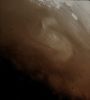
vo1_783a42.jpgFrame Viking Orbiter 1 n. 783a42 - Martian Cyclone (Absolute Natural Colors; credits for the additional process, and color.: Dr Paolo C. Fienga - Lunexit Team)139 visiteSiamo sopra la Regione di Vastitas Borealis (61,77° North Lat. and 231,86° East Long.), alle 06:55 (Ora Locale di Marte). L'immagine è stata ottenuta da una distanza di circa 28.639,5 Km dalla Superficie del Pianeta Rosso il giorno 9 Agosto 1978.
Location & Time Information:
Date/Time (UT): 1978-08-09 T 16:31:21
Distance/Range (Km): 28.639,5
Central Latitude/Longitude (deg): +61,77/231,86
Orbit(s): 783
Imaging Information:
Area or Feature Type: Cloud
Instrument: Visual Imaging Subsystem - Camera B
Instrument Resolution (pixels): 1056 x 1182,7 bit
Instrument Field of View (deg): 1.54 x 1.69
Filter: Red (6)
Illumination Incidence Angle (deg): 68,46
Phase Angle (deg): 112,52
Instrument Look Direction: N/A
Surface Emission Angle (deg): 53,26MareKromium
|
|

vo1_058a02.jpgFrame Viking Orbiter 1 n. 058a02 (Natural Colors; credits for the additional process. and color.: Dr Paolo C. Fienga - Lunexit Team)134 visitenessun commentoMareKromium
|
|
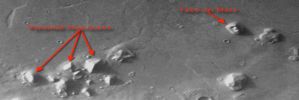
z-The_Face_on_Mars.jpgThe Face on Mars134 visiteIn the AD 1976, many Astronomers were astounded by a (Viking Orbiter) satellite image resembling a Face on the Surface of Mars. What really is that “Face”? Read on to learn more about the face on Mars.
We have already discussed in the past the term "pareidolia". It causes people to see patterns (such as faces and other familiar images) in everyday objects. Many people think that the “Face” on Mars is merely a case of Pareidolia. However, some people believe that the Face exists as a structure created by intelligent design.
But: what exactly do we see when looking at the images of Mars? Mountains? Ancient ruins like the Sphinx or the Pyramids? It seems that everyone has an opinion. And what started this obsession with the face on Mars? In 1976, the Mars Orbiter Viking 1, took a series of pictures of the Martian Region known as Cydonia Mensae. The pictures showed several mountains over a large area. In addition to the hills, and one, in particular, looked like a face. NASA thought it would gain publicity by promoting it to the public. As a consequence, people believed that aliens built this structure on Mars. Located in the Northern Hemisphere of Mars, Cydonia’s Geological Formations suggest the existence of standing water, lakes or even an ocean here for an extended period.
There are several "Mesa-like" structures and smaller flat-topped mountains in the Region. Planetary Researchers believe that parts of these Northern Lowland Plains were once the bed of an ocean or many, and extremely large lakes. Incidentally, they were covered by many layers of various materials (such as, maybe, lava), airborne particles (such as Volcanic Ashes or Atmospheric Particulate), or even Sedimentary Deposits whose depth was of many hundreds of meters. After a long period, erosion removed (some of) these layers. This is just a theory. You may like it or not, but that is it. And it has not been either confirmed or denied. So...
But what about the "Face"? The Martians (accepting the idea that the feature is NOT natural!) thought that another Civilization, in a given period of Time, would have seen and photographed a "Face"? The Mountaintop looks like a three-kilometer-long Face. Why? Because, many Scientists said, the "Terrain features and the angle of shadows led to the creation of the Face". All of the Mars Researchers at the time believed it was an optical illusion. In addition, the HRSC camera captured the Face on Orbit 3253, and the images were published in September 2006. Based on the new photos, the Mountain in question no longer contained a "Face". The angle and lighting removed the “Face” from the image. As a matter of fact, the Mountain now resembles the other Mountains in the area.
This High-Resolution (HR) Images from the Mars Orbiter Camera located on the Mars Global Surveyor Spacecraft showed the famous “Face on Mars” in detail, clearly "demonstarting" that it was a "Natural Geological Formation".
Suspicions of Aliens? The internet has various articles full of ideas and speculation with regards to the Face on Mars. However, it seems everyone wants to believe that Ancient Cvilizations (BUT NOT NECESSARILY INDIGENOUS OF MARS!) once inhabited the Red Planet. Some pictures taken from other man-made satellites seem to suggest the existance of "Pyramidal Structures" near the Face. Furthermore, they think the PyramidS exist nearly (and only) 5 km away from the Face. Dr. John Brandenburg, who worked for NASA, has been speaking about this for years. Brandenburg has worked on Space Plasma Technologies, Nuclear Fusion, and advanced Space Propulsion (and so we think that he's not exactly an "idiot" or just an "incompetent").
“We have found, in a nutshell, that Mars used to seem Earth-like, in the past, and became, eventually, the home not only to life, but a Humanoid Civilization, and that Civilization was apparently destroyed by a Nuclear (?) attack from Space. We have to send our (human) Astronauts there to find out what exactly happened. Did the people on Mars know who did this to them? And how can we make sure that this doesn’t (or won't) happen to us as well?”
Think about this, Ladies and Gentlemen...MareKromium
|
|
![vo2_287b43[1]-PCF-LXTT.jpg](albums/userpics/10060/small_vo2_287b43%5B1%5D-PCF-LXTT.jpg "Nome del file=vo2_287b43[1]-PCF-LXTT.jpg
Dimensione del file=45KiB
Dimensioni=1094x962
Aggiunta il=Giu 29, 2011")
vo2_287b43[1]-PCF-LXTT.jpgFrame Viking Orbiter 2 n. 287b43 (Natural Colors; credits for the additional process. and color.: Dr Paolo C. Fienga - Lunexit Team)117 visitenessun commentoMareKromium
|
|
| 45 immagini su 4 pagina(e) |
 |
3 |
|








