| |

| Piú viste - Imagination |

Sunset_over_the_Alps.jpg"Campfire" in the Sky over the Alps (credits: Tatiana Balbiani)623 visitenessun commentoMareKromium
|
|

Criovulcanismo.jpgCryovolcanism on Earth (just like on Mars and Titan, as far as we know for now...) 478 visite...Wonders of Nature...MareKromium
|
|

Red_Giant.jpgRising Red Giant...459 visite"...Ti invito al viaggio - in quel paese che ti somiglia tanto
I soli languidi dei suoi cieli annebbiati -
hanno per il mio spirito, l'incanto - dei tuoi occhi
quando brillano, offuscati..."
(M. Sgalambro - F. Battiato)
|
|

Catastrophe.jpgIs the sighting of an Oarfish a Sign of imminent catastrophe?!?437 visiteWho knows when a Legend possesses some scientific founfation and when it does not...
Oh, yeah, sorry: I forgot. Scientists know EVERYTHING! So, do not worry: the Earth is still alive and well!MareKromium
|
|

The_Saddest_Truth.jpgDedicated to me...Just for a little laugh!337 visitePer i non "Anglofili": "Vedo Alieni e Mondi lontani" risposta "Ragazzino fortunato! Io vedo solo stronzi e cretini!...". Estratta da un oramai vecchio film che, penso, conosciate tutti.MareKromium
|
|
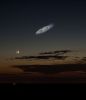
Andromeda.jpgIf our eyes were a CCD Camera... (Credits: Stephen Rahn - Tom Buckley-Houston)329 visiteThis is, of course, a photographic COMPOSITION, but the proportions are exact, and what we would see in the sky if the Andromeda Galaxy were bright enough, would be an object almost as wide as 7 full moons.
The Moon seen from Earth, in fact, occupies about half a degree in the sky. M31 on the other hand, over 2 million light years away, is over 3 degrees wide.MareKromium
|
|

Super_Earths.jpgSuper Earths321 visite(ANSA) - ROMA, 07 SET - Due nuove - cosiddette - "Super-Terre" sono state scoperte in orbita intorno ad una stella molto 'fredda', distante circa 100 Anni Luce da noi, e una delle due si trova nella sua Zona Abitabile: questo ha fatto subito salire il pianeta nelle posizioni di testa all'interno della lista di quelli più promettenti da studiare, portandolo al secondo posto dopo i pianeti che orbitano intorno alla famosa stella Trappist-1.
La scoperta, pubblicata sulla rivista Astronomy & Astrophysics, è di un gruppo internazionale di ricercatori guidati da Laetitia Delrez dell'Università di Liegi, che si sono avvalsi della rete di telescopi del progetto Speculoos (Search for habitable planets eclipsing ultra-cool stars), coordinato dalla stessa Università.
Il pianeta più interno tra i due appena scoperti, chiamato LP 890-9b, è circa il 30% più grande della Terra ed effettua un giro completo intorno alla sua stella (LP 890-9) in soli 2,7 giorni. Questo esopianeta era stato inizialmente individuato anche dal telescopio spaziale Tess della Nasa ed è stato poi confermato dagli strumenti di Speculoos, che sono ottimizzati per osservare questo tipo di stelle deboli e fredde che emettono la maggior parte della loro luce nel vicino infrarosso. I telescopi principali del progetto si trovano nell'Osservatorio Paranal dello European Southern Observatory (Eso) in Cile e sull'isola di Tenerife (Canarie).
La seconda super-Terra, invece, era del tutto inaspettata: LP 890-9c è di dimensioni simili alla sua vicina (circa il 40% più grande della Terra), ma orbita intorno alla sua stella in 8,5 giorni, caratteristica che la pone nella Zona Abitabile, vale a dire quella zona in cui, un pianeta con condizioni geologiche e atmosferiche simili alla Terra, avrebbe una temperatura superficiale che consente all'acqua di rimanere liquida per miliardi di anni.MareKromium
|
|

Titanian_Rainstorm-David_A__Hardy.jpgRainy Day on Titan (a Fantasy Frame by David A. Hardy - AstroArt) 303 visiteUn Lavoro davvero BELLISSIMO dell'Artista David A. Hardy che abbiamo tuttavia LEGGERMENTE modificato in accordo a quelle che noi, come Lunexit Team, riteniamo essere le condizioni effettive di luminosità esistenti al Datum di Titano (il quadro di Dave Hardy, a nostro parere, pecca - come d'altronde la NASA "insegna" e "suggerisce" - di una luminosità davvero eccessiva - verificate Voi stessi l'original painting di Dave Hardy, pubblicato sulla Rubrica "NASA - Picture of the Day" del giorno 1mo Aprile 2011 per rendervene conto).
Ci scusiamo, ovviamente, con il Maestro David A. Hardy per la modifica effettuata sul Suo - comunque SPLENDIDO - quadro, ma questa modifica la ritenevamo e riteniamo dovuta ai Lettori di Lunar Explorer Italia.MareKromium
|
|
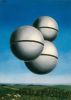
Voices.jpgBe careful, Man...292 visite"...This Society has no centers of power and possesses no type of organization in the terrestrial sense of the term, because, although individuals do exist in some physical, yet exotic, form, there is no such thing as "individual consciousness."
Each individual "participant" (it's an ugly expression, but it's the most appropriate in this context) of this Civilization exists only as a "part of a whole"; as a portion — necessary, but not indispensable — of a "greater body" to which he or she accedes and with which he or she merges and vanishes.
I do not know whether this type of psychological and social architecture is original or whether it — somehow — derived from a series of previous "organizational experiments."
I do not know whether it is a "choice" or a "necessity."
What I do know is that this Civilization has existed for at least twenty billion Earth years, and its "consciousness," if I may call it that, extends to the edges of this Universe.
Maybe even others."
Dr. Paolo C. FiengaMareKromium
|
|

Comparisons.jpgComparisons259 visiteSun - Earth: the average diameter of the Sun is about 1,392,000 km, almost 109 times larger than the Earth (12,742 km). This means that we could put 109 Earths side by side to match the diameter of our star.
Stephenson 2-18 - Sun: the largest known star compared to the Sun. We are talking about a radius of 2,158 solar radii (solar radius equals 696,340 km). If we were to place it at the centre of our Solar System, its photosphere would engulf the orbit of Saturn, the lord of the rings.
Ton 618 - Stephenson 2-18: the largest known black hole compared to the largest star. Ton 618 has a diameter of 2606 astronomical units (1 astronomical unit is equivalent to the distance Earth - Sun or 150 million kilometres). To give a better idea, Saturn (used as a comparison before) is 10 astronomical units away from the Sun.
We are ants in the Universe!MareKromium
|
|

Medusa.jpgPossible Encounter in Gorgonum Chaos...231 visiteFiglia di Forco e di Ceto, Medusa era una delle Gorgoni, insieme a Steno ed Euriale, ma lei era l'unica ad essere mortale.
Nelle rappresentazioni più antiche ella era orrenda, esattamente come le sue sorelle Steno ed Euriale. In versioni più recenti, tuttavia (Pindaro, Ovidio), Medusa venne considerata bellissima e spaventosa allo stesso tempo.
Secondo il mito, Poseidone si era innamorato di Medusa quando ancora era una bellissima fanciulla. Una notte, il dio la sedusse (o forse la violò) nel tempio di Atena. Quest'ultima, profondamente irritata dall’affronto subito, trasformò la fanciulla in un orribile mostro: le mani vennero trasformate in pezzi di bronzo; sulla schiena sorsero delle ali d’oro ed il suo corpo venne ricoperto di scaglie; i denti furono resi simili a zanne di cinghiale; i capelli divennero dei serpenti ed il suo sguardo acquisì il potere di trasformare in pietra chiunque lo incrociasse.
Medusa fu uccisa da Perseo, che le mozzò la testa, ma guardando la sua immagine riflessa sul suo scudo, lucido come uno specchio.
Quando le tagliò il capo, dal collo della Gorgone uscirono i figli che aveva generato dopo la notte con Poseidone: Pegaso e Crisaore e, secondo Ovidio, dal suo sangue nacquero anche il corallo rosso e l'Anfesibena (trattasi di un mitico serpente dotato di due teste: una ad ogni estremità del corpo, e di occhi che brillano come lampade. Secondo il mito greco, Anfesibena fu generata dal sangue gocciolato dalla testa di Medusa quando Perseo volò, stringendola in pugno, sopra il deserto libico. L'Anfesibena, come creatura mitologica e leggendaria, è stata citata da Marco Anneo Lucano e Plinio il Vecchio. Viene citata, inoltre, da Dante nel Canto 24mo dell'Inferno e da Borges nel suo "Manuale di Zoologia Fantastica").
La testa della defunta Gorgone - sebbene mozzata - non perse il suo orribile potere pietrificante e Perseo, infatti, la mostrò ad Atlante, così trasformandolo in pietra.
La testa di Medusa fu quindi - ed infine - donata da Perseo ad Atena, che a sua volta gli aveva dato lo scudo specchiato con il quale l'aveva potuta affrontare senza guardarla direttamente negli occhi e senza così subire la pietrificazione, ed Atena, una volta ricevutala, la pose al centro della propria Egida.MareKromium
|
|

Sweden.jpgVälkommen Sverige!221 visiteLocales Pages Accesses Bandwidth Used
Italy 5.841 14.405 258.56 MB
France 417 650 14.02 MB
Sweden 361 361 9.13 MB
...and many others.
Every month we read real data in real time from our "followers". As far as Sweden is concerned, the data are always the same: 361 pages with 361 accesses. Usually, they all occur at the beginning of the month.
So, who are You?
A University? Free Researchers? Amateur Astronomers? Government? Military?
Please, ask us any question you wish!
What are you looking for? You read very little, but you always read the same few pages. And that's funny!
Anyway, we are ready to help, if you need it... And remember: you can read us, but we can read you. So now, plaese, ask whatever you wish...MareKromium
|
|
| 93 immagini su 8 pagina(e) |
1 |
|
|
|
|
|
|
|
|








