| Risultati della ricerca nelle immagini - "unnamed" |

Craters-Unnamed_Crater-PCF-LXTT.jpgUnusually-looking Unnamed Crater (Saturated Natural Colors; credits for the additional process. and color.: Dr Paolo C. Fienga - Lunar Explorer Italia)65 visiteCaption NASA:"At one time the Floor of this Unnamed Crater located to the West of Hellas Basin, was completely filled with material from Rim to Rim. As this image shows, part of that fill material is being removed. The hole that is formed shows that the fill material was layered and a very rough surface is located at the bottom of the hole".MareKromium
|
|
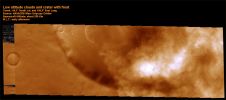
Craters-Unnamed_Crater_with_Frost-00-PCF-LXTT.JPGClouds over "Frosty" Crater (CTX Frame - False Colors; credits for the additional process. and color.: Dr Paolo C. Fienga - Lunar Explorer Italia)69 visiteIl dettaglio della nuvola che scivola sul cratere senza nome situato a Sud-Est del bacino di impatto denominato "Hellas" è molto bello, ma non fermiamoci al dettaglio artistico ed osserviamo il margine interno del cratere posto alla Vostra Sx: le tracce di brina sono evidenti.
E non è tutto: osservate il fondo del cratere. C'è qualcosa che lo "allaga", in parte? Sicuramente non si tratta solo di fango (è l'albedo del dettaglio che ce lo dice).
La nostra prima ipotesi è che, sul fondo di questo cratere senza nome, vi possa essere un discreto quantitativo di ghiaccio d'acqua il quale è talmente trasparente, da permetterci di riuscire a vedere anche i minuscoli crateri che giacciono al di sotto di esso.
La seconda ipotesi, meno immaginifica ma, forse, più realistica, è che sul fondo del cratere vi sia un deposito sottile, ma abbondante, di brina ghiacciata.
Caption NASA:"The dust storm season in the Southern Hemisphere of Mars is well underway. This image of an unnamed crater South-East of Hellas Basin shows the encroachment of a storm in the region".MareKromium
|
|

Craters-Unnamed_Crater_with_Frost-01-PCF-LXTT.jpgClouds over "Frosty" Crater (EDM - Enhanced Natural Colors; credits for the additional process. and color.: Dr Paolo C. Fienga - Lunar Explorer Italia)71 visiteDettaglio del "laghetto" (di ghiaccio d'acqua o di brina...) che ci sembra individuabile sul fondo di questo cratere senza nome.
Le Vostre opinioni al riguardo, se ci fossero, saranno gradite.MareKromium
|
|

Craters-Unnamed_Crater_with_Pedestal-MGS.jpgAnother "Pedestal Crater" (Enhanced Natural Colors; credits for the additioanl process. and color.: Dr Paolo C. Fienga - Lunexit Team)72 visitenessun commentoMareKromium
|
|
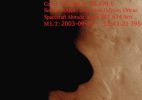
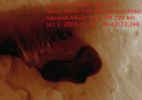
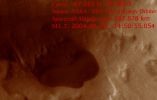
Craters-Unnamed_Crater_with_possible_Oil_Lake-V07738009-PCF-LXTT-00.jpgMigrating Dunes, Dirty Waters or maybe Surfacing Hydrocarbons? (1 - Natural Colors; credits for the additional process. and color.: Dr Paolo C. Fienga - Lunexit Team)74 visiteAttraverso la ricerca e selezione, operata dal bravissimo Dr Gianluigi Barca, di 5 frames, ottenuti nell'arco di 4 anni ma TUTTI relativi al medesimo rilievo superficiale (ossìa un cratere di modeste dimensioni situato ad una relativamente elevata Latitudine Sud), è possibile vedere con estrema chiarezza la - diciamo così... - "bizzarra" evoluzione di un "qualcosa" che giace sul fondo del cratere stesso.
Non è necessario spendere troppe parole sull'evidenza delle variazioni (anche cromatiche) occorse al materiale inquadrato in questi 5 frames, ma ci sembra opportuno sottolineare che una sequenza talmente incredibile e così chiaramente indicativa del verificarsi di eventi caratterizzati da una matrice (forse) indicativa di una recentissima - ed ancora perdurante - attività geologica avrebbe meritato l'attenzione di Scienziati e Ricercatori di tutto il Mondo. Attenzione che, invece (ed almeno per quanto ci è dato sapere) non c'è stata. Zero, nihil: totale silenzio. Curioso. Curioso specialmente allorchè andiamo a vedere (e leggere, in 1000 salse diverse!) che un evento di gran lunga meno eclatante - il rinnovarsi/ampliarsi di un "gully" - ha trovato spazio ed interesse (forse eccessivi e sproporzionati) nell'intera Comunità Scientifica.
Attenzione: che l'ampliarsi e modificarsi di "gullies" sia un possibile indice della presenza di acque superficiali su Marte è un fatto importante, senza dubbio; ma anche l'avanzare, il ritrarsi ed il mutare di forma di questo "materiale" (il quale potrebbe anche avere una origine organica) in un arco di tempo così piccolo - geologicamente parlando - a noi pare un evento meritevole di grande - anzi GRANDISSIMA - attenzione!
Ma che cosa stiamo guardando? Un nuovo - e terribilmente ingannevole gioco di chiaro/scuri (al quale si abbina un ulteriore elemento fuorviante per i nostri occhi il quale è derivante da leggeri mutamenti della luce sull'Orizzonte Locale e/o da variazioni dell'altezza e dell'angolazione da cui le riprese sono state effettuate)?
Secondo noi, fra le ipotesi (pur) logiche e pragmatiche considerabili, questa è decisamente la meno soddisfacente (anche se non possiamo comunque escluderla al 100%).
Si tratta allora di "dune migranti"? Tendenzialmente, anche dopo aver esaminato altri frames relativi a queste "migrating dunes", saremmo portati a dire di no (manca l'effetto "scia" - di polveri e sabbie (collose) residuali - che caratterizza questo particolare fenomeno).
Si tratta forse di "fanghi" (ossìa di "acque sporche")? Ipotesi plausibile.
O magari si tratta di Idrocarburi Affioranti? Ecco: questa idea ci piace e, ora che stiamo osservando Marte con sempre maggiore attenzione e - soprattutto - "sapendo" quello che cerchiamo, l'ipotesi di cui sopra ci sembra attendibilissima. Idrocarburi frammisti a polveri e residui di CO2: osservate il frame n. 4 con particolare attenzione e poi, se volete, comunicateci le Vostre opinioni.
E COMPLIMENTI vivissimi al Dr Barca!MareKromium
|
|
Craters-Unnamed_Crater_with_possible_Oil_Lake-V07738009-PCF-LXTT-01.jpgMigrating Dunes, Dirty Waters or maybe Surfacing Hydrocarbons? (2 - Natural Colors; credits for the additional process. and color.: Dr Paolo C. Fienga - Lunexit Team)90 visitenessun commentoMareKromium
|
|
Craters-Unnamed_Crater_with_possible_Oil_Lake-V07738009-PCF-LXTT-02.jpgMigrating Dunes, Dirty Waters or maybe Surfacing Hydrocarbons? (3 - Natural Colors; credits for the additional process. and color.: Dr Paolo C. Fienga - Lunexit Team)65 visitenessun commentoMareKromium
|
|

Craters-Unnamed_Crater_with_possible_Oil_Lake-V07738009-PCF-LXTT-03.jpgMigrating Dunes, Dirty Waters or maybe Surfacing Hydrocarbons? (4 - Natural Colors; credits for the additional process. and color.: Dr Paolo C. Fienga - Lunexit Team)66 visitenessun commentoMareKromium
|
|

Craters-Unnamed_Crater_with_possible_Oil_Lake-V07738009-PCF-LXTT-04.jpgMigrating Dunes, Dirty Waters or maybe Surfacing Hydrocarbons? (5 - Natural Colors; credits for the additional process. and color.: Dr Paolo C. Fienga - Lunexit Team)64 visitenessun commentoMareKromium
|
|

Craters-Unnamed_Crater_with_possible_Oil_Lake-V07738009-PCF-LXTT-05.JPGAs Time Goes By... (an Image-Mosaic by Dr Gianluigi Barca - Lunexit Team)77 visiteQuadro comparativo delle possibili variazioni di forma e texture del materiale individuato sul fondo di un cratere senza nome posto ad una elevata Latitudine Sud.MareKromium
|
|

PSP_003252_1425_RED_browse-01.jpgBright Gully Deposit in Terra Sirenum (the "crater" - close-up; false colors)68 visiteAs seen in the context image and here, the appearance of the crater wall differs between the Northern and Southern Sides. On the Northern Pole-Facing Side Walls, prominent gullies with channels and aprons are apparent, with many of these having valley-like alcoves near their tops. The morphology of the gullies is consistent with formation by a fluid, most likely water.
On the pole-facing slopes, ground ice or aquifers may be more stable, being subjected to less heating from sunlight compared to equator-facing slopes.
In contrast, the Southern, Equator-Facing Walls are dominated by rocky debris flows that lack prominent channels.MareKromium
|
|

PSP_005680_1525_RED_abrowse-00.jpgPossible ancient Salt Deposits in Terra Cimmeria (Extremely Saturated and ENhanced Natural Colors - credits for the additional process. and color.: Dr Paolo C. Fienga - Lunexit Team)66 visiteThe ancient cratered highlands of the Southern Hemisphere of Mars has an intriguing and complex history as it has been riddled with impact craters and modified by volcanic processes and by the wind.
Additionally, it is one of the most heavily dissected terrains on Mars exhibiting the densest population of Valley Networks: old dried up channels and valleys that may have been formed by surface runoff, the seepage of ground water, or both.
Recently, the Thermal Emission Imaging System (THEMIS) aboard Mars Odyssey, in conjunction with spectral data from the Thermal Emission Spectrometer (TES) aboard the Mars Global Surveyor (MGS) have revealed the presence of a unique surface deposit that may be rich in chloride salts formed from the presence of liquid water. Three separate missions (MGS, MO and MRO) have come to reveal the composition and nature of these unique deposits, which, although they occur as relatively small deposits (less than 25 square Km) are widely distributed in Noachian (most ancient) terrains with fewer occurrences in the Hesperian (middle geologic time) terrains.
The deposit appears to be relatively thin and occurs in low-lying areas. It is also heavily pockmarked and discontinuous, possibly from removal of the material by erosion. Both of these aspects suggest that the deposit is indeed very old.
The presence of such salts is intriguing, and strongly suggests that conditions were favorable for water near or at the surface in the geologic past.
Polygonal cracks can be observed in this image and other images of these deposits elsewhere on Mars (see PSP_003160_1410) and are similar to desiccation cracks (formed from the rapid evaporation and drying of a wet surface) and indicate that these may were more likely deposited at the surface.
However, the volume and duration the water required for these deposits is still being investigated. MareKromium
|
|
| 15 immagini su 2 pagina(e) |
1 |
|








