| Risultati della ricerca nelle immagini - "ray" |
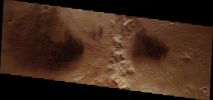
Craters-Du_Martheray_Crater-Dunefield-20090128a-PCF-LXTT.jpgDunes within Du Martheray Crater (Natural Colors; credits for the additional process. and color.: Dr Paolo C. Fienga - Lunar Explorer Italia)64 visiteCaption NASA:"This VIS image shows the Northern part of Du Martheray Crater and the smaller crater on its Rim. Both craters have floor features showing evidence of both wind erosion and wind deposition. The small, dark sand dunes are easily seen against the brighter eroded background".
Coord.: 5,8° North Lat. and 94,0° East Long.
MareKromium
|
|

NGC-1275-Perseus_Cluster_cxc_f.jpgNGC 1275 - Perseus Cluster106 visite"...Molte volte, quando ho cercato di esporre questo concetto che, a mio parere, è davvero elementare, mi sono poi trovato a dovermi difendere da bordate di accuse di estremismo.
Il concetto è questo: prima di preoccuparsi di tutelare nel miglior modo possibile i diritti degli imputati, bisognerebbe cercare di tutelare - sempre nel miglior modo possibile - quelli delle Parti Lese.
E' evidente che le critiche ad un simile principio, talmente ovvio da non necessitare di alcuna ulteriore spiegazione, arrivano da coloro i quali non hanno idea di che cosa voglia dire "essere le Vittime di un crimine".
Costoro, altrettanto ovviamente, sono le medesime persone che, nelle rare ipotesi in cui vengono anche solo sfiorate da un evento delittuoso (e perpetrato in loro danno), diventano i Profeti della Forca ed i Vati della Sanzione Esemplare..."
P.C. Floegers - "Scritti di Cronaca e Sociale"
|
|
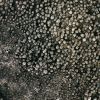
OPP-SOL053-1.jpgJust "Little Round Rocks"? - Sol 53 (Superdefinition + MULTISPECTRUM; credits: Dr G. Barca & Lunexit)62 visitenessun commentoMareKromium
|
|
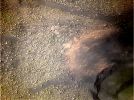
OPP-SOL1527-1P264005741EFF89AHP2587L6M1-1.jpgGreenish "soil" inside Victoria - Sol 1527 (Superdefinition; credits: Dr M. Faccin)63 visitenessun commentoMareKromium
|
|
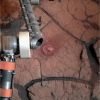
OPP-SOL1838-MF-LXT.jpgThe "Mark" and the "Pearl" - Sol 1838 (possible True Colors; credits: Dr M. Faccin)59 visitenessun commentoMareKromium
|
|
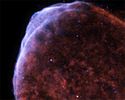
SN-1006.jpgSN 1006: Supernova Remnant in X-Rays75 visite"...Circuit Fatum, et si quid diu praeteriit repetit; quaedam rarius sollicitat, saepius quaedam, nihil immune esse et innoxium sinit..."
(Seneca)
"...Il Destino si muove intorno a noi e se, talvolta, qualcosa riesce a sfuggirgli, (nel tempo) la riafferra; esso è causa di eventi che accadono di frequente, come di eventi rari e, comunque, nulla e nessuno può restare indifferente al suo tocco o (addirittura) sfuggirgli..."
|
|
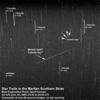
SOL643-PIA03613_fig1.jpgSpirit's search for meteors - Sol 64380 visiteSi vedano i commenti (nonchè la Original Caption) riportati nelle note al frame relativo al Sol 668.
|
|

SOL668-PIA03615_fig1.jpgSpirit's search for meteors - Sol 66863 visiteIn questo (bellissimo frame), una media esposizione ci mostra il cielo notturno di Marte, con le sue stelle ed i suoi "streaks". Come potete leggere, la NASA è dubbiosa su alcune strisce: saranno "stelle cadenti" o "raggi cosmici"? E' evidente che la domanda è giusta. Ciò che ci ha un pò sorpresi è il fatto che, sino a non molto tempo fa, gli streaks nel cielo notturno di Marte erano SEMPRE e SOLO raggi cosmici o...vecchie astronavi Russe o Americane che precipitavano. Il commento originale NASA, che riportiamo per intero, vale davvero la pena di essere letto...
The PanCam on both MER are about as sensitive as the human eye at night. The cameras can see the same bright stars that we can see from Earth and the same patterns of constellations dot the night sky. Scientists on the rover team have been taking images of some of these bright stars as part of several different projects. One project is designed to try to capture shooting stars, or meteors, in the martian night sky.
"Meteoroids" are small pieces of comets and asteroids that travel through space and eventually run into a planet. On Earth, we can sometimes see meteoroids become brilliant, long "meteors" streaking across the night sky as they burn up from the friction in our atmosphere. Some of these meteors survive their fiery flight and land on the surface (or in the ocean) where, if found, they are called "meteorites." The same thing happens in the martian atmosphere, and Spirit even accidentally discovered a meteor while attempting to obtain images of Earth in the pre-dawn sky back in March, 2004 (see http://marsrovers.jpl.nasa.gov/gallery/press/spirit/20040311a.html, and Selsis et al. (2005) Nature, vol 435, p. 581). On Earth, some meteors come in "storms" or "showers" at predictable times of the year, like the famous Perseid meteor shower in August or the Leonid meteor shower in November. These "storms" happen when Earth passes through the same parts of space where comets sometimes pass. The meteors we see at these times are from leftover debris that was shed off of these comets.
The same kind of thing is predicted for Mars, as well. Inspired by calculations about Martian meteor storms by meteor scientists from the University of Western Ontario in Canada and the Centre de Recherche en Astrophysique de Lyon in France, and also aided by other meteor research colleagues from NASA's Marshall Space Flight Center, scientists on the rover team planned some observations to try to detect predicted meteor storms in October and November, 2005. The views shown here are a composite of nine 60-second exposures taken with the panoramic camera on Spirit during night hours of sol 668 (Nov. 18, 2005), during a week when Mars was predicted to pass through a meteor stream associated with Halley's comet. The south celestial pole is at the center of the frame. Many stars can be seen in the images, appearing as short, curved streaks forming arcs around the center point. The star trails are curved because Mars is rotating while the camera takes the images. The brightest stars in this view would be easily visible to the naked eye, but the faintest ones are slightly dimmer than the human eye can detect.
In addition to the star trails, there are several smaller linear streaks, dots and splotches that are the trails left by cosmic rays hitting the camera detectors. Cosmic rays are high-energy particles that are created in the Sun and in other stars throughout our galaxy and travel through space in all directions. Some of them strike Earth or other planets, and ones that strike a digital camera detector can leave little tracks or splotches like those seen in these images. Because they come from all directions, some strike the detector face-on, and others strike at glancing angles. Some even skip across the detector like flat rocks skipped across a pond. These are very common phenomena to astronomers used to working with sensitive digital cameras like those in the Mars rovers, the Hubble Space Telescope, or other space probes, and while they can be a nuisance when taking pictures, they generally do not cause any lasting damage to the cameras. Three of the streaks in the image, including one spanning most of the distance from the left edge of the frame to the center, might be meteor trails or could be the marks of other cosmic rays.
While hunting for meteors on Mars is fun, ultimately the team wants to use the images and results for scientific purposes. These include helping to validate the models and predictions for interplanetary meteor storms, providing information on the rate of impacts of small meteoroids with Mars for comparison with rates for the Earth and Moon, assessing the rate and intensity of cosmic ray impact events in the Martian environment, and looking at whether some bright stars are being dimmed occasionally by water ice or dust clouds occurring at night during different Martian seasons.
|
|

as14-72-10026.jpgAS 14-72-10026 - Hirayama and Mare Smythii77 visiteImage Collection: 70mm Hasselblad
Mission: Apollo 14
Magazine: 72
Magazine Letter: L
Latitude: 3° South
Longitude: 86,5° East
Film Type: SO-368
Film Width: 70 mm
Film Color: color
Feature(s): Hirayama Area and Mare SmythiiMareKromium
|
|
|
|
|
| 9 immagini su 1 pagina(e) |
|





