| Risultati della ricerca nelle immagini - "on" |

0-AS17-Metric-FNB2444.jpgElements of Exo-Geology: Notion and Definition64 visiteL'Eso-Geologia (detta anche Geologia Planetaria, o Astrogeologia) è la Disciplina che studia la Geologia dei Corpi Celesti extra-terrestri: i Pianeti del Sistema Solare e le loro lune, gli Asteroidi, le Comete e, quando è possibile, i Meteoriti.
Fu il grande Dr Eugene Shoemaker ad introdurre questa Disciplina nel Servizio Geologico degli Stati Uniti (USGS) e fu grazie a lui che vennero apportati dei numerosi (e validi) contributi allo studio dei crateri di impatto (Terrestri ed extra-terrestri), della Luna e di alcuni Asteroidi e Comete.
L'Eso-Geologia, nella sua veste operativa, utilizza le Tecniche della Geomorfologia e, in particolare, del Telerilevamento per studiare e caratterizzare la superficie dei Corpi Celesti.
Lo studio - prevalentemente teorico - dei loro strati più interni è invece basato su metodi Fisici o Astronomici (anche se oggi, grazie alle nuove tecnologie che sono a disposizione, è già possibile studiare la struttura e la composizione degli strati interni di alcuni Corpi Celesti - pensate, ad esempio, al Lavoro svolto per Marte dal Radar "MARSIS" il quale si trova a bordo della Sonda ESA "Mars Express").
Ciò premesso, diciamo che a cominciare da oggi, 10 Luglio 2008, agendo nel quadro delle attività Divulgative ed Istituzionali proprie dell'Associazione Lunar Explorer Italia, abbiamo deciso che proveremo - avvalendoci del prezioso contributo del nostro Socio ed Amico, il Dr Gualtiero La Fratta (Geologo) - a darVi qualche Elemento Tecnico Essenziale relativo a questa affascinante Disciplina il quale, auspicabilmente, possa permettere a coloro che ci leggono di apprendere qualcosa in più circa la Natura e la Struttura, esterna ed interna, dei Mondi che, da anni, cerchiamo di esplorare "a tavolino".
Buon Viaggio, quindi, e Grazie a TUTTI per l'essere ancora con noi!MareKromium
|
|

00-Aristarchus Crater-2005-29-a-full_jpg.jpg01 - Aristarchus Crater (and Plateau)123 visiteThe HST Advanced Camera for Surveys snapped this close-up view of the Aristarchus crater on Aug. 21, 2005. The crater is 26 miles (about 42 Km) in diameter and approx. 2 miles (such as about 3,2 Km) in depth and sits at the South-Western edge of the Aristarchus Plateau. The Plateau is well known for its rich array of geologic features, including a dense concentration of volcanic rilles (such as river and valley-like landforms that resulted from the collapse of lava tubes) and source vents.
|
|

00-Closing-in-on-theMoon410.jpgThe Moon, from 600.000 and 60.000 Km!114 visiteLa Luna: non ci siamo dimenticati della Luna, anzi! Da oggi, 26 Aprile 2005, inizieremo a raccontarVi la "Luna Dimenticata" (o quasi...) attraverso le immagini che ci arrivano dalla Sonda ESA SMART-1.
Individueremo nuove "Singolarità"?
Incontreremo nuovi enigmi?
La Luna è davvero (e solo) "...del padiglion del ciel, la Gran Frittata..."?!?
Staremo a vedere...
Caption ESA originale."These 2 images show the Moon as seen by SMART-1 during the approach phase. The image on the left was taken on 28 October 2004, at a distance of about 600.000 Km from the Moon, when the spacecraft was in its last orbit around the Earth. The image on the right was taken on 12 November 2004, about 15 days later, at a distance of about 60.000 Km. At that time, the Moon was facing the Earth with its unlit side (new Moon).
The slightly illuminated part at the top of the Moon (right image) shows a 'slice' of the Moon's far side at about the latitude of the Lunar North Pole. The North Pole far side is seen for the first time by a European spacecraft, and only for the second time in the history of lunar exploration".
|
|

00-Evolving Crater.gifEvolving Crater1065 visiteLunar Explorer Italia, vista l'intensa e motivata partecipazione di tanti Lettori, ha deciso di aprire una nuova Sezione Maggiore la quale verrà dedicata ai loro Lavori. Si tratta di Opere Interpretative o Divulgative che, per impegno e completezza, ci è sembrato che meritassero di trovare uno spazio sulle nostre pagine.
Non siamo tutti quanti Scienziati e quindi non ci si deve attendere lavori di tipo "Universitario": questa Sezione è riservata, infatti, a quegli Appassionati e Studiosi della Materia - a qualsiasi titolo e livello - i quali hanno qualcosa da dire.
Lun-Ex-It, nelle sue premesse, era ed è anche una (piccola) Tribuna dalla quale chiunque si può affacciare e dire qualcosa.
E non servirà gridare poiché gli Amici di Lun-Ex-It non sono sordi.
Uno spazio ai Lettori lo avevamo già riservato, per il "Campo Artistico", nella Sezione Deep-Sky e l'iniziativa, statistiche alla mano, è stata un successo. Adesso i Lettori che non hanno paura di esprimersi potranno formulare “in chiaro” le loro idee sull’Universo che ci circonda.
Grazie di cuore, quindi, Buon Lavoro e Benvenuto a chiunque voglia raccontarci qualcosa delle proprie Ricerche e Convinzioni in ordine a questo infinito, affascinante e sempre più controverso Campo della nostra – imperfetta – Conoscenza (le immagini di supporto sono gradite).
|
|
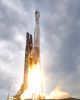
00-LRO-0001.jpgLiftoff...To the Moon!66 visitenessun commentoMareKromium
|
|

00-LRO-0002.jpgLiftoff...To the Moon!68 visitenessun commentoMareKromium
|
|

00-Libration-250px-Lunar_libration_with_phase2.gifThe "Lunation": such as a full "Lunar Cycle"74 visitenessun commentoMareKromium
|
|

00-Lunation.gifA full Lunar Cycle (Lunation)274 visiteDa "Astronomy: Picture of the Day", del 13 Novembre 2005:"Our Moon's appearance changes nightly. This time-lapse sequence shows what our Moon looks like during a lunation, such as a complete Lunar Cycle.
As the Moon orbits the Earth, the half illuminated by the Sun first becomes increasingly visible, then decreasingly visible. The Moon always keeps the same face toward the Earth and its apparent size changes slightly, though, and a slight wobble called "libration" is discernable as it progresses along its elliptical orbit.
During the cycle, sunlight reflects from the Moon at different angles and so illuminates different features differently. A full lunation takes about 29,5 days, such as just under a month (moon-th)".
|
|

00-M-FAGONE-GreenMars.jpgThe "True Colors" of Mars?789 visiteLun-Ex-It has decided to open a new Main Section of its "Library" which will be entirely dedicated to the Readers (we thought that some Works that were sent to us deserved some kind of recognition and...Here we are!).
We are not all Scientists so, please, do not expect any "graduated-like" Work here: this Section is just given to those who have something to 'Show&Tell', no matter what their "cv" might say: anybody can come to this (small) Tribune and speak-up (but nobody needs to scream, because Lunar Explorer's Friends are not deaf).
A small space for the Readers had already been created in the Deep Sky Section and, we must say, after a little more than a year, the stats show that the experiment was successful. Now therefore, after Writers&Poets, it is time to listen to what our Truth-Seeking Friends have to say about the Moon, Mars and the Universe.
So, if you are not scared of your own ideas and opinions being - let's say - "exposed", write us!
(in English or French; pictures are welcome)
|
|
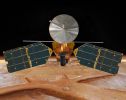
00-MRO-front-view_br~0.jpgHere is the "Mars Reconnaisance Orbiter"116 visiteThis artist's concept of the Mars Reconnaissance Orbiter features the spacecraft's main bus facing down, toward the red planet. The large silver circular feature above the spacecraft bus is the high-gain antenna, the spacecraft's main means of communicating with both Earth and other spacecraft. The long, thin pole behind the bus is the SHARAD antenna. Seeking liquid or frozen water, SHARAD will probe the subsurface using radar waves at a 15-25 MHz frequency band, "seeing" in the first few hundreds of feet (up to 1 kilometer) of Mars' crust. The large instrument (covered in black thermal blanketing) in the center is the HiRISE camera. This powerful camera will provide the highest-resolution images from orbit to date.
The other easily visible instruments are: the Electra telecommunications package which is the gold-colored instrument directly left of the HiRISE camera. It will act as a communications relay and navigation aid for Mars spacecraft. To the right of the HiRISE camera is the Context Imager (CTX).
|
|

00-The Moon from HST.jpg00 - The Moon through the "Eyes" of the Hubble Space Telescope112 visite
|
|

00-The Moon.jpgThe Moon81 visiteMoon Facts and Data
Mass (kg) = 7.349e+22
Mass (Earth = 1) = 1.2298e-02
Equatorial radius = 1.737,4 Km
Equatorial radius (Earth = 1) = 2.7241e-01
Mean density (gm/cm^3) = 3.34
Mean distance from Earth = 384.400 Km
Rotational period (days) = 27,32166
Orbital period (days) = 27,32166
Average length of lunar day (days) = 29,53059
Mean orbital velocity (km/sec) = 1,03
Tilt of axis = 1,5424°
Orbital inclination = 5,1454°
Equatorial surface gravity (m/sec^2) = 1,62
Equatorial escape velocity (km/sec) = 2,38
Magnitude (Vo) = -12,74
Mean surface temperature (day) = 107°C
Mean surface temperature (night) = -153°C
Maximum surface temperature = 123°C
Minimum surface temperature = -233°C
|
|
| 9356 immagini su 780 pagina(e) |
1 |
 |
|
|
|
|
|
|
|
|
|





