| Risultati della ricerca nelle immagini - "old" |

APOLLO 15 AS 15-2510.jpgAS 15-2510 - Humboldt Crater75 visiteThe crater Humboldt, on the east limb of the Moon, as seen from Earth, is 200 km across, a little larger than Tsiolkovsky. This view by the Apollo 15 mapping camera looks southward across Humboldt's ejecta blanket and into the crater. Irregular secondary craters partly covered by the ejecta are in the foreground and a long chain of secondaries extends from Humboldt's rim to the foreground. Humboldt is one of the largest craters known to have a prominent central peak. If the crater is like terrestrial impact structures, the peak may expose rock uplifted about 10% of the crater's width, on the order of 20 Km from beneath the crater floor. This would be an exciting find for future Astronauts. A spider web of cracks on the crater floor suggested to R. B. Baldwin (1968) that the floor was bowed up in the middle. Later, dark mare lavas flooded low areas in the outer part of the floor and covered the cracks. A peculiar "bull's eye" double crater on the crater floor has several counterparts elsewhere on the Moon. The origin of these double craters is a continuing puzzle.
|
|

APOLLO 15 AS 15-93-12653.jpgAS 15-93-12653 - Humboldt Crater149 visiteDa notare la fitta rete di crepacci (canali?) interni alla circonferenza di Humboldt: uno spettacolo della Natura, una configurazione superficiale davvero singolare ed un rompicapo per i sostenitori dell'ipotesi secondo cui la causa del 99,9% dei crateri visibili sulla Luna (Humboldt incluso) e sugli altri corpi planetari del Sistema Solare deve essere individuata in meccaniche da impatto.
Certo, la meccanica da impatto è intuitiva, semplice ed immediata ma, specie in ipotesi come questa, siamo realmente certi che la possiamo considerare definitiva ed esaustiva?
|
|

Craters-Holden_Crater-01.jpgThe beautiful "Holden Crater" (1)67 visitenessun commentoMareKromium
|
|

Craters-Holden_Crater-02.jpgThe beautiful "Holden Crater" (2)70 visitenessun commentoMareKromium
|
|

Craters-Holden_Crater-03.jpgThe beautiful "Holden Crater" (3)76 visitenessun commentoMareKromium
|
|

Craters-Holden_Crater-04.jpgThe beautiful "Holden Crater" (4)66 visitenessun commentoMareKromium
|
|
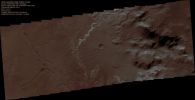
Craters-Holden_Crater-20091217a-PCF-LXTT1.jpgHolden Crater (Absolute Natural Colors; credits for the additional process. and color.: Dr Paolo C. Fienga - Lunexit Team)62 visitenessun commentoMareKromium
|
|

Craters-Holden_Crater-PCF-LXTT.jpgFeatures of Holden Crater (Absolute Natural Colors; credits for the additional process. and color.: Dr Paolo C. Fienga - Lunexit Team)153 visitenessun commentoMareKromium
|
|

Craters-Holden_Crater-PIA03694-1.jpgDeposits inside Holden Crater (1)63 visiteImage information: VIS instrument;
Latitude: -27,3° N;
Longitude: 324,5° E;
Resolution: 17 meter/pixel.
|
|

Craters-Holden_Crater-PIA03694-2.jpgDeposits inside Holden Crater (2)65 visitenessun commento
|
|

Craters-Holden_Crater-PIA14181-PCF-LX_TT.jpgOn the Rim of Holden Crater (Natural Colors; credits for the additional process. and color.: Dr Paolo C. Fienga - Lunexit Team)292 visiteOrbit Number: 41709
Latitude: 25,2309° South
Longitude: 324,993° East
Instrument: VIS
Captured: May, 10th, 2011MareKromium
|
|

Craters-Holden_Crater-TRA_000861_1530_RED_Holden_Delta_00.jpgThe beautiful Holden Crater64 visiteThis HiRISE image covers a portion of the floor of Holden Crater situated in southwest Margaritifer Terra. Holden crater has likely experienced extensive modification by running water, which is supported by observations of drainage and deposition into the crater from a large channel breaching Holden's rim and the alluvial fans that built out along the floor of the crater. The HiRISE sub-image shows relatively bright finely layered deposits that are capped by relatively darker materials. Unlike previous images, the HiRISE image shows that the thickness of some of the individual layers are on the order of a meter or even less in thickness and are laterally uniform and continuous over the extent of the imaged outcrop. Some of the layers in the outcrop display an orthogonal pattern or what may be fractures or joints. The "layer-cake" appearance of these layers suggests that they may have been deposited into a lake that once occupied the crater floor and have seen little in the way of deformation since that time. By contrast, the darker materials overlying the layers are younger and may have been sediments deposited off the nearby alluvial fans. Alternatively, they may represent wind-blown deposits lain down during a later much drier period similar to the conditions that currently exist at the surface today. In some locations, the darker materials have been stripped and expose the lighter finely layered sediments underneath, thereby implying the finely layered materials extend much farther than what is visible along the large outcrop.
|
|
| 40 immagini su 4 pagina(e) |
1 |
 |
|





