| Risultati della ricerca nelle immagini - "e)" |
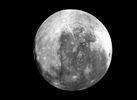
000-The Moon from Clem.JPG014 - Light-up the Moon!69 visiteMosaic of the near side of the Moon lit by Earthshine, as imaged by a Startracker camera on March 15, 1994.
The Southern Hemisphere is up.
The bright crater toward the top of the image is Tycho.
|
|

007-The Moon from Clem-Gagarin.JPG030 - Jules Verne Crater78 visiteThis oblique image was acquired by Clementine during orbit 255. The images used to form this color composite were taken with the UV/VIS camera at wavelengths of 415, 750, and 1000 nnmts. In the lower right are seen mare materials (flood lavas) in the floor of the impact crater Jules Verne. To the left, near the Limb of Gagarin, is another mare unit in the floor of Tsiolkovsky.
|
|

015-The Moon from Clem-FarSide-PIA00304.jpg002 - The Far-Side of the Moon89 visiteClementine Project Information
--------------------------------------------------------------------------------
Clementine was a joint project between the Strategic Defense Initiative Organization and NASA. The objective of the mission was to test sensors and spacecraft components under extended exposure to the space environment and to make scientific observations of the Moon and the near-Earth asteroid 1620 Geographos. The observations included imaging at various wavelengths including ultraviolet and infrared, laser ranging altimetry, and charged particle measurements. These observations were originally for the purposes of assessing the surface mineralogy of the Moon and Geographos, obtaining lunar altimetry from 60N to 60S latitude, and determining the size, shape, rotational characteristics, surface properties, and cratering statistics of Geographos.
Clementine was launched on 25 January 1994 at 16:34 UTC (12:34 PM EDT) from Vandenberg AFB aboard a Titan IIG rocket. After two Earth flybys, lunar insertion was achieved on February 21. Lunar mapping took place over approximately two months, in two parts. The first part consisted of a 5 hour elliptical polar orbit with a perilune of about 400 km at 28 degrees S latitude. After one month of mapping the orbit was rotated to a perilune of 29 degrees N latitude, where it remained for one more month. This allowed global imaging as well as altimetry coverage from 60 degrees S to 60 degrees N.
After leaving lunar orbit, a malfunction in one of the on-board computers on May 7 at 14:39 UTC (9:39 AM EST) caused a thruster to fire until it had used up all of its fuel, leaving the spacecraft spinning at about 80 RPM with no spin control. This made the planned continuation of the mission, a flyby of the near-Earth asteroid Geographos, impossible. The spacecraft remained in geocentric orbit and continued testing the spacecraft components until the end of mission.
More information on the Clementine mission, instruments, and early results can also be found in the Clementine special issue of Science magazine, Vol. 266, No. 5192, December 1994.
|
|

017-The Moon from Clem-NearSide-PIA00302.jpg003 - The Near-Side of the Moon79 visiteAbout 50.000 Clem images were processed to produce the 4 orthographic views of the Moon. Images PIA00302, PIA00303, PIA00304 and PIA00305 show albedo variations (normalized brightness or reflectivity) of the surface at a wavelength of 750 nm (just longward of visible red). The Lunar Near-Side is a contrast between dark and light albedo surfaces that has been fancied as the "Man in the Moon". Lunar terrain types are still designated by their 17th century name and that is:
1. Maria (dark albedo features also known as basins) and
2. Terra (brighter albedo features also known as uplands or highlands).
The Maria constitutes about 16% while the Terra 84% of the Lunar Surface. The nearside is composed of about 30 percent maria. Extensive bright ray systems surround craters Copernicus (upper left center) and Tycho (near bottom).
Studies have shown that two major processes, impact and basaltic volcanism have shaped the major physical features of the Lunar Surface.
|
|

2-Milky Way-Center.jpgThe "center" of the Milky Way169 visite"...Riusciamo a scrutare nel cuore della nostra Galassia, superando i veli di polveri e nebbia lasciati dai Creatori per nascondere il Sole Eterno alle nostre notti insonni.
Ci avviciniamo ai recessi di questo Universo ed intravediamo le luci che ne annunciano la fine e che, nel contempo, proclamano l'inizio del prossimo.
Con calma e con prudenza, lo sapete, possiamo anche intuire parte dei meccanismi che consentono alle stelle di bruciare lentamente e, quindi, di illuminare e definire la strada ai Viaggiatori, fornendo degli eterni punti di riferimento.
(...) Un giorno, forse, qualcuno vedrà la Notte illuminarsi ed annunciare l'Unione fra le Antiche Sorelle e, quando ciò accadrà, sarà un Segno sul quale non potranno più generarsi errori e malintesi.
Ma per giungere a vedere quel giorno dobbiamo passare attraverso la nostra pigrizia, ignoranza ed innata avidità e sarà quello, credetemi, il cammino più arduo. Molto più arduo del raggiungere i bordi del nostro Sistema e comprenderne lo scopo (...)".
P.C. Floegers - "In The Paradox"
|
|

APOLLO 11 AS 11-37-5437 HR-2.jpgAS 11-37-5437 - US Highway Number "ONE"360 visiteOriginal caption:"Crater Maskelyne (bottom right), Rima Hypatia (or "US Highway Number One") and Moltke (left of center), "Boot Hill" and "Duke Island" (bottom center)".
Nota: nella Cerchiatura Blu, un possibile TLP (il punto luminoso NON pare essere un photoartifact)
|
|

APOLLO 11 AS 11-37-5447.jpgAS 11-37-5447 - Undocking (5) - Moltke Crater191 visiteOriginal caption:"CSM Columbia and Crater Moltke.
This view also includes the Apollo 11 Landing Site, which is just above and to the left of Columbia".
|
|

APOLLO 15 AS 15-90-12299 HR-1.jpgAS 15-90-12299 - Delisle (HR)89 visitenessun commento
|
|

APOLLO 16 AS 16-131-20163 HR-2.jpgAS 16-131-20163 - The Moon (HR)106 visitenessun commento
|
|
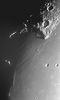
C-La Condamine Crater 00.jpgRays of light through "La Condamine Crater" (1)135 visiteNel novero dei cosiddetti TLP (ovvero Transient Lunar Phoenomena) ci sono anche - secondo alcune Scuole di Pensiero - i cosiddetti "Raggi di Luce" i quali, in situazioni di Sole radente (ovviamente con riferimento ai luoghi Lunari coinvolti ed a prescindersi dalla posizione dell'Osservatore Terrestre), si "intrufolano" - se ci passate questa espressione - attraverso i cracks delle murate (rims) di alcuni crateri e, nel farlo, disegnano inusuali - e temporanee, appunto - strisce di luce sul fondo dei crateri stessi.
Quello che Vi proponiamo in questa sequenza è (sembra essere) proprio uno di questi casi.
Per onestà intellettuale, però, pur proponendoVi questa sequenza e pur rispettando profondamente il lavoro dell'Astronomo Robert Spellman, noi riteniamo che questo tipo di fenomenologia, sebbene curiosamente interessante e suggestiva nelle visioni telescopiche della Luna, NON HA nulla a che spartire con la Famiglia Classica dei TLP.
|
|

Eartshine.JPG024 - Earthshine73 visiteThe Clementine Startracker acquired this image of the Moon glowing from the reflected light of the Earth.
|
|

Enceladus-N00030070.jpgEnceladus, from approx. 22.500 Km : a controversial "crack"84 visiteNon ci vogliono "occhi da geologo" o grandi esperienze nella classificazione dei rilievi superficiali dei corpi celesti esterni per capire che il crack che attraversa tutta l'immagine presenta della caratteristiche assolutamente peculiari ed anomale. Esso sembra avere inizio dal margine di un piccolo cratere da impatto (che vedete in basso, a ridosso del bordo inferiore del frame) e poi si prolunga per centinaia di Km, seguendo quasi una linea retta ed aumentando le proprie dimensioni per poi, improvvisamente, dopo aver costeggiato un grande cratere da impatto, dividersi in due cracks più piccoli e tortuosi (parte alta dell'immagine).
Si tratta di un crack "giovane", senza dubbio, e molto diverso da quelli che caratterizzano la maggior parte di questa piccola luna.
|
|
| 46 immagini su 4 pagina(e) |
1 |
 |
|





