| Risultati della ricerca nelle immagini - "colourful" |

ESP_023674_1590_RED_abrowse-PCF-LXTT-00.jpgColorful Central Peak in an Unnamed Crater (CTX Frame - Absolute Natural Colors; credits for the additional process. and color.: Dr Paolo C. Fienga - Lunexit Team)179 visiteMars Local Time: 14:11 (Early Afternoon)
Coord. (centered): 20,5° South Lat. and 306,4° East Long.
Spacecraft altitude: 259,1 Km (such as about 162,0 miles)
Original image scale range: 51,8 cm/pixel (with 2 x 2 binning) so objects ~ 1 mt and 56 cm across are resolved
Map projected scale: 50 cm/pixel
Map projection: EQUIRECTANGULAR
Emission Angle: 7,2°
Sun-Mars-Spacecraft (or "Phase") Angle: 41,5°
Solar Incidence Angle: 35° (meaning that the Sun is about 55° above the Local Horizon)
Solar Longitude: 345,0° (Northern Winter)
Credits: NASA/JPL/University of Arizona
Additional process. and coloring: Dr Paolo C. Fienga - Lunar Explorer ItaliaMareKromium
|
|

ESP_023674_1590_RED_abrowse-PCF-LXTT-01.jpgColorful Central Peak in an Unnamed Crater (EDM - Absolute Natural Colors; credits for the additional process. and color.: Dr Paolo C. Fienga - Lunexit Team)227 visiteMars Local Time: 14:11 (Early Afternoon)
Coord. (centered): 20,5° South Lat. and 306,4° East Long.
Spacecraft altitude: 259,1 Km (such as about 162,0 miles)
Original image scale range: 51,8 cm/pixel (with 2 x 2 binning) so objects ~ 1 mt and 56 cm across are resolved
Map projected scale: 50 cm/pixel
Map projection: EQUIRECTANGULAR
Emission Angle: 7,2°
Sun-Mars-Spacecraft (or "Phase") Angle: 41,5°
Solar Incidence Angle: 35° (meaning that the Sun is about 55° above the Local Horizon)
Solar Longitude: 345,0° (Northern Winter)
Credits: NASA/JPL/University of Arizona
Additional process. and coloring: Dr Paolo C. Fienga - Lunar Explorer ItaliaMareKromium
|
|

OPP-SOL1821-GB-LXT.jpgDeep Rover Tracks, Colourful Sands - Sol 1821 (possible True Colors; credits: Dr G. Barca & Lunar Explorer Italia)100 visitenessun commentoMareKromium
|
|

OPP-SOL1845-GB-LXT.jpgThe unbelievable True Colors of Meridiani's Surface - Sol 1845 (possible True Colors; credits: Dr G. Barca)63 visitenessun commentoMareKromium
|
|

OPP-SOL1968-GB~0.jpgTracks in the Desert - Sol 1968 (Possible True Colors; credits: Dr G. Barca)112 visitenessun commentoMareKromium
|
|

OPP-SOL2043-GB.jpgRover Tracks, Pebbles and Colourful Sand - Sol 2043 (Natural Colors; credits: Dr G. Barca)63 visitenessun commentoMareKromium
|
|

OPP-SOL2296-GB-LXTT.jpgThe (many) Colors of Meridiani Planum - Sol 2296 (Natural Colors; credits for the additional process. and color.: Dr Gianluigi Barca - Lunexit Team)69 visitenessun commentoMareKromium
|
|

OPP-SOL2927-2928-MF-EB-LXTT-IPF.jpgThe Surface of Meridiani Planum - Sol 2927 AND 2928 (Enhanced Natural Colors; credits for the additional process. and color.: Elisabetta Bonora and Marco Faccin - Lunexit Team)130 visitenessun commentoMareKromium
|
|
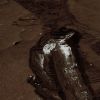
SOL1103-GB-LXT.jpgSalts inside the Rover Tracks - Sol 1103 (Natural Colors; credits: Dr G. Barca & Lunar Explorer Italia)65 visitenessun commentoMareKromium
|
|
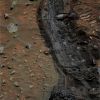
SOL1137-GB-LXT.jpgColourful Surface with Dark Rover Track - Sol 1137 (Natural Colors; credits: Dr G. Barca & Lunar Explorer Italia)64 visitenessun commentoMareKromium
|
|
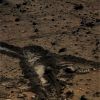
SOL1137-GB.jpgDeep Rover Tracks - Sol 1137 (possible True Colors; credits: Dr G. Barca)64 visitenessun commentoMareKromium
|
|
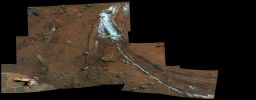
SOL1202-PIA11756.jpgRover’s Wheel churns-up bright Martian Soil - Sol 1202 (False Colors; credits: NASA/JPL-Caltech/Cornell)69 visiteCaption NASA:"NASA’s Mars Exploration Rover Spirit acquired this mosaic on the mission’s 1202nd Martian Day, or Sol (such as May 21, 2007), while investigating the area East of the elevated plateau known as “Home Plate” in the “Columbia Hills”.
The mosaic shows an area of disturbed soil, nicknamed “Gertrude Weise” by scientists, made by Spirit's stuck right Front Wheel.
The trench exposed a patch of nearly pure silica, with the composition of opal. It could have come from either a hot-spring environment or an environment called a fumarole, in which acidic, volcanic steam rises through cracks. Either way, its formation involved water, and on Earth, both of these types of settings teem with microbial life.
The image is presented here in false color that is used to bring out subtle differences in color".MareKromium
|
|
| 42 immagini su 4 pagina(e) |
1 |
 |
|








