| Risultati della ricerca nelle immagini - "as" |
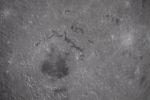
0017-The_Orientale_Basin.jpgThe Orientale Basin92 visiteart002e012090 (April 6, 2026) - In this view of the Moon, the Artemis II crew captured an intricate snapshot of the rings of the Orientale Basin, one of the Moon’s youngest and best-preserved large Impact Craters on his first shift during the Lunar Fly-By observation period.MareKromium
|
|
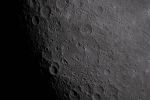
0018-Hertzprung_Basin_Rim.jpgVavilov Crater Along the Hertzsprung Basin Rim85 visiteart002e012093 (April 6, 2026) - Hertzsprung Basin comes into view with its distinctive two concentric rings of mountains, revealing the scale of this ancient impact structure.
Near the lower left, Vavilov crater — identified by its Central Peak — stands out, a feature often described by the Artemis II crew during their Lunar Fly-by.MareKromium
|
|

019-The Moon from Clem-EastLimb-PIA00303.jpg005 - The eastern limb of the Moon: Mare Smythii, Mare Marginis, Mare Crisium and Mare Fecunditatis67 visiteThe dark albedo features Mare Smythii (image center) and Mare Marginis (above Smythii) are just visible from Earth on the extreme eastern edge of the Lunar Near-Side. Mare Crisium (West of Marginis) and Mare Fecunditatis (SouthWest of Crisium) are familiar Near-Side features as seen from Earth.
Maria Regions are believed to be large basins formed by impacts from cosmic projectiles later filled by basaltic lava flows from volcanic eruptions. Basaltic lava flows on the basin floors give maria their dark albedo appearance.
|
|

023-The Moon from Clem-SchroendingerBasin.jpg045 - Schroedinger Basin (detail mgnf)66 visiteDetail from the UV-VIS Clementine Camera of the floor of the basin Schrodinger, showing the coverage (inset strip) of the HR camera for comparison. The Dark Halo Crater (center at 76° South Lat. and 139° East Long.; 5 Km across) is a volcanic vent that erupted ash during the period of mare volcanism on the Moon, more than 3,5 BY ago.
|
|

029-The Moon from Clem-OrientaleBasin.jpg070 - The "Orientale" basin70 visiteMosaic of more than 2000 Clementine (750-nanometers) images, showing the Orientale Basin of the Moon at full resolution of about 250 mt per pixel. The Orientale Basin is about 930 Km in diameter and is only partly filled by dark, mare lava.
The relative paucity of mare basalt fill, coupled with the young age and topographic freshness of the basin, makes this feature the archetypal lunar multiring basin.
|
|

039-vg1_3493040.jpgMimas (Herschel Crater) and other controversial features60 visiteIncommentabile...
|
|

040-vg1_3493350.jpgMimas' Miscellanea of Misteries75 visitenessun commento
|
|

14-De Gasparis Crater.jpgDe Gasparis Crater92 visiteDe Gasparis is a small to medium sized crater 30 Km in diamater located on the western flank of Mare Humorum. The rim of the crater is worn and eroded. The interior has, at some point, been flooded by lava and sits around 0,8 Km below the surrounding surface. The crater is intersected by a number of rimae including, running from top-left to lower-right of the crater, a part of the 93 Km long Rimae De Gasparis.
Due to the consistent depth of the rimae it evidently formed after the crater and is possibly associated with the tectonic activity which saw the infilling of the crater.
The crater is named after the Italian Astronomer Annibale de Gasparis (1819-1892, director of the observatory in Naples, Italy and discoverer of 9 asteroids). Along with the crater and rimae, asteroid 4279 is also named in his honour.
The image represents raw data and no flat field or other corrections have been applied.
|
|

15-U-Tobias.jpgTobias Mayer Crater, from Lunar Orbiter 5 (3D)101 visiteOriginal caption:"Stereoscopic view of an area sw of the Crater Tobias Mayer in Oceanus Procellarum. The highland ridge in the middle portion of the anaglyph is about 35 Km long and 2 Km high. A smooth mare dome abuts the western flank of the ridge. The dome is about 20 Km in diameter and exhibits an elongate summit crater, about 5 Km long.
A sinuous rille meanders across the lower part of the photograph, detouring around the base of the dome. Note the presence of several crater chains in the lower half and a large highland mass at upper left".
|
|

31-Gassendi.jpgGassendi Crater84 visiteCaption ESA originale:"This mosaic of 2 images, taken by the advanced Moon Imaging Experiment (AMIE) on board ESA's SMART-1 spacecraft, shows the inside of crater Gassendi. AMIE obtained these images on 13 January 2006, 1' apart from each other, from a distance of about 1220 Km(top frame) and 1196 Km (bottom frame) from the surface, with a ground resolution of 110 and 108 mt per pixel, respectively.
The area shown in the top image is centred at a Latitude of 16,2º South and Longitude 40,2º West, while the bottom images is centred at a Latitude of 17,9º South and Longitude 40,2º West.
Gassendi is an impact feature located on the Near Side of the Moon, at the Northern Edge of Mare Humorum. The crater is actually much larger than the field of view visible in this image. The hills on the lower right of the mosaic are the central peak of the crater, with a height of roughly 1,2 Km. The crater almost fully visible on the top is called Gassendi A".
|
|

A-NTM03.jpgJust like Earth...294 visiteNoi non sappiamo chi sia Don Edwards, l'Autore di questa spettacolare Galleria di Fantasia Marziana, laddove il Pianeta Rosso diventa, con grande realismo e cura dei dettagli, un Mondo di Foreste e d'Acqua; una cosa è certa, tuttavia: un Lavoro come quello di Don, merita rispetto e visibilità e noi riteniamo giusto attribuirgli un "minimo" di fama anche qui, in Italia, inserendo la Sua Collezione di "Fantasie Marziane" in una Sezione creata ad hoc.
Buon Viaggio, quindi...
|
|

AA-Jupiter-PIA02666_modest.jpgJupiter from Cassini-Huygens144 visiteJupiter Data and Statistics
Mass (kg) = 1.900e+27
Mass (Earth = 1) = 3,1794e+02
Equatorial radius = 71.492 Km
Equatorial radius (Earth = 1) = 1,1209e+01
Mean density (gm/cm^3) = 1,33
Mean distance from the Sun = 778.330.000 Km
Mean distance from the Sun (Earth = 1) = 5,2028
Rotational period (days) = 0,41354
Orbital period (days) = 4332,71
Mean orbital velocity = 13,07 Km per second
Tilt of axis = 3,13°
Orbital inclination = 1,308°
Equatorial surface gravity (m/sec^2) = 22,88
Equatorial escape velocity = 59,56 Km per second
Magnitude (Vo) = - 2,70
Mean cloud temperature = - 121°C
Atmospheric pressure (bars) = 0,7
Atmospheric composition: Hydrogen 90%; Helium 10%
|
|
| 1275 immagini su 107 pagina(e) |
1 |
 |
|
|
|
|
|
|
|
|
|





