| Risultati della ricerca nelle immagini - "Volcanic" |

Aeolian_Features-Yardangs-20080111a.jpgAshes and Sulphur all over Apollinaris Patera (Extremely Enhanced Natural Colors; credits for the additional process. and color.: Dr Paolo C. Fienga - Lunexit Team) 160 visiteSe, per questo frame, la NASA sottolinea, per altro giustamente, l'aspetto legato ai "segni del vento" lasciati nei pressi dell'antico vulcano noto come Apollinaris Patera, noi preferiamo enfatizzare il "senso" di questa colorizzazione (forse un pò psichedelica, ma non fantasiosa).
Ricordate le istantanee Apollo 17 che ritraevano, nei pressi del Cratere noto come "Shorty", delle sabbie e detriti arancio/rossastri e che tanto stupirono la Comunità Scientifica? Ebbene, quel "bizzarro" colore della superficie lunare era solo l'evidenza di una remota attività vulcanica o di un, forse più recente, outgassing. Qualunque fosse l'origine del fenomeno, tuttavia, la sua causa venne chiarita attraverso l'analisi dei campioni riportati a Terra.
Per ricordare:"...On Earth, orange or rust-colored rocks and soil around volcanic vents are often the result of literal rusting of iron by volcanic water vapor. If this was the cause of the orange soil at Shorty then, small amounts of volcanic gasses might still be present (on the Moon)...".
Ed anche su Marte, ovviamente. Le "parole magiche", poi (e soprattutto per Marte), sono "ruggine causata da vapore acqueo". Ora la domanda è ovvia: perchè continuare a soffermarsi sulla tracce di "Aeolian Activities" quando c'è qualcosa - a nostro parere - di molto più intrigante da indagare?
Qualcosa che se, sulla Luna, poteva avere senso solo se riferita ad un remoto passato, su Marte potrebbe significare moltissimo in proiezione attuale e futura? Pensateci bene: il fenomeno del "rusting" (e quindi dei colori rosso/arancio accesi, sia sulla Luna, sia sulla Terra e sia su Marte o altrove nel Sistema Solare) si risolve nell'ossidazione di elementi ferrosi (iron-based and iron-rich elements) a causa della presenza di acqua (in qualche forma).
Perchè quindi ignorare il vapore acqueo (con la possibile "cappa di umidità" in perenne sospensione, come sostiene l'Amico Matteo Fagone) e parlare solo di "venti", di "yardangs", di "layers" e di tante altre cose certamente importanti e meravigliose, ma mai tanto importanti e meravigliose quanto l'eventuale - ed attuale - presenza di acqua sul Pianeta "Arrugginito"?
Ecco: alla fine, ben più di Cydonia e dei possibili "Artifacts Marziani", è questo il VERO "mistero"...MareKromium
|
|

Cerberus_Fossae-PIA15474-PCF-LXTT.jpgFeatures of Cerberus Fossae (Absolute Natural Colors; credits for the additional process. and color.: Dr Paolo C. Fienga - Lunexit Team)113 visiteOrbit Number: 45159
Latitude: 9,351° North
Longitude: 159,905° East
Instrument: VIS
Captured: February, 18th, 2012
Mars Local Solar Time: 15:48 (Middle Afternoon)MareKromium
|
|

Claritas_Fossae-1-029-290304-0068-6-co-02.jpgClaritas Fossae (1 - ESA/ DLR/ FU Berlin - G. Neukum)72 visiteCaption ESA originale:"These Mars Express images show Claritas Fossae, an ancient tectonic region on Mars, west of Solis Planum, a tectonic and volcanic area south-east of the Tharsis volcano group.
The images were taken by the High-Resolution Stereo Camera (HRSC) on Mars in orbit 68 from an altitude of 271 Km. The images are centred at 255,7° East and 30,9° North. North is on the left".
|
|

Claritas_Fossae-2-029-290304-0068-6-co-02.jpgClaritas Fossae (2 - ESA/ DLR/ FU Berlin - G. Neukum)61 visitevedi il commento al frame che precede
|
|

Claritas_Fossae-3-096-140904-0508-6-co-01-ClaritasFossae_hires.jpgClaritas Fossae (3 - ESA/ DLR/ FU Berlin - G. Neukum)65 visiteCaption ESA originale:"The displayed region is the eastern part of Claritas Fossae and the western part of Solis Planum at longitude 260° East and latitude of about 28° South.
The diffuse blue-white streaks in the northern parts of the scene (Sx di chi guarda) are clouds or aerosols. The Claritas Fossae (‘fossa’ is Latin for trough----->canale) region is characterised by systems of ‘grabens’ running mainly north-west to south-east. These can be traced several hundred kilometres up to the northern Tharsis shield volcanoes.
A "graben" forms when a block of the planet’s crust drops down between 2 faults, due to extension, or pulling, of the crust. A ‘horst and graben’ system can occur where there are several parallel faults.
Geographically, the grabens separate the eastern volcanic plains of the Solis Planum region from the western Daedalia Planum lava plains.
|
|

Claritas_Fossae-4-096-140904-0508-6-co-01-ClaritasFossae_hires.jpgClaritas Fossae (4 - ESA/ DLR/ FU Berlin - G. Neukum)60 visiteCaption ESA originale:"The lava blankets of the Solis Planum area cover the eastern parts of the older Claritas Fossae ridge and surround some of the higher ground. The geological history of this region can be reconstructed by analysing the layers of tectonic grabens, impact craters, volcanic features and even small valley networks. The complexity of Claritas Fossae Region suggests that some of the events took place at the same time. Furthermore, the detailed view of the large southern impact crater shows patches of dark material which are located near the central and marginal parts of the impact crater floor. This material may be of volcanic origin".
|
|

Claritas_Fossae-5-098-140904-0508-6-3d-01-ClaritasFossae_hires.jpgClaritas Fossae (5 - ESA/ DLR/ FU Berlin - G. Neukum)76 visitenessun commento
|
|
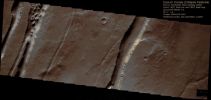
Collapse_Features-Elysium_Fossae-20080422a-PCF-LXTT.jpgChannels in Elysium Fossae (Absolute Natural Colors; additional process.: Dr Paolo C. Fienga - Lunexit Team)64 visitenessun commentoMareKromium
|
|
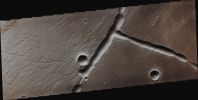
Collapse_Features-Sacra_Fossae-PIA15250-PCF-LXTT.jpgSacra Fossae (Absolute Natural Colors; credits for the additional process. and color.: Dr Paolo C. Fienga - Lunexit Team)228 visiteOrbit Number: 44393
Latitude: 23,941° North
Longitude: 290,183° East
Instrument: VIS
Captured: December, 17th, 2011
Mars Local Solar Time: 14:32 (Early Afternoon)MareKromium
|
|

Daedalia_Planum-PIA14154-PCF-LXTT.jpgFeatures of Daedalia Planum (Natural Colors; credits: Dr Paolo C. Fienga - Lunexit Team)314 visitenessun commentoMareKromium
|
|

ESP_011930_1875_RED_abrowse.jpgLong Fissure in Cerberus Fossae (Natural Colors; credits: Lunar Explorer Italia)57 visitenessun commentoMareKromium
|
|

ESP_014111_1130_RED_abrowse.jpgPityhusa Patera Caldera (Natural Colors; credits: Lunexit)60 visitenessun commentoMareKromium
|
|
| 206 immagini su 18 pagina(e) |
1 |
 |
|
|
|
|
|
|
|
|
|





