| Risultati della ricerca nelle immagini - "Transient" |

OPP-SOL1157-1R230899564EFF815WP1301R0M1-00.jpgPossible "Transient Event" on Mars (1) - extra detail mgnf (Sol 1157)67 visiteUna svista? Un dettaglio irrilevante? O forse la "cristallizzazione" in un frame from Mars di un reale Evento Transitorio?
Innanzitutto, congratulazioni e complimenti al Dr Gianluigi Barca per la possibile scoperta e, comunque, per l'occhio dimostrato! Per il resto...andiamo a vedere il detail mgnf...MareKromium
|
|

OPP-SOL1157-1R230899564EFF815WP1301R0M1-01.jpgPossible "Transient Event" on Mars (2) - extra detail mgnf (Sol 1157)63 visiteDettaglio della possibile scoperta del Dr Gianluigi Barca: a nostro parere, dopo aver effettuato una serie di 14 comparazioni visuali di questo dettaglio con altri 13 eventi anomali e, da un punto di vista meramente "visivo", simili all'evento che ora stiamo osservando in questo frame, potremmo effettivamente essere davanti ad un TMP (Transient Martian Phoenomenon): un Fenomeno Transitorio Marziano.
Nella specie, le caratteristiche dello "sbuffo" (alquanto simile ad una colonna di polvere sottile o di fumo/vapore) ci portano a ritenere che potrebbe trattarsi di:
1) una estrusione di vapori/fumi (ma, in tutta onestà, questa zona di Marte non ci sembra proprio che presenti elementi i quali supportino un'ipotesi relativa a possibili fenomeni vulcanici);
2) una estrusione di acqua (fortemente plausibile: gli elementi di supporto a questa teoria costituiranno oggetto di un articolo di prossima pubblicazione su TruePlanets);
3) un micro-impatto primario (il quale determina la creazione di quei bizzarri "mini-impact crater" che abbiamo già incontrato innumerevoli volte sulla via di Victoria e che la NASA, dopo averli "notati", si è sempre ben guardata dal provare a spiegarli);
4) un micro-impatto secondario (ipotesi razionale e plausibile, da un punto di vista meramente logico, ma...quante possibilità ci sono che un bolide si schianti nei pressi di Opportunity e quindi l'impatto di un ejecta di modestissime dimensioni venga poi registrato visivamente dal Rover?...);
5) un image-artifact "nuovo".
Questi sono gli elementi e le possibili ipotesi esplicative: complimenti di cuore al Dr Barca e, per quanto attiene la soluzione del mistero...aspettiamo le Vostre ipotesi!MareKromium
|
|
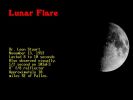
ZZ-ZZ-U-Flare.jpgTransient Lunar Phoenomena (TLP) - 1189 visiteDietro l'acronimo TLP (linguaggio internazionale per "Transient Lunar Phoenomena") o FLT (per "Fenomeni Lunari Transitori") si nasconde, forse, uno dei più grandi - e vicini! - "misteri" ai quali la Scienza Convenzionale ancora NON è riuscita a dare una risposta convincente, sebbene la fenomenologia in oggetto le fosse nota sin dall'Antichità. Ma che cosa sono i TLP?
Sono "Eventi Estemporanei", imprevisti ed imprevedibili, i quali si risolvono - nella maggior parte dei casi - in "brillamenti" (che possono manifestarsi in forma di "sparks"--> scintille o "flares"--> fiammate o fiaccole) della superficie lunare. Si tratta di luci (di colore bianco, rossastro o azzurro, per lo più) che si accendono sulla superficie della Luna e che sono così brillanti da risultare visibili anche dalla Terra e SENZA l'ausilio di particolari strumenti. Questi TLP, come avremo occasione di vedere, si manifestano in alcune zone in particolare (i.a. i Crateri Aristarco ed Alfonso) e sono stati osservati da Astronomi ed Astronauti.
|
|

ZZ-ZZ-V-Flare from Clem.jpgTransient Lunar Phoenomena (TLP) - 2183 visiteEccoVi due testimonianze (decisamente autorevoli) riguardo a questi strani fenomeni, estratte dall'articolo 'LTP-Lunar Transient Phoenomena' di W.S. Cameron:"On the night of November 2, 1958, Soviet astronomer Nikolai A. Kozyrev witnessed a strange phenomenon while making spectrograms of the crater Alphonsus with the Crimean Astrophysical Observatory's 50-inch reflector. As he watched through the telescope's guiding eyepiece, he saw the crater's central peak blur and turn an unusual reddish color. The spectrograms confirmed his visual impressions of a volcanic event; they showed an emission spectrum of carbon vapor (S&T: February, 1959, page 184).
On July 19, 1969, the Apollo 11 command module had just achieved orbit around the Moon when the Mission Control Center in Houston received word that amateur astronomers reported a TLP in the vicinity of the crater Aristarchus. Asked to check out the situation, astronaut Neil Armstrong looked out his window toward the earthlit region and observed an "area that is considerably more illuminated than the surrounding area. It just has -- seems to have a slight amount of fluorescence to it." Although he wasn't sure, Armstrong believed the region was Aristarchus".
|
|

ZZ-ZZ-Z-Flare from Clem.jpgTransient Lunar Phoenomena (TLP) - 3354 visiteNonostante queste 2 (ma ne esistono migliaia!) testimonianze, i TLP sono rimasti una grande incognita. Per un valido studio sulla materia - che qui non ci è possibile affrontare compiutamente per ragioni di spazio - Vi rimandiamo al Sito "Lunar Anomalies Homepage" del Collega Mike Bara (www.lunaranomalies.com) ed alla relativa Sezione dedicata ai TLP. Noi pubblicheremo qualsiasi immagine ci pervenga e che riguardi questi fenomeni e, ogni volta, cercheremo di spendere qualche parola per spiegare le possibili cause di un simile evento, dalle più ovvie ("outgassing" e "meteor strikes") alle più "esotiche" (eruzioni vulcaniche, cupole di cristallo che brillano ai raggi del Sole, esperimenti nucleari Top Secret ed UFO activity).
Nota: negli ultimi 2 frames un (presunto) TLP ripreso dalla Sonda Clementine (immagine originale e detail mgnf). Certo è che, con tutte le evidenze che abbiamo, il fatto che la natura (genuina) di un simile fenomeno continui ad essere messa in dubbio ci lascia davvero perplessi (sic!)...
|
|

ZZ-ZZ-ZZ-FM-TLP-Proclus-Lunar Flash.jpgLunar "Flash" near the Terminator146 visite"Among the most enigmatic astronomical occurences are Lunar Transient Phenomena, instances of areas on the Moon appearing to brighten, darken, or change color on a time-scale of minutes. The very existence of LTP's is controversial, though they have been reported for 2 centuries (S&T: November, 1988, page 478).
Now a most remarkable one seems to have been photographed. On May 23, 1985, G. Kolovos (University of Thessaloniki) was testing a 4 1/4-inch refractor by taking pictures of the four-day-old Moon from a small village in Northern Greece. One of his seven photographs revealed a bright dot near the Moon's Terminator.
Kovolos and colleagues from the university closely analyzed the image of the dot, near the crater Proclus "C".
They write in the December, 1988 "Icarus", that the oval spot is 22 Km across and seems to conform to the local topography. What could causee such a bright flash on the Moon? The authors consider and dismiss several possibilities. Kodak Laboratories in Athens examined the film and concluded that the spot was not a film defect. It was not a surface reflection, because the illumination pattern implies that the flash occurred ABOVE the lunar surface. A volcanic eruption would have left an obscuring cloud on subsequent photos. So would a meteor impact.
Kovolos and co-workers hazard a guess that the intense heating of the lunar surface after sunrise might force cracks open, allowing trapped gas to escape. As the gas rises and expands, an electrical discharge could conceivably make it glow brightly. Many LTP sightings do occur near the lunar terminator within a day of sunrise. The researchers warn that their theory is far from being an explanation for all LTP's. "We present our results with caution," they write, "and we hope that additional data may lead to their indisputable explanation."
|
|

ZZ-ZZ-ZZ-FM-TLP.gifTLP or illuminated "peaks" (again)?144 visiteObserver Joshua Try located in Whangarei, New Zealand reported that on 25-09-2001 at 8:30 U.T. he observed two possible L.T.Ps. on the edge of the terminator near the crater Archimedes. They appeared to be 2 bright points of light about the size of Mount Piton. They seem to form a triangle with Mount Piton. He observed them for 2 hours and they were still visible when he ended his observing session.
I had the opportunity to conduct some video tapping of the Moon on 22 January 2002 at 00 hr 18 min U.T. and was able to capture the Moon under similar lighting conditions. The image was taken with SCT C8 using 25mm eyepiece in projections. This image was taken when the Moon was 8.4 days old and the colongitude was 8.92. It may be that since the locations are very close that what Joshua saw was the tops of the mountain peaks just catching the sunlight. My image which is one lunar day later shows the mountains fully illuminated. I have had several reports in the past years that have reported these features as possible L.T.P. It can be very impressive and striking when one first sees these feature just catching the sunlight. It is my opinion that what the observer witness was peaks of these two mountains deep past the sunrise terminator.
|
|

ZZ-ZZ-ZZ-Flare_from_Italy-TLP-1.jpgA "Flare on the Lunar limb" from Italy (1) - (Credits: Dr Paolo C. Fienga/LXTT/IPF)13305 visiteEra il 14 Aprile 1997 quando, durante una sessione di riprese fotografiche della spettacolare cometa "Hale-Bopp", il Dr Paolo C. Fienga decise di gettare un'occhiata alla Luna.
Usando un semplice tele-obiettivo non gli fu difficile notare, proprio sul bordo della Luna - ma nella sua zona in ombra - un insistente scintillio il quale si protrasse - a detta dell'Osservatore - per oltre 2 ore, sebbene con luminosità ed intensità via via decrescenti. Di che cosa si trattava? Secondo il Dr Fienga - il quale utilizzò per l'osservazione del fenomeno un telescopio riflettore "Celestron-8" - sul bordo della Luna "...si era accesa una luce di colore bianco e rosso..." la quale assomigliava "...ad una piccola stella, come la si vedrebbe al telescopio..".
Questa luce, ora più viva e brillante, ora meno, rimase visibile fra le 21 e le 23 CET, poi scomparve. TLP? Meteor Strike? UFO? Si trattò, in effetti, di un fenomeno davvero inusuale il quale trovò svariate spiegazioni ed interpretazioni. Vediamole...
|
|

ZZ-ZZ-ZZ-Flare_from_Italy-TLP-2.jpgA "Flare on the Lunar limb" from Italy - detail mgnf (2) - (Credits: Dr Paolo C. Fienga/LXTT/IPF)14549 visiteIl Dr David O. Darling ritenne plausibile l'ipotesi per cui si fosse trattato del "picco illuminato del Monte Leibnitz", colpito solo sulla sua sommità dai raggi del Sole radente.
Una buona idea, ma destinata a cadere non solo sulla base della stessa testimonianza del Dr Fienga, ma anche a seguito dell'esame di questo detail mgnf del frame originale operato a cura del Dr J.J. Mercieca (MUFOR). Difficile pensare che un "picco illuminato" produca un simile "getto di luce" e, forse, di materiale.
Meteor Strike? E' possibile, ma la durata del fenomeno (circa 2 ore!) ci lascia davvero perplessi. Poteva dunque essere il riflesso di una Cupola di Cristallo illuminata dal Sole (R. Hoagland)? Idea "esotica" e totalmente insostanziabile. Allora un "outgassing"? Questa è l'ipotesi (assieme al fenomeno vulcanico) che, ad oggi, ci sembra - tutto sommato - più verosimile.
Ma la verità è che, probabilmente, non sapremo mai che cosa accadde davvero sul bordo della Luna durante quella fredda notte di Aprile del 1997...
|
|

as08-14-2390.jpgAS 08-14-2390 - Earthrise and possible "Transient"63 visiteImage Collection: 70mm Hasselblad
Mission: 8
Magazine: 14
Magazine Letter: B
Latitude: approx. 13,0° South
Longitude: approx. 105,0° East
Lens Focal Length: 80 mm
Film Type: SO-368
Film Width: 70 mm
Film Color: color
Feature(s): HUMBOLDT, NORTHEAST OFMareKromium
|
|
|
|
| 10 immagini su 1 pagina(e) |
|








