| Risultati della ricerca nelle immagini - "Telesto" |

Epimetheus_and_Telesto-N00152425-26-EB.jpgEpimetheus and Telesto (an Image-Mosaic by Elisabetta Bonora - Lunexit Team)58 visitenessun commentoMareKromium
|
|

Rhea_and_Telesto-N00152419-22-EB.jpgRhea and Telesto (an Image-Mosaic by Elisabetta Bonora - Lunexit Team)55 visitenessun commentoMareKromium
|
|
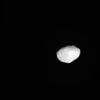
Telesto-N00041270.jpgTelesto87 visiteOriginal caption:"N00041270.jpg was taken on October 11, 2005 and received on Earth October 12, 2005. The camera was pointing toward TELESTO at approx. 19.676 Km away; this image was taken using the CL1 and CL2 filters. This image has not been validated or calibrated
|
|

Telesto-N00041282.jpgTelesto56 visiteOriginal caption:"N00041282.jpg was taken on October 11, 2005 and received on Earth October 12, 2005. The camera was pointing toward TELESTO at approx. 15.409 Km away; this image was taken using the P0 and GRN filters. This image has not been validated or calibrated".
|
|

Telesto-N00041291.jpgTelesto54 visiteOriginal caption:"N00041291.jpg was taken on October 11, 2005 and received on Earth October 12, 2005. The camera was pointing toward TELESTO at approximately 12,230 kilometers away, and the image was taken using the CL1 and CL2 filters. This image has not been validated or calibrated".
Nota: ricordate il discusso Fly-By di Hyperion durante il quale questa piccola luna rimaneva completamente immobile durante l'avvicinamento di Cassini (vedi "Hyperion", di A. Feltri e P. C. Fienga su NEXUS)? Notate ora come Telesto, invece, cambi VISIBILMENTE posizione tra un frame e l'altro. Sarà perchè Telesto ruota su sè stesso molto più rapidamente di Hyperion o forse perchè Cassini ha diminuito la sua velocità di crociera?
O magari perchè queste immagini sono genuine e quelle del Fly-By di Hyperion non lo erano?...
Voi che dite?
|
|

Telesto-N00041294.jpgTelesto56 visiteOriginal caption:"N00041294.jpg was taken on October 11, 2005 and received on Earth October 12, 2005. The camera was pointing toward TELESTO, at approx. 11.408 Km away; the image was taken using the CL1 and CL2 filters. This image has not been validated or calibrated".
|
|

Telesto-N00047270.jpgTelesto54 visiteOriginal caption:"N00047270.jpg was taken on December 25, 2005 and received on Earth December 26, 2005. The camera was pointing toward TELESTO that, at the time, was approximately 20.919 kilometers away, and the image was taken using the CL1 and UV3 filters".
|
|

Telesto-N00047273.jpgTelesto57 visiteOriginal caption:"N00047273.jpg was taken on December 25, 2005 and received on Earth December 26, 2005. The camera was pointing toward TELESTO that, at the time, was approximately 21.404 kilometers away, and the image was taken using the CL1 and CL2 filters".
Nota: secondo Voi è il movimento della Sonda rispetto a Cassini che ha determinato il repentino cambio di posizione di Telesto in questi due frames, oppure Telesto è un'altra - vera, questa volta! - "Tumbling Moon" (al pari - presunto - di Hyperion)?!?
|
|

Telesto-PIA07586.jpgTelesto66 visiteCaption originale:"The blob of light seen here is Saturn's moon Telesto, which shares its orbital path with much larger Tethys. Telesto is 24 Km across.
Although this view may hint at a flattened, potato-like shape for Telesto (a common shape for Saturn's smaller moons), no features on the moon's surface can be resolved here.
The image was taken in visible green light with the Cassini spacecraft narrow-angle camera on Aug. 1, 2005, at a distance of approximately 768.000 Km from Telesto and at a Sun-Telesto-spacecraft angle of 37°. Resolution in the original image was 5 Km per pixel. The image has been contrast-enhanced and magnified by a factor of 4 to aid visibility".
|
|

Telesto-PIA07696-PCF-LXTT-IPF.jpgTelesto (Absolute Natural Colors; credits for the additional process. and color.: Dr Paolo C. Fienga - Lunar Explorer Italia/Italian Planetary Foundation) 80 visiteThis view - obtained by the NASA - CASSINI Spacecraft - shows us a few interesting Surface Features (mostly old Impact Craters and Mountains) as well as fine color variations that are found on the Trojan Saturnian moon Telesto. The smooth Surface of this moon suggests that, like Pandora, even Telesto is covered by a mantle of fine, dust-sized Icy Material. The origin of the color differences is not yet understood, but it may reasonably be caused by extremely subtle variations in the Mineralogical Composition of its Surface, or by the (extremely small) size of the Dusty Grains which make up the Icy Soil. Tiny Telesto is a Celestial Body that is approx. 24 Km (such as about 15 miles) wide only.
The image was acquired with the NASA - Cassini Spacecraft Narrow-Angle Camera on December, 25th, 2005 at a distance of approximately 20.000 Km (such as about 12.000 miles) from Telesto and at a Sun-Telesto-CASSINI Spacecraft, or Phase, Angle of 58°. Image scale is 118 meters (387 feet) per pixel.
This picture (which is an Original NASA - CASSINI Spacecraft b/w frame published on the NASA - Planetary Photojournal with the ID n. PIA 07696) has been additionally processed and then colorized, according to an informed speculation carried out by Dr Paolo C. Fienga (LXXT/IPF), in Absolute Natural Colors (such as the colors that a human eye would actually perceive if someone were onboard the NASA - CASSINI Spacecraft and then looked outside, towards the Saturnian moon, Telesto), by using an original technique created - and, in time, dramatically improved - by the Lunar Explorer Italia Team. Different colors, as well as different shades of the same color, mean, among other things, the existence of different Elements (Minerals) present on the Surface of Telesto, each having a different Albedo (---> Reflectivity) and Chemical Composition.MareKromium
|
|

Telesto-PIA07696.jpgTelesto57 visiteThese views show surface features and color variation on the Trojan moon Telesto. The smooth surface of this moon suggests that, like Pandora, it is covered with a mantle of fine, dust-sized icy material.
This monochrome image was taken in visible light. To create the false-color view (see PIA07697), ultraviolet, green and infrared images were combined into a single black and white picture that isolates and maps regional color differences.
The "color map" was then superposed over a clear-filter image. The origin of the color differences is not yet understood, but may be caused by subtle differences in the surface composition or the sizes of grains making up the icy soil.
Tiny Telesto is a mere 24 Km (about 15 miles) wide.
The image was acquired with the Cassini spacecraft narrow-angle camera on Dec. 25, 2005 at a distance of approx. 20.000 Km (about 12.000 miles) from Telesto and at a Sun-Telesto-spacecraft, or phase, angle of 58°. Image scale is 118 meters (387 feet) per pixel.
|
|

Telesto-PIA07702-PCF-LXTT-IPF.jpgTiny Telesto (Absolute Natural Colors; credits for the additional process. and color.: Dr Paolo C. Fienga/Lunar Explorer Italia/Italian Planetary Foundation)75 visiteThe NASA - Cassini Spacecraft passed within a cosmic "stone's throw" (---> meaning very close, in cosmic terms) from the Saturnian moon Telesto in October of the AD 2005, capturing this shot of this tiny Trojan moon. Telesto (which is approx. 24 Km, such as a little less than 15 miles across) appears to be mantled in fine, Icy (and/or "Dusty") Material, although a few shallow Impact Craters and some Rocky Outcrops (and/or large Boulders) are visible. Its smooth Surface does not appear to retain the record of intense cratering that most of Saturn's other moons possess.
The original image was taken in Polarized Green Light with the NASA - Cassini Spacecraft Narrow-Angle Camera on October 11, 2005, at a distance of approximately 14.500 Km (such as a little more than 9004 miles) from Telesto. The image scale is roughly 86 meters (283 feet) per pixel.
This picture (which is an Original NASA - CASSINI Spacecraft b/w frame published on the NASA - Planetary Photojournal with the ID n. PIA 07702) has been additionally processed and then colorized, according to an educated guess carried out by Dr Paolo C. Fienga (LXXT/IPF), in Absolute Natural Colors (such as the colors that a human eye would actually perceive if someone were onboard the NASA - CASSINI Spacecraft and then looked outside, towards the Saturnian moon, Telesto), by using an original technique created - and, in time, dramatically improved - by the Lunar Explorer Italia Team. Different colors, as well as different shades of the same color, mean, among other things, the existence of different Elements (Minerals) present on the Surface of Telesto, each having a different Albedo (---> Reflectivity) and Chemical Composition.MareKromium
|
|
| 16 immagini su 2 pagina(e) |
1 |
|





