| Risultati della ricerca nelle immagini - "Spot" |

Jupiter-050107_11.jpgThe "Little Spot" of Jupiter67 visiteThis amazing color portrait of Jupiter’s “Little Red Spot” (LRS) combines high-resolution images from the New Horizons Long Range Reconnaissance Imager (LORRI), taken at 03:12 UT on February 27, 2007, with color images taken nearly simultaneously by the Wide Field Planetary Camera 2 (WFPC2) on the Hubble Space Telescope. The LORRI images provide details as fine as 9 miles across (15 Km), which is approx. 10 times better than Hubble can provide on its own.
The improved resolution is possible because New Horizons was only 1,9 MMs (about 3 MKM) away from Jupiter when LORRI snapped its pictures, while Hubble was more than 500 MMs (abou 800 MKM) away from the Gas Giant Planet.
The Little Red Spot is the second largest storm on Jupiter, roughly 70% the size of the Earth, and it started turning red in late-2005. The clouds in the Little Red Spot rotate counterclockwise, or in the anticyclonic direction, because it is a high-pressure region. In that sense, the Little Red Spot is the opposite of a hurricane on Earth, which is a low-pressure region – and, of course, the Little Red Spot is far larger than any hurricane on Earth.
Scientists don't know exactly how or why the Little Red Spot turned red, though they speculate that the change could stem from a surge of exotic compounds from deep within Jupiter, caused by an intensification of the storm system. In particular, sulfur-bearing cloud droplets might have been propelled about 50 kilometers into the upper level of ammonia clouds, where brighter sunlight bathing the cloud tops released the red-hued sulfur embedded in the droplets, causing the storm to turn red. A similar mechanism has been proposed for the Little Red Spot's "older brother," the Great Red Spot, a massive energetic storm system that has persisted for over a century.
New Horizons is providing an opportunity to examine an “infant” red storm system in detail, which may help scientists understand better how these giant weather patterns form and evolve.
MareKromium
|
|

PHOE-SOL009-lg_2964.jpgIce or Salt? - Sol 9 (MULTISPECTRUM; credits: Lunexit)64 visitenessun commentoMareKromium
|
|
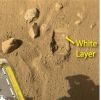
PHOE-SOL009-lg_3074.jpgToo Little and Too Late: ICE on Mars, according to NASA - Sol 9 (Approximate Colors; credits: NASA/JPL/Univ. of Arizona - Texas A&M)64 visiteE ancora una volta la NASA (la GRANDE NASA!) arriva in ritardo. Addirittura con quasi un giorno pieno di ritardo! Il "White Layer" che vedete qui indicato, infatti, è stato anticipato da Lunar Explorer Italia nella giornata di ieri e la NASA, con frame analogo a questo, ma con "bad processing" aveva già mostrato questo frame due giorni fa, MA SENZA IL WHITE LAYER! Se ricordate - ma potete verificarlo semplicemente - noi abbiamo usato questo frame NASA per costruire un mini-collage e mostrarVi la netta differenza esistente fra il Processing Lunexit (con e senza MULTISPECTRUM) ed il Processing NASA (tendenzialmente produttivo di quadri monocolori).
Che dire? Come "suggerisce" il titolo che abbiamo dato a questo quadro, una bella dedica alla NASA, alla University of Arizona ed alla Texas A&M: "troppo poco e troppo tardi"!...(specie considerando, giova ripeterlo, le "professionalità" ed i "mezzi" che gli Amici Americani si ritrovano...)MareKromium
|
|
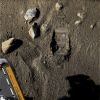
PHOE-SOL010-lg_2881-2882-2883.jpgThe "White Layer" of Ice, according to Lunexit - Sol 9 (Superdefinition; credits: Dr Gianluigi Barca)64 visiteInutile "nascondersi" dietro ad un dito e, almeno in questo caso, permetteteci di dirVi una cosa senza ostentare falsa modestia: la qualità del Color Processing Lunexit è ENORMEMENTE SUPERIORE alla qualità del Color Processing NASA.
Il merito di questo straordinario risultato è dei nostri due Amici e Colleghi, Drr Gianluigi Barca e Marco Faccin, ai quali vanno i nostri più grandi e sinceri COMPLIMENTI (e se gli Amici di Pasadena avessero un pizzico di umiltà e buon senso, avrebbero già dovuto smetterla di pubblicare le loro orribili immagini in "approximate colors", sul cui senso logico e cromatico si stanno già interrogando davvero in tanti...Anche in USA!).MareKromium
|
|

PHOE-SOL013-lg_3450.jpgOxidation, Evaporation or Sublimation? - Sol 13 (Superdefinition; credits: Dr M. Faccin)63 visiteCurioso...La Macchia Bianca, che nei giorni scorsi ci ha tanto intrigato, ora sembra essere diventata una "chiazza nera", per altro assai ben definita.
Questo cambiamento sarà attribuibile ad un errore umano (un errore nostro, nella fattispecie) occorso durante l'additional processing, oppure è stato proprio il nostro additional processing ad aver messo, di fatto, in luce un comportamento "curioso" da parte di un elemento che, sintanto che era confinato nel sottosuolo di Marte, aveva determinate caratteristiche (exx: di colore e consistenza) e che poi, una volta portato alla luce (e messo a contatto con la "difficile" atmosfera del Pianeta), è "mutato"?
E se fosse stato effettivamente del ghiaccio, la "chiazza scura" che vediamo adesso che cosa dovrebbe rappresentare?
Forse il residuo di una evaporazione o di una sublimazione?
E se invece si trattasse di una ossidazione? "Che cosa" si sarebbe potuto ossidare?...
Domande, domande, domande...MareKromium
|
|
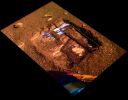
PHOE-SOL025-lg_6964~0.jpgWatch CAREFULLY! - Sol 25 (perspective view; credits: Dr M. Faccin)192 visitenessun commento (anzi: ora i "commenti" li dovete fare Voi...)MareKromium
|
|
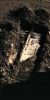
PHOE-SOL032-lg8077-8078-8079_copia2.jpgThe "Trench" - Sol 32 (natural colors; credits: Dr G. Barca)62 visitenessun commentoMareKromium
|
|
PHOE-SOL039-lg10082-10089-10090.jpgThe "Icy" Trench... - Sol 39 (natural colors; credits: Dr G. Barca)72 visitenessun commentoMareKromium
|
|

PHOE-SOL039-lg_10082.jpgThe "Icy" Trench... - Sol 39 (MULTISPECTRUM; credits: Lunexit)63 visiteCurioso ma, più guardiamo questo dettaglio della Superficie di Vastitas Borealis, e più la sensazione che il "materiale bianco" affiorante dalla piccola trincea NON SIA (!) ghiaccio diventa forte...MareKromium
|
|

PHOE-SOL046-lg12309-12310-12311.jpgThe "Trench" - Sol 46 (Superdefinition and natural colors; credits: Dr G. Barca)63 visitenessun commentoMareKromium
|
|

PHOE-SOL051-RGB.jpgThe "Trench" - Sol 51 (Superdefinition and natural - but enhanced - colors + MULTISPECTRUM; credits: Dr M. Faccin & Lunexit)64 visiteE' attraverso questa spettacolare elaborazione (curata ancora una volta dal nostro Marco Faccin) dell'immagine della "trincea" scavata da Phoenix, che possiamo vedere quello che la NASA fa una "gran fatica" a mostrarci: le "strisce biancastre" che giacciono sul fondo della medesima.
Che cosa sono? Evidenze di sale o tracce di umidità residua?
E' evidente che da una semplice fotografia (la quale, per altro, vista la scarsissima qualità dei frames NASA-RAW, è stata pesantemente processata in Superdefinizione e quindi ricolorizzata adottando il procedimento multispettrale) NON SI PUO' risalire alla Verità Assoluta e Garantita al 100%. Solo un bugiardo o una persona in malafede potrebbe dire "questa è la Verità".
Noi, da parte nostra, Vi possiamo dire solo una cosa: questo è il processing addizionale più sicuro (nel senso di non produttivo di image-artifacts) e più raffinato (visti i mezzi disponibili) che abbiamo.
Questo è il risultato che ne deriva: si tratterà di sali, di ghiaccio, o di umidità residua? Giudicate Voi.MareKromium
|
|

PSP_009696_2575_RED.JPGDunes and Translucent Ice-Spot in the Northern Plains (Saturated and Enhanced Natural Colors; credits for the additional process. and color.: Dr Paolo C. Fienga - Lunexit Team) 67 visiteThis Terrain is located near the North Pole. The bright patch of material is ice, which might have been deposited in the previous Winter.
After ice in the form of surface frost is deposited from the Atmosphere, it experiences changes throughout the Martian Year. Some of the ice has a polygonal texture which probably formed when temperature variations created stress and cracks in the ice.
The dark features scattered throughout the scene are Dunes. The streaks emanating from the Dunes trending in the South/West direction indicate the dominant direction of the wind in recent times.MareKromium
|
|
| 12 immagini su 1 pagina(e) |
|








