| Risultati della ricerca nelle immagini - "Spherules" |

OPP-SOL014-MI-0.jpgSpherules - Sol 14 (True Colors; credits: Dr M. Faccin)93 visitenessun commentoMareKromium
|
|

OPP-SOL014-MI-1.jpgSpherules - Sol 14 (True Colors + MULTISPECTRUM; credits: Dr M. Faccin & Lunexit)65 visitenessun commentoMareKromium
|
|

OPP-SOL0965-MF.jpgSpherules - Sol 965 (High-Def-3D; credits: Dr M. Faccin)60 visitenessun commentoMareKromium
|
|

OPP-SOL1029-MF.jpgBerryLand - Sol 1029 (High-Def-3D and Natural Colors; credits: Dr M. Faccin)60 visitenessun commentoMareKromium
|
|
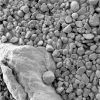
OPP-SOL106-1M137593451EFF2208P2956M2M1.jpgUp-close and personal (1) - Sol 10671 visitenessun commento
|
|
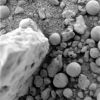
OPP-SOL106-1M137594101EFF2208P2956M2M1.jpgUp-close and personal (2) - Sol 10682 visitenessun commento
|
|

OPP-SOL2240-1P327127376EFFAGN3P2430L7M1.jpgThe Surface of Meridiani - Sol 2240 (Absolute Natural Colors; credits for the additional process. and color.: Dr Paolo C. Fienga - Lunexit Team)71 visitenessun commentoMareKromium
|
|

OPP-SOL3064-Spherules-PCF-LXTT-IPF.jpgCompacted Spherules at "Kirkwood" - Sol 3046 (Absolute Natural Colors; credits for the additional process. and color.: Dr Paolo C. Fienga/Lunar Explorer Italia/Italian Planetary Foundation)90 visiteCaption NASA:"Small Spherical Objects fill the field in this mosaic combining 4 (four) images from the Microscopic Imager onboard the NASA - Mars Exploration Rover (MER) Opportunity. The view covers an area about 2,4" (inches, such as about 6 centimeters) across, at a Rocky Outcrop known as "Kirkwood" and located in the Cape York Segment of the Western Rim of Endeavour Crater. The individual Spherules are up to about one-eighth of one inch (such as approx. 3 millimeters) in diameter. The Microscopic Imager took the component images during the 3064th Martian Day, or Sol, of Opportunity's work on Mars (such as September 6, 2012).
It has to be remembered that the MER Opportunity already discovered Martian Spherules at its Landing Site, more than eight-and-a-half years ago and those Spherules were nicknamed "Blueberries". They provided important evidence about long gone "Wet Environmental Conditions" on Mars because researchers using Opportunity's science instruments identified them as "Rocky Concretions" rich in the Mineral Hematite deposited by Water saturating the Bedrock.
However, the Spherules at Kirkwood do not have the Iron-rich composition of the Blueberries and they also differ in concentration, distribution and structure. Some of the Spherules in this image have been partially eroded away, revealing a "Concentric Internal Structure". Opportunity's Science Team plans to use Opportunity for further investigation of these Spherules in order to determine what evidence they can provide about the (VERY) ancient Martian Environmental Conditions.MareKromium
|
|

SOL0139-PIA16706-PCF-LXTT-IPF.jpgSpherules at Gale Crater - Sol 139 (Absolute Natural Colors; credits for the additional process. and color.: Dr Paolo C. Fienga/Lunar Explorer Italia/Italian Planetary Foundation)89 visiteCaption NASA:"This image from the Right Mast Camera (MastCam) onboard the NASA - Curiosity Mars Exploration Rover shows roughly Spherical Features, which are VERY similar to the ones found by the Mars Exploration Rover Opportunity in the Meridiani Planum Region of Mars. These "Gale Crater's" Spherules are apparently common in this Stratigraphic Unit, informally "Sheepbed"; a Stratigraphic Unit which defines the lower part of the sequences of Strata exposed in the area known as "Yellowknife Bay". These Spherical Features have been interpreted as "Concretions": a definition which implies that they have formed in Water that percolated (---> the movement and filtering of fluids through porous materials) through the Sediment. Curiosity's MastCam obtained these images on the 139th Martian day, or Sol, of the Rover's Surface Operations at Gale Crater (such as December, 25th, 2012)". MareKromium
|
|
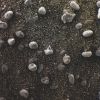
SOL812.jpgPebbles and Spherules in the "wet" (?) Martian Sand... - Sol 812 (Superdefinition + MULTISPECTRUM; credits: Dr G. Barca & Lunexit)75 visitenessun commentoMareKromium
|
|
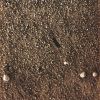
SOL913.jpgUnusual surface feature (a "hole"?) in the proximities of Spirit's Winter Haven (3) - Sol 913 (Superdefinition + MULTISPECTRUM; credits: Dr G. Barca & Lunexit)63 visiteLa parte DAVVERO interessante di questo frame? Il piccolo "foro rettangolare" che si vede quasi a centro quadro.
Diciamo che non ci interessa chi/che cosa lo ha fatto e come (dubitiamo FORTEMENTE comunque che si tratti di un'azione meccanica posta in essere dal Rover); diciamo solo che esso è una (piccola) evidenza del fatto che lo strato superficiale di Marte è una sorta di "Mega-Guscio Protettivo" (per usare una terminologia "familiare" al nostro Caro Amico, il Dr Feltri) per qualcosa che "stà sotto". Un qualcosa che non deve essere esposto alle (indubitabili) azioni avverse del clima e dell'atmosfera Marziana.
Acqua? Vegetazione di un qualche tipo? Forme Vitali Indigene?... Ogni ipotesi, per il momento, è valida.
E ricordate una cosa, se e quando vorrete commentare questi findings: noi speculiamo, è vero.
Ma lo facciamo sulla base di quanto mostrato da immagini genuine NASA sulle quali la NASA stessa, sebbene sollecitata innumerevoli volte (e non solo da noialtri), di fatto, si rifiuta di esprimere opinioni ed idee. Ed è un peccato: perchè la Ricerca Scientifica non si fa solo interpretando "l'ovvio" ed il "conosciuto poichè riconosciuto" (sorry per il gioco di parole).
La Ricerca Scientifica, anche se a quel punto diventa MOLTO rischiosa (da tutti i punti di vista e per chiunque la ponga in essere) si fa anche "speculando" e "provando ad interpretare l'Ignoto"...
Pensateci su.MareKromium
|
|
|
| 11 immagini su 1 pagina(e) |
|





