| Risultati della ricerca nelle immagini - "Skylight" |

Collapse_Features-Skylight-Cerberus_Fossae-PCF-LXTT-00.jpgPossible Skylight in Cerberus Fossae (CTX Frame - Enhanced Natural Colors; credits for the additional process. and color.: Dr Paolo C. Fienga - Lunexit Team)179 visitenessun commentoMareKromium
|
|

Collapse_Features-Skylight-Cerberus_Fossae-PCF-LXTT-01.jpgPossible Skylight in Cerberus Fossae (EDM - Enhanced Natural Colors; credits for the additional process. and color.: Dr Paolo C. Fienga - Lunexit Team)192 visitenessun commentoMareKromium
|
|

ESP_019351_1795_RED_abrowse-00-PCF-LXTT.jpgCollapse Pit on the S/E Flank of Pavonis Mons (CTX Frame - Absolute Natural Colors; credits for the additional process. and color: Dr Paolo C. Fienga - Lunexit Team)215 visiteCaption NASA:"This image is located on the South/Eastern Flank of Pavonis Mons, a large Volcano located in the Tharsis Region of Mars. The dark, circular Pit Feature roughly in the middle of the image is about 180 meters at its widest diameter. The Pit appears to be surrounded by small sand dunes".
Acquisition date: 12 September 2010
Mars Local Time: 15:33 (Middle Afternoon)
Latitude (centered): 0,5° South
Longitude (East): 248,6°
Spacecraft Altitude (such as "Range to Target Site"): 256,4 Km (160,2 miles)
Original Image Scale Range: 25,6 cm/pixel (with 1 x 1 binning) so objects ~77 cm across are resolved
Map Projected Scale: 25 cm/pixel and North is up
Map Projection: EQUIRECTANGULAR
Emission Angle: 3,2°
Sun-Target-MRO (such as "Phase") Angle: 51,8°
Solar Incidence Angle (S.I.A.): 55°, with the Sun about 35° above the Local Horizon
Solar Longitude: 147,2° (Northern Summer)MareKromium
|
|

ESP_019351_1795_RED_abrowse-01-PCF-LXTT.jpgCollapse Pit on the S/E Flank of Pavonis Mons (EDM - Absolute Natural Colors; credits for the additional process. and color: Dr Paolo C. Fienga - Lunexit Team)224 visiteCaption NASA:"The interior of the Pit consists of sediment-covered Boulders that range in size from approximately 5 meters (approximately 16 ft) to less than 1 meter (approximately 3 feet) in diameter. The interior region of the Pit appears to slope towards the North-West. Such Pits may form from collapse of a surface "roof" below which Lava may long ago have flowed, or as a result of removal of subsurface material due to erosion or extension".MareKromium
|
|
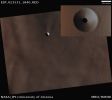
ESP_023531_1840-00.jpgSkylight on the Dusty Slopes of Arsia Mons (CTX Frame and EDM - Absolute Natural Colors; credits for the additional process. and color.: Dr Paolo C. Fienga - Lunexit Team)235 visiteMars Local Time: 14:08 (Early Afternoon)
Coord. (centered): 3,7° North Lat. and 248,5° East Long.
Spacecraft altitude: 263 Km (such as about 164,4 miles)
Original image scale range: 26,3 cm/pixel (with 1 x 1 binning) so objects ~ 79 cm across are resolved
Map projected scale: 25 cm/pixel
Map projection: EQUIRECTANGULAR
Emission Angle: 4,1°
Sun-Mars-Spacecraft (or "Phase") Angle: 30,4°
Solar Incidence Angle: 34° (meaning that the Sun is about 56° above the Local Horizon)
Solar Longitude: 339,1° (Northern Winter)
Credits: NASA/JPL/University of Arizona
Additional process. and coloring: Dr Paolo C. Fienga - Lunar Explorer ItaliaMareKromium
|
|

ESP_024481_1605-PCF-LXTT.jpgSkylight in Daedalia Planum (Enhanced Absolute Natural Colors; credits for the additional process. and color.: Dr Paolo C. Fienga - Lunexit Team)227 visiteMars Local Time: 14:38 (early afternoon)
Coord. (centered): 19,5° South Lat. and 237,6° East Long.
Spacecraft altitude: 274,7 Km (such as about 171,7 miles)
Original image scale range: 27,5 cm/pixel (with 1 x 1 binning) so objects ~ 82 cm across are resolved
Map projected scale: 25 cm/pixel
Map projection: EQUIRECTANGULAR
Emission Angle: 23,9°
Phase Angle: 31,1°
Solar Incidence Angle: 47° (meaning that the Sun is about 43° above the Local Horizon)
Solar Longitude: 16,3° (Northern Spring)
Credits: NASA/JPL/University of Arizona
Additional process. and coloring: Lunar Explorer ItaliaMareKromium
|
|
|
|
| 6 immagini su 1 pagina(e) |
|








