| Risultati della ricerca nelle immagini - "Sand," |

OPP-SOL1523-1P263388371EFF89AHP2586L7M1.jpgPartially Disturbed Soil - Sol 1523 (MULTISPECTRUM; credits: Lunexit)63 visitenessun commentoMareKromium
|
|
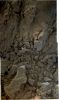
OPP-SOL2787-MF-EB-LXTT-00.jpgDust, Rocky Grains and Pebbles - Sol 2787 (a Microscopic Imager Image Mosaic in Slightly Saturated Natural Colors - credits for the additional process. and color.: Elisabetta Bonora and Marco Faccin - Lunexit Team)212 visitenessun commentoMareKromium
|
|
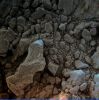
OPP-SOL2787-MF-EB-LXTT-01.jpgDust, Rocky Grains and Pebbles - Sol 2787 (a Microscopic Imager Vision in Natural Colors - credits for the additional process. and color.: Elisabetta Bonora and Marco Faccin - Lunexit Team)264 visitenessun commentoMareKromium
|
|
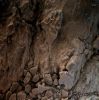
OPP-SOL2787-MF-EB-LXTT-02.jpgDust, Rocky Grains and Pebbles - Sol 2787 (a Microscopic Imager Vision in Natural Colors - credits for the additional process. and color.: Elisabetta Bonora and Marco Faccin - Lunexit Team)233 visitenessun commentoMareKromium
|
|

OPP-SOL2924-MIC-B-MF-EB-LXTT-IPF.jpgMicroscopic View - Sol 2924 (Natural Colors; credits for the additional process. and color.: Elisabetta Bonora and Marco Faccin - Lunexit Team) 105 visitenessun commentoMareKromium
|
|
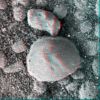
OPP-SOL924-MF-LXTT-03.jpgMicroscopic Vision - Sol 924 (High-Def-3D; credits for the additional process. and color.: Elisabetta Bonora and Marco Faccin - Lunexit Team)125 visitenessun commentoMareKromium
|
|
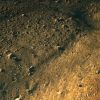
PHOE-SOL001-N-Photocomposite.jpgThe soil of Vastitas Borealis - Sol 1 (Natural Colors + MULTISPECTRUM; credits: Dr M. Faccin & Lunexit)75 visitenessun commentoMareKromium
|
|
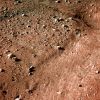
PHOE-SOL001-PIA10682.jpgThe soil of Vastitas Borealis - Sol 1 (Approximate Colors; credits: NASA/JPL-Caltech/University of Arizona )65 visiteCaption NASA:"This image shows a polygonal pattern in the ground near NASA's Phoenix Mars Lander, similar in appearance to icy ground in the arctic regions of Earth.
Phoenix touched down on the Red Planet at 4:53 p.m. Pacific Time (7:53 p.m. Eastern Time), May 25, 2008, in an arctic region called Vastitas Borealis, at 68° North Latitude and 234° East Longitude.
This is an approximate-color image taken shortly after landing by the spacecraft's Surface Stereo Imager, inferred from two color filters, a violet, 450-nanometer filter and an infrared, 750-nanometer filter".
Nota Lunexit: una nuova "dizione" NASA. Ora questi (semi-assurdi) colori non sono più Approximate True o Approximate Natural: adesso sono SOLO "Approximate".
Beh, visti i quattrini, i mezzi, le tecnologie, le menti ed il tempo che si ritrovano a disposizione i nostri Amici di Pasadena, scusateci se, dopo aver visto questa (a nostro parere "quasi inguardabile") elaborazione, non ci sentiamo di fargli i complimenti...MareKromium
|
|

SOL0058-PIA16193-PCF-LXTT-IPF.jpgHigh-Resolution View of a Cross-Section through a Martian Ripple - Sol 58 (Absolute Natural Colors; credits for the additional process. and color.: Dr Paolo C. Fienga - Lunar Explorer Italia - Italian Planetary Foundation)96 visiteCaption NASA:"This image shows the wall of a "scuffmark" made by the NASA - MER Curiosity in a Windblown Ripple of Martian Sand, by using one of its wheels. The upper half of the image shows a small portion of the side wall of the scuff and a little bit of the floor of the scuff (bottom of this image). The prominent depression with raised rims at the bottom center of the image was formed by one of the treads on Curiosity's front right wheel.
The largest Grains of Sand in this image are about 0,04 to 0,08" (such as about 1 to 2 millimeters) in size. Those large Grains were on top of the Windblown Ripple and fell down to this location when the scuff was made. The bulk of the Sand in the Ripple is smaller, in the range below 0,002 to 0,008" (i.e.: 50 to 200 microns). The full scuffmark is about 20" (such as approx. 50 centimeters) wide which is, by the way, the same width of Curiosity's wheel.
This image from the Mars Hand Lens Imager (MAHLI) is the product of merging 8 (eight) images acquired at 8 (eight) slightly different focus settings to bring out details on the wall, slopes, and floor of the wheel scuff. The merge was performed onboard the MAHLI instrument to reduce downlinked data volume.
The image was acquired by MAHLI with the lens about 4,7" (approx. 12 centimeters) from the target. The pixel scale is about 0,002" (such as approx. 50 microns) per pixel. The image covers an area, roughly 3 by 2" (such as about 8 by 6 centimeters). The image was obtained on October, 4, 2012 - such as the 58th Sol, or Martian Day, of operations of the MER Curiosity on the Surface of Gale Crater".MareKromium
|
|
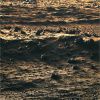
SOL1147-0.jpgLong Shadows in the Evening Hours near Home Plate (1) - Sol 1147 (True Colors + MULTISPECTRUM; credits: Dr Marco Faccin & Lunexit)64 visitenessun commentoMareKromium
|
|
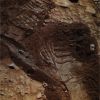
SOL1388-2P249497680EFFAWNSP2552R6M1-PCF-LXTT.jpgDeep Rover Tracks - Sol 1388 (Absolute Natural Colors; credits for the additional process. and color.: Dr Paolo C. Fienga - Lunexit Team)99 visitenessun commentoMareKromium
|
|
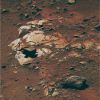
SOL464-1.jpgUNBELIEVABLE BALANCE (plus White Stones, Reddish Sand and Greenish Dust)! - Sol 464 (True Colors + MULTISPECTRUM; credits: Dr G. Barca & Lunexit)140 visite...Avevamo già parlato di "Equilibri Impossibili", vero?!?...Guardate la roccia scura ed aiutateci a capire come fa a stare in quella posizione...Su che cosa poggia?!?
Complimenti al Dr Barca per la MAGNIFICA elaborazione!MareKromium
|
|
| 16 immagini su 2 pagina(e) |
1 |
|








