| Risultati della ricerca nelle immagini - "SUrface" |
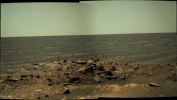
OPP-SOL1950-GB-LXT1.jpgPossible Secondary Crater near Victoria Crater (Resolution Crater) - Sol 1950 (Photo-composite Panorama - Natural Colors/Blue-Green Filters ON; credits: Dr. G. Barca & Lunexit)63 visitenessun commentoMareKromium
|
|
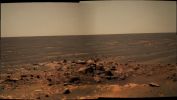
OPP-SOL1950-GB-LXT2.jpgPossible Secondary Crater near Victoria Crater (Resolution Crater) - Sol 1950 (Photo-composite Panorama - Natural Colors/Blue-Green Filters OFF; credits: Dr. G. Barca & Lunexit)65 visitenessun commentoMareKromium
|
|
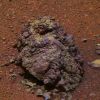
OPP-SOL2695-EB-MF-LXTT.jpgExtremely unusually-looking and Colourful Erratic Boulder - Sol 2695 (Absolute Natural Colors; credits for the additional process. and color.: Elisabetta Bonora and Marco Faccin - Lunexit Team)133 visitenessun commentoMareKromium
|
|
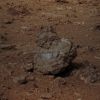
OPP-SOL2696-MF-EB-LXTT-PCF-LXTT-1.jpgErratic Boulder at Greeley Haven - Sol 2696 (Absolute Natural Colors; credits for the additional process. and color.: Elisabetta Bonora and Marco Faccin - Lunexit Team)108 visitenessun commentoMareKromium
|
|
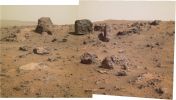
OPP-SOL2699-EB-MF-LXTT.jpgBouldery Skyline - Sol 2699 (Saturated Natural Colors; credits for the additional process. and color.: Elisabetta Bonora and Marco Faccin - Lunar Explorer Italia)175 visitenessun commentoMareKromium
|
|
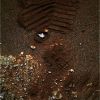
OPP-SOL2900-EB-MF-LXTT.jpgBright and Colourful Pebbles - Sol 2900 (Enhanced and Darkened Natural Colors; credits for the additional process. and color.: Elisabetta Bonora and Marco Faccin - Lunar Explorer Italia)110 visitenessun commentoMareKromium
|
|

OPP-SOL2927-2928-MF-EB-LXTT-IPF.jpgThe Surface of Meridiani Planum - Sol 2927 AND 2928 (Enhanced Natural Colors; credits for the additional process. and color.: Elisabetta Bonora and Marco Faccin - Lunexit Team)130 visitenessun commentoMareKromium
|
|

OPP-SOL306-1P155364996EFF38EVP2555R7M1.jpgTipuna Rock - Sol 306 (Natural Colors; credits for the additional process. and color.: Dr Paolo C. Fienga - Lunexit Team)172 visitenessun commentoMareKromium
|
|

SOL0020-0020MR0057011000C0_DXXX.jpgWhite Edge - Sol 20 (RAW b/w Original NASA Frame; credits: NASA/JPL-Caltech - Research: Dr Gianluigi Barca/Lunar Explorer Italia/Italian Planetary Foundation)97 visitenessun commentoMareKromium
|
|

SOL0037MR0156001000E1_DXXX.jpgExtremely unusually-looking Rock: "Mid-Air" - Sol 37 (Credits: NASA/JPL-Caltech; Research: Dr Gianluigi Barca - Lunexit Team/Italian Planetary Foundation)122 visiteTanto affascinante, la "postura" di questo "sasso", quanto inusuale e, chissà..., "Anomalo". Un Grande abbraccio al Dr barca (Big "G") per la continua - e sempre proficua! - ricerca del "dettaglio impossibile". Si, impossibile. Perchè questo "sasso" poggia ESATTAMENTE su un impossibile equilibrio (a meno che quanto vediamo non sia altro che la porzione superiore di un macigno più grande ed infossato - ma, onestamente, questa ipotesi non ci pare molto valida). E comunque sia, pensiamoci sopra...MareKromium
|
|

SOL0038MR0171000000E1_DXXX.jpgUnusually-looking Igneous Rock - Sol 38 (Absolute Natural Colors; credits for the research and the additional process.: Dr Gianluigi Barca/Lunar Explorer Italia/Italian Planetary Foundation)121 visitenessun commentoMareKromium
|
|

SOL0039-PIA16156.jpg"Hard" Mars... - Sol 39 (Credits: NASA/JPL-Caltech/MSSS)123 visite...Bisogna pure sorridere, in qualche modo ed in qualche misura...
Caption NASA:"NASA's Curiosity Rover found evidence for an ancient, flowing Stream on Mars at a few sites, including the Rock Outcrop pictured here, which the science team has named "Hottah" after Hottah Lake in Canada's Northwest Territories. It may look like a broken sidewalk, but this geological feature on Mars is actually exposed Bedrock made up of smaller fragments cemented together, or what geologists call a "Sedimentary Conglomerate". Scientists theorize that the Bedrock was disrupted in the past, giving it the titled angle, most likely via impacts from Meteorites.
The key evidence for the ancient Stream comes from the size and rounded shape of the Gravel in and around the Bedrock. Hottah has pieces of gravel embedded in it, called clasts, up to a couple inches (few centimeters) in size and located within a matrix of sand-sized material. Some of the clasts are round in shape, leading the Science Team to conclude they were transported by a vigorous flow of Water. The Grains are too large to have been moved by Wind. A close-up view of Hottah reveals more details of the Outcrop. Broken surfaces of the Outcrop have rounded, Gravel Clasts, such as the one circled in white, which is about 1,2" (3 centimeters) across. Erosion of the Outcrop results in Gravel Clasts that protrude from the Outcrop and ultimately fall onto the Ground, creating the Gravel Pile at left".MareKromium
|
|
| 28 immagini su 3 pagina(e) |
1 |
|








