| |
| Risultati della ricerca nelle immagini - "S" |

0-SMART-1.jpgSMART-1 and the Moon102 visiteThe solar electric primary propulsion on-board SMART-1 is a Stationary Plasma Hall-effect thruster, the PPS-1350 developed by SNECMA, France. Using Xenon gas as propellant and the power from the spacecraft's solar arrays, the thruster is capable of providing a thrust of something like 70 milliNewtons. Using the thrust of the electric propulsion system, SMART-1 progressively expanded its orbit, spiralling out from Earth and was caught by the Moon's gravitational field on 15 November 2004, nearly 14 months after launch. In order to enhance the capture opportunities and to save precious fuel, SMART-1 also made use of celestial mechanics, including Moon resonances and swing-bys. The spacecraft exploited the unstable regions of space where the gravity field of Earth and Moon compete and which are normally avoided by conventional trajectories. It passed through the L1 point of the Earth-Moon System which allowed for the spacecraft to be caught by the Moon's gravity.
|
|

0-Saturn and Friends.jpgSaturn and His Moons212 visiteThe dozens of moons orbiting Saturn vary drastically in shape, size, age and origin. Some of these moons have rocky surfaces, while others are porous, icy bodies. Many have craters, ridges and valleys and some show evidence of tectonic activity. Some appear to have formed billions of years ago, while others appear to be pieces of a bigger, fragmented body. The most interesting one is Titan, the biggest of them all. Larger than Earth's Moon, Titan even has its own thick atmosphere - the only natural satellite in the Solar System with such a luxury. During its 4-year mission in this immense region, the Cassini spacecraft will extensively photograph many of these moons and collect data that will increase our understanding of their composition.
To date, 34 moons have been officially named. In alphabetic order, they are: Albiorix, Atlas, Calypso, Dione , Enceladus, Epimetheus, Erriapo, Helene, Hyperion, Iapetus, Ijiraq, Janus, Kiviuq, Methone, Mimas, Mundilfari, Narvi, Paaliaq, Pallene, Pan, Pandora, Phoebe, Polydeuces, Prometheus, Rhea, Siarnaq, Skadi, Suttung, Tarvos, Telesto, Tethys, Thrym, Titan and Ymir.
|
|

0-The Solar System.jpgA "New" Solar System (according to IAU)? No, thanks...204 visite"Plutone non è degno di essere considerato un Pianeta": questa, con un pizzico di polemica (da parte nostra) ed in estrema sintesi, la decisione della IAU la quale, dovendo scegliere se portare (o non) da 9 a 12 il numero dei Membri Maggiori del Sistema Solare, ha " elegantemente" pensato e deliberato di ridurli ad 8!
Questa decisione, a parere di Lunar Explorer Italia, costituisce un futile, inutile e villano "sgarbo postumo" nei confronti del grande Astronomo Americano Clyde Tombaugh (lo scopritore di Plutone) e quindi abbiamo deciso, in quanto Gruppo di Ricercatori Indipendenti, di non riconoscere la "IAU Resolution n. 6-A" e pertanto continueremo a considerare il nostro Sistema Solare inclusivo di Plutone (anzi: del Pianeta "Doppio" Plutone-Caronte).
Clyde Tombaugh nacque nel 1906 da una famiglia di agricoltori dell'Illinois. da ragazzo sviluppò un forte interesse per l'osservazione del cielo, incoraggiato sia dal padre che dallo zio. Il primo telescopio con il quale osservò le stelle apparteneva a suo zio. Clyde era insoddisfatto del primo telescopio che aveva comprato in un negozio, così decise di costruirne uno lui stesso. Il padre di Clyde si trovò un secondo lavoro per pagare i materiali necessari. Il telescopio che Clyde costruì nel 1925 fu solo il primo di oltre trenta telescopi che costruì nel corso della sua vita.
Nel 1928 Clyde finì di costruire un telescopio riflettore da 23 cm, molto preciso. La montatura fu costruita con un albero a gomiti, preso da un'automobile Buick del 1910, e da parti di scarto di una macchina agricola! Tuttavia non fu con questo che Clyde compì le osservazioni che gli valsero un'offerta di lavoro dal Lowell Observatory. Clyde fece disegni molto dettagliati delle proprie osservazioni al telescopio di Marte e Giove. Inviò i suoi disegni agli astronomi del Lowell Observatory, chiedendo commenti e suggerimenti. Invece ricevette un'offerta per andare a lavorare all'osservatorio come astronomo praticante. Clyde accettò il lavoro e cominciò a dedicarsi alla ricerca del famoso "Pianeta X" di Percival Lowell, un pianeta ancora sconosciuto che avrebbe dovuto trovarsi oltre Nettuno. Il lavoro di Clyde Tombaugh consisteva nel fotografare un pezzettino di cielo per volta, poi esaminarlo attentamente e confrontare le diverse fotografie per identificarvi eventuali oggetti non identificati in movimento, che avrebbero potuto essere pianeti. Clyde Tombaugh fotografò oltre il 65% del cielo e trascorse migliaia di ore esaminando le immagini. Dopo dieci mesi di durissimo lavoro, spesso lavorando anche la notte in una cupola non riscaldata, Clyde Tombaugh scoprì il pianeta Plutone. Clyde Tombaugh morì all'età di novant'anni, il 17 gennaio 1997.
|
|
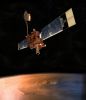
00-A-Mars_Global_Surveyor.jpgMars Global Surveyor75 visiteMars Global Surveyor was launched in 1996 on a mission designed to study Mars from orbit for two years. It accomplished many important discoveries during nine years in orbit. On Nov. 2, 2006, the spacecraft transmitted information that one of its arrays (---> pannelli) was not pivoting (--> ruotando) as commanded.
Loss of signal from the MGS Orbiter began on the following orbit.
Mars Global Surveyor has operated longer at Mars than any other spacecraft in history and for more than four times as long as the prime mission originally planned.
NASA has recently formed an internal review board to look more in-depth into why NASA's Mars Global Surveyor went silent in November 2006 and recommend any processes or procedures that could increase safety for other spacecraft.
|
|
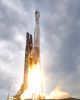
00-LRO-0001.jpgLiftoff...To the Moon!67 visitenessun commentoMareKromium
|
|

00-LRO-0002.jpgLiftoff...To the Moon!69 visitenessun commentoMareKromium
|
|
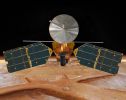
00-MRO-front-view_br~0.jpgHere is the "Mars Reconnaisance Orbiter"119 visiteThis artist's concept of the Mars Reconnaissance Orbiter features the spacecraft's main bus facing down, toward the red planet. The large silver circular feature above the spacecraft bus is the high-gain antenna, the spacecraft's main means of communicating with both Earth and other spacecraft. The long, thin pole behind the bus is the SHARAD antenna. Seeking liquid or frozen water, SHARAD will probe the subsurface using radar waves at a 15-25 MHz frequency band, "seeing" in the first few hundreds of feet (up to 1 kilometer) of Mars' crust. The large instrument (covered in black thermal blanketing) in the center is the HiRISE camera. This powerful camera will provide the highest-resolution images from orbit to date.
The other easily visible instruments are: the Electra telecommunications package which is the gold-colored instrument directly left of the HiRISE camera. It will act as a communications relay and navigation aid for Mars spacecraft. To the right of the HiRISE camera is the Context Imager (CTX).
|
|

00-PhoenixLiftoff.jpgThe beginning...97 visiteCaption NASA:"Can Mars sustain life? To help answer this question, last week NASA launched the Phoenix Mission to Mars. In May 2008, Phoenix is expected to land in an unexplored North Polar Region of Mars that is rich in water-ice. Although Phoenix cannot move, it can deploy its cameras, robotic arm, and a small chemistry laboratory to inspect, dig, and chemically analyze its landing area. One hope is that Phoenix will be able to discern telling clues to the history of ice and water on Mars. Phoenix is also poised to explore the boundary between ice and soil in hopes of finding clues of a habitable zone there that could support microbial life.
Phoenix has a planned lifetime of 3 months on the Martian surface".MareKromium
|
|

00-SMART1.jpgSMART-1 and the Moon105 visiteSMART-1's science payload, with a total mass of some 15 Kg, features many innovative instruments and advanced technologies. These are:
- AMIE, a miniaturised HR camera for Lunar Surface imaging;
- SIR, a Near-Infrared Point-Spectrometer for Lunar mineralogy investigation;
- D-CIXS, a very compact X-ray Spectrometer with a new type of detector and micro-collimator which will provide fluorescence spectroscopy and imagery of the Moon's surface elemental composition;
- XSM, an X-ray monitor to support D-CIXS by providing measurements of solar X-ray emission for calibration:
- KaTE, an experiment aimed at demonstrating deep-space telemetry and telecommand communications in the X and Ka-bands;
- RSIS, a Radio-Science Experiment relying on KaTE. It monitors the electric propulsion by means of tracking techniques. In lunar orbit it will, with AMIE, also study the Moon's libration.
|
|
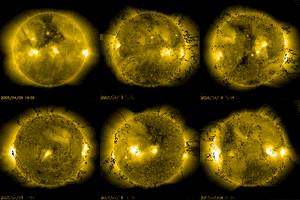
00-The Sun.gifThe Sun256 visite"It is in the Human Nature", qualcuno ha scritto, "to take everything for granted...Until you loose it".
Anche il Sole fa parte di quello che "diamo per scontato", come ovvio, ed è per questo che Vi offriamo questo piccolo filmato GIF - opera del Dr A. Feltri: per ricordare e ricordarVi grazie a 'che cosa', oggi, sin dal momento della nostra nascita e sino all'istante della nostra morte, possiamo dire di essere vivi e, quindi, possiamo vedere, respirare, avere esperienze, fare delle scelte, evolvere o regredire, ridere o piangere etc.
E' il Sole: la nostra Stella, ma solo una delle tante...
|
|

00-Titan.JPGTitan in possible True Colors (credits: NASA)83 visiteAttraverso l’oculare di un (anche) modesto telescopio, Titano, il più grande satellite naturale del pianeta Saturno, appare come un corpo puntiforme che splende debolmente di un delicato color giallo-pallido.
Si tratta di un oggetto celeste reso affascinante dalla sua posizione – apparentemente assai prossima – rispetto al Gigante Anellato (la sua distanza angolare da Saturno non supera mai i 20 raggi saturniani), ma certo non si può dire che Titano, in sé, riesca a suggerire particolari interessi e curiosità visive, anzi: nessun rilievo superficiale di questo Mondo, infatti, risulta discernibile nelle osservazioni effettuate da Terra (nemmeno usando le più sofisticate ed avanzate tecniche fotografiche) e, come abbiamo appreso grazie alle immagini ottenute dalle Sonde Voyager prima e dall’Orbiter Cassini poi, anche da distanza (relativamente) ravvicinata questo mondo risulta alquanto indecifrabile (anche se occorre dire che, già dalla metà degli Anni ’70, l’effettuazione di una serie di osservazioni ripetute di Titano – effettuate usando i più grandi telescopi terrestri al tempo disponibili – aveva, peraltro correttamente, suggerito agli Astronomi una sostanziale NON uniformità, in termini di albedo, della sua superficie la quale venne ben interpretata, sin d’allora, come indice della possibile presenza di aree superficiali sensibilmente disomogenee ed equiparabili a continenti).
MareKromium
|
|

000-0-Mars.jpgMeteor strike on Mars132 visiteMars may have lost much of its atmosphere during asteroid impacts early in its history.
The Beagle 2 lander will look for signatures of life on Mars, whether long-dead or still-living, by measuring the ratio of two different types of carbon in the rocks. Biological processes on Earth favour the lighter isotope of carbon, carbon-12, over the heavier carbon-13. Hence, a high carbon-12 to carbon-13 ratio is taken as evidence of life and has been found in rocks up to 4 billion years old, even where geological processing has occurred. The hope is that the same occurred on Mars.
|
|
| 9778 immagini su 815 pagina(e) |
1 |
 |
|
|
|
|
|
|
|
|
|
|
|








