| Risultati della ricerca nelle immagini - "Russel" |
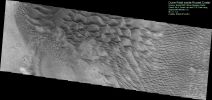
Craters-Russel_Crater-20080116a.jpgDunefield inside Russel Crater (Original NASA/2001 Mars Odyssey Orbiter b/w Frame)64 visitenessun commentoMareKromium
|
|
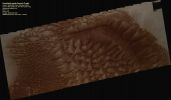
Craters-Russel_Crater-20091019a.jpgUnusually-looking Dunefield inside Russel Crater (Natural Colors; credits: Lunexit)79 visitenessun commentoMareKromium
|
|
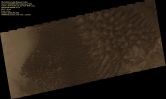
Craters-Russel_Crater-20091112b.jpgRussel Crater and its Dunefield (Natural Colors; credits: Lunexit)64 visitenessun commentoMareKromium
|
|
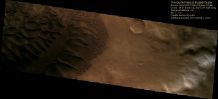
Craters-Russel_Crater-Dunefield-20080317a-PCF-LXTT.jpgDunefield inside Russel Crater (Absolute Natural Colors; credits for the additional process. and color.: Dr Paolo C. Fienga - Lunexit Team)79 visiteCaption NASA:"This beautiful Dunefield is located on the Floor of Russell Crater, in the Noachis Region of Mars".
MareKromium
|
|

Craters-Russel_Crater-Dunefield-PIA13887-PCF-LXTT.jpgRussel Crater's Dunefield (Absolute Natural Colors; credits for the additional process. and color.: Dr Paolo C. Fienga - Lunexit Team)241 visitenessun commentoMareKromium
|
|
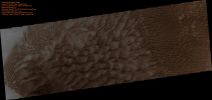
Craters-Russel_Crater-Dunefield-PIA13918-PCF-LXTT.jpgDunes in Russel Crater (Absolute Natural Colors; credits for the additional process. and color.: Dr Paolo C. Fienga - Lunexit Team)198 visitenessun commentoMareKromium
|
|

Craters-Russel_Crater-IR-00.jpgThe "Warm Dunes" of Russell Crater (IR - False Colors)65 visiteCaption NASA:"This InfraRed image shows the main dune field on the floor of Russell Crater. The dunes are bright in this daytime image because they are warm. The sand material is dark".
Coord.: 54,6° South Lat. and 13,0° East Longitude
Nota: nelle immagini IR i rilievi più "luminosi" sono anche quelli "più caldi". Ok. Ma la NASA non si ferma a questo rilievo tecnico e ci dice pure, se leggete con attenzione, che mentre il "dunefield" è luminoso, dunque caldo, i rilievi costituiti da materiali "sabbiosi" (sand material) sono scuri, dunque freddi.
Ma, scusate...seguendo questa logica (dune bright---> calde; sabbia dark---> fredda), la domanda sorge spontanea: ma di che cosa sono "fatte" le dune?!?
O meglio: la "sabbia" che forma le dune (e che si scalda al Sole) in che cosa è diversa rispetto alla sabbia che NON forma le dune - e che rimane fredda - ma che giace comunque al suolo e sul fondo del Cratere Russel? O abbiamo capito male?!? Voi che ne pensate?MareKromium
|
|

Dunefield-Russel_Crater-PIA14150-PCF-LXTT.jpgLarge Dunefield inside Russel Crater (Enhanced Natural Colors; credits: Dr Paolo C. Fienga - Lunexit Team)251 visitenessun commentoMareKromium
|
|

ESP_011580_1255_RED_abrowse.jpgThe Dunes of Russel Crater (Natural Colors; credits: Lunar Explorer Italia)72 visitenessun commentoMareKromium
|
|
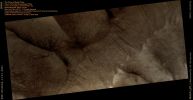
PSP_004038_1255_RED_abrowse.jpgDunes inside Russel Crater (Absolute Natural Colors; credits for the additional process. and color.: Dr Paolo C. Fienga - Lunexit Team)68 visiteThe Russell Crater Dunefield is covered seasonally by Carbon Dioxide (CO2) Frost, and this image shows the Dunefield after the Frost has sublimated (evaporated directly from solid to gas). There are just a few patches left of the bright seasonal frost.
Numerous dark DD Tracks can be seen meandering across the Dunes. The face of the largest dune is lined with Gullies. The source of the Gullies is unclear but could involve erosion by the seasonal CO2 Ice. MareKromium
|
|
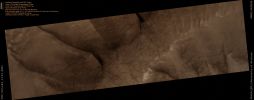
PSP_005383_1255_RED_abrowse-00.jpgDunefield with DD Tracks inside Russel Crater (Absolute Natural Colors; credits for the additional process. and color.: Dr Paolo C. Fienga - Lunexit Team)78 visiteDust Devils make dark, diffuse scribble markings on the Surface by kicking up Dust and are especially active in the Summertime over Dark Surfaces, such as those with many deposits of sand-sized material.
The Surface warms up in the Sunlight, creating the right conditions to form Dust Devils. Mars also has larger dust storms that can deposit a thin layer of Dust and eliminate the Dust Devil Tracks. MareKromium
|
|
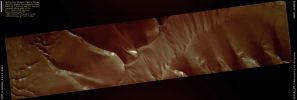
PSP_010090_1255_RED.jpgSpring over Russel Crater (natural colors; credits: Lunexit)75 visiteSpring is already starting to show its influence at the Russell Crater field of sand dunes. Channels down the face of the largest dune show dark spots where the sublimation of the seasonal carbon CO2 Ice Cap has begun.
This active process (where ice evaporates directly to gas) dislodges loose material, leaving dark streaks down steep slopes. The process starts when the Sun peeks above the horizon at the end of Antarctic Night.
Bright streaks may be loose frost cascading down steep slopes.MareKromium
|
|
| 12 immagini su 1 pagina(e) |
|








