| Risultati della ricerca nelle immagini - "Particle" |

Comets-Hartley_2-PIA13626.gifSnowballs near Comet Hartley-2111 visiteCaption NASA:"This movie shows the motion of some Icy Particles in the Cloud around Comet Hartley 2, as seen by NASA's EPOXI mission Spacecraft. A star moving through the background is marked with red and moves in a particular direction and with a particular speed, while the Icy Particles move in random directions. The Icy Particles are marked in green, blue and light blue.
The images for the movie were obtained by the Medium-Resolution Imager on Nov. 4, 2010, the day the EPOXI mission Spacecraft made its closest approach to the Comet".MareKromium
|
|

OPP-SOL1886-MICRO2-GB-LXT.jpgMicroscopic Meridiani - Sol 1886 (possible True Colors; credits: Dr G. Barca & Lunar Explorer Italia)63 visitenessun commentoMareKromium
|
|
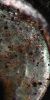
PHOE-SOL137-lg39589-39590-39591-2.jpgMicroscopic Vastitas - Sol 137 (Superdefinition and possible True Colors; credits: Dr G. Barca)76 visitenessun commentoMareKromium
|
|
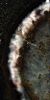
PHOE-SOL137-lg39617-39618-39619-2.jpgMicroscopic Vastitas - Sol 137 (Superdefinition and possible True Colors; credits: Dr G. Barca)74 visitenessun commentoMareKromium
|
|

SOL0069-EB-MF-LXTT-IPF.jpgBright Soil Particle at Rocknest - Sol 69 (an Image-Mosaic in Natural Colors; credits for the additional process. and color.: Elisabetta Bonora and Marco Faccin/Lunar Explorer Italia/Italian Planetary Foundation)106 visiteThese four (4) images show an interesting detail found in a small Pit (or "Bite") created when the NASA - Mars Exploration Rover and Laboratory "Curiosity" collected its second scoop of Martian Soil at a Sandy Patch nicknmaed "Rocknest." The bright Soil Particle visible in the center of each of the four images - which is basically very similar to other particles located elsewhere in the Pit itself, but not visible here - caused a certain and immediate concern because a small, light-toned shred of Debris from the Spacecraft had already been observed just a few Soles before, in a nearby location. However, in this case, the Mission's Science Team assessed that this bright Soil Particle which has ben exposed and scooped in the Pit, is to be considered as Native Martian Material, rather than another Debris coming from the Spacecraft.
These four images were all taken by the Mars Hand Lens Imager (MAHLI) Camera that is positioned on Curiosity's Robotic Arm during the 69th Martian Day, or Sol, of its Mission (such as October, 15, 2012) at Gale Crater, and about a week after the Scoop dug this little hole. The view here covers an area of ground which is less than half a centimeter across.
These four images, which are all NASA - Mars Exploration Rover and Laboratory "Curiosity" b/w frames (identified by the serial n. visible in the lower left side of each picture) have been additionally processed and then colorized in Natural Colors (such as the colors that a perfect human eye - or an Electronic Eye - would actually perceive if someone were on the Surface of Gale Crater - Mars -, near the NASA - Mars Exploration Rover and Laboratory "Curiosity", and then looked down, towards the little Pit excavated on the Surface, by using an original technique created - and, in time, dramatically improved - by the Lunar Explorer Italia Team.MareKromium
|
|
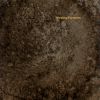
SOL1863-1MICRO2.jpgMovements... - Sol 1863 (Natural Colors; credits: Dr G. Barca)67 visiteDall'occhio del nostro Dr Barca, una "evidenza diretta" dei movimenti (per adesso inspiegabili) di corpuscoli che occorrono sotto gli occhi del Microscopic Imager di Spirit.
Come il Dr Barca stesso ci spiega:"...Vedete quello strano effetto che mostra dei puntini colorati al centro? Direi che si tratta della prova matematica dello spostamento dei granuli di sabbia.
Perchè? Premesso che si tratta di quelle immagini che riprendono un movimento al centro frame - simili ad altre pubblicate non molto tempo fa -, si nota che la collimazione millimetrica che occorre operare nei frames MI per ottenere la Superdefinizione non ha trovato i dovuti riscontri (e cioè particella "a" su particella "A"; "b" su "B"; "c" su "C" etc.).
Questo perchè i granuli si sono spostati, e quindi sono apparsi i diversi colori generati dalla sovrapposizione dei vari strati di filtri...".
Che altro dire? Tutti i "tasselli" stanno andando al loro posto; su Marte "qualcosa" si muove!...MareKromium
|
|
|
|
| 6 immagini su 1 pagina(e) |
|








