| Risultati della ricerca nelle immagini - "One" |

0011-nasa-artemis-orion-flyby-2_gif.gifOrion's Second Lunar Fly-By (GIF-Movie)154 visitenessun commentoMareKromium
|
|

OPP-SOL929-1N210665715EFF75__P0685R0M1.jpg"Little One": just before Victoria (1) - Sol 92963 visiteUno splendido (e piccolo) cratere - dalle dimensioni apparenti di 25/30 mt di diametro - che abbiamo battezzato "Little One": l'ultima fermata prima del grande Victoria Crater il cui bordo (rim) lo si può già vedere con una discreta chiarezza (nei tre frames precedenti).
La NASA, a proposito di nomi e battesimi, ha invece chiamato questo piccolo cratere con il nome di "Emma Dean".
|
|
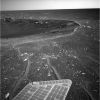
OPP-SOL929-1N210665767EFF75__P0685R0M1.jpg"Little One": just before Victoria (2) - Sol 92962 visitenessun commento
|
|

QB-VikingOne-PIA08616-00.jpgViking One: the Landing Site, 30 years after the landing... (1)111 visiteCaption NASA originale:"Viking 1 landed 30 years ago, on July 20, 1976. It was the first U.S. landing on Mars and a very exciting time for Mars Exploration. Since that time, 4 additional Spacecrafts have successfully landed on Mars and conducted their science investigations. Today, new missions to the Martian Surface are in the works, with landings expected in 2008 (Phoenix) and 2010 (Mars Science Laboratory).
The Viking 1 Lander is difficult to see in MGS-MOC images. The Western Chryse Planitia Landing Site is often obscured by dust hazes and occasional storms, especially during Northern Winter, which would otherwise be the best time to look for the Lander from orbit because the Sun casts longer shadows in Winter.
When the atmosphere is clearest, in portions of the Spring and Summer, the Sun is higher in the sky as seen from MGS's orbit. The spacecraft always passes over the Landing Site Region around 2 p.m. in the afternoon".
|
|

QB-VikingOne-PIA08616-01.jpgViking One: the Landing Site, 30 years after the landing... (2)99 visiteCaption NASA originale:"The suite of pictures shown here describes the best MOC view of the Landing Site. These were previously released in May 2005, but the MOC team felt that 20 July 2006 is an appropriate time to review this story.
The 1st figure (1) visually tells how the Lander was found. The initial observations of the location of Viking 1, as originally determined by members of the Viking science team based on sightlines to various crater rims seen in the Lander images (black lines), did not show the detailed features we knew from the Lander pictures (2) to be in the area.
Using geodetic measurements, the late Merton Davies of the RAND Corporation, a MGS-MOC Co-Investigator, suggested that we should image areas to the East and North of where Viking 1 was thought to be. Timothy J. Parker of the JPL (Pasadena, California), using sightlines to crater rims seen in the Lander images (white lines), deduced a location very close to that suggested by Davies".
|
|

QB-VikingOne-PIA08616-02.jpgViking One: the Landing Site, 30 years after the landing... (3)86 visiteCaption NASA originale:"The MOC image of that location, acquired in 2003, showed additional near-field features (rocks associated with a nearby crater) that closely matched the Viking 1 images (frames 2 and 3, where "B" denotes "Volkswagen Rock"). The inset (upper right of frame 3) is an enlargement that shows the location of the Viking 1 Lander.
The MOC image of the Viking 1 Lander Site (3) was acquired during a test of the MGS Pitch and Roll Observation (PROTO) technique conducted on May 11, 2003. (Following initial tests, the "c" part of "cPROTO" was begun by adding compensation for the motion of the Planet to the technique). The PROTO or cPROTO approach allows MOC to obtain images with better than its nominal 1,5 mt (5 ft) per pixel resolution.
The image shown here (3) was map projected at 50 cm (~20") per pixel. The full 11 May 2003 image can be viewed in the MOC Gallery, it is image R05-00966.
In addition to celebrating the 30th anniversary of the first U.S. robotic Mars landing, we note that 20 July is also the 37th anniversary of the first human landing on the Moon, on 20 July 1969. There are two dates that are most sacred in the space business (three, if you count the 4 October 1957 launch of Sputnik 1). The other date is 12 April, which celebrates the 1961 launch of the first human in space, and the 1981 launch of the first space shuttle orbiter".
|
|
|
|
| 6 immagini su 1 pagina(e) |
|








