| |
| Risultati della ricerca nelle immagini - "Olympia" |
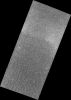
North_Polar_Regions-Olympia_Undae-PIA06848-00.jpgNorth Polar Erg: Olympia Undae (Original NASA/JPL/ASU b/w Frame)97 visiteImage information: VIS instrument;
Latitude: 81,4° North;
Longitude: 180,6° East (such as 179,4° West);
Resolution: 19 meter/pixel.
|
|
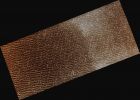
North_Polar_Regions-Olympia_Undae-PIA06848-01.jpgNorth Polar Erg: Olympia Undae (Absolute Natural Colors; credits for the additional process. and color.: Dr Paolo C. Fienga - Lunexit Team)184 visiteImage information: VIS instrument;
Latitude: 81,4° North;
Longitude: 180,6° East (such as 179,4° West);
Resolution: 19 meter/pixel.
MareKromium
|
|
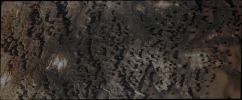
North_Polar_Regions-Olympia_Undae-PIA16320-PCF-LXTT-IPF.jpgFeatures of Olympia Undae (Absolute Natural Colors; credits for the additional process. and color.: Dr Paolo C. Fienga/Lunar Explorer Italia/Italian Planetary Foundation)98 visiteThis NASA - Mars Odyssey Orbiter "VIS" image shows a portion of Olympia Undae, the largest Dunefield near the North Polar Cap. In this Region, the Dunes are spaced far enough apart so to allow us to see the details of the Surface that they are moving across.
Orbit Number: 47095
Latitude: 79,6934° North
Longitude: 149,575° East
Instrument: VIS
Captured: July, 26, 2012MareKromium
|
|

North_Polar_Regions-Olympia_Undae-PIA18243-PCF-LXTT-IPF.jpgOlympia Undae (Absolute Natural Colors; credits for the additional process. and color. Dr Paolo C. Fienga/Lunar Explorer Italia/Italian Planetary Foundation)78 visiteOlympia Undae is a large Field of Sand Dunes surrounding the North Polar Ice Cap of Mars. Because of the High Latitude of the Dunes, they are covered with Water and Carbon Dioxide (CO2) Frost for the whole Winter, Springtime and part of Summer as well (remember that during the Wintertime the Dunes are also poorly illuminated). Said that, it comes natural to understand that these Dunes are are best viewed during Summertime (from mid, to late Summer, to be more precise), when some of their most obvious Features - such as the Ripples that form on the Dunes' Surface - can be seen in detail.
In this sub-image, taken by the NASA - Mars Reconnaissance Orbiter on April, 9, 2014, we can see the Dunes in the Early Martian Summer. The Dark (Gray, with Reddish nuances here) Material visible here is the Sand that makes up the Dunes. Between them, Bright Bedrock as well as some lingering Patches of Frost (White-colored) that has not yet sublimated, are also well visible. If you look carefully, you will be able to see small Ripples that formed on the Dunes' Flat Surfaces, as well as Bright so-called "Inter-Dune Areas".
This specific area has been viewed several times by HiRISE, so NASA was able to compare this image to other past ones (from about 2 years ago); the most obvious difference between these images was simply found in the Illumination, which was much better in the AD 2012 (it is possible to say so once it has been noticed that the 2012 images showed much finer details). However, and despite that beforementioned difference, several changes in the Boundaries of the Sand and Ripple positions were also found, and this last circumstance showed - and proved - that (the Dominant and very strong North Polar) Winds, perhaps assisted by the Sublimation of the Frost that covers most of the Dunes (an event, the latter, that actually contributes in loosening Sand), are continuously modifying the Landforms of Olympia Undae, from one year to another.
Mars Local Time: 13:52 (Early Afternoon)
Coord. (centered): 81,633° North Lat. and 178,830° East Long.
Spacecraft altitude: 321,8 Km (such as about 199,837 miles)
Original image scale range: 32,2 cm/pixel (with 1 x 1 binning) so objects ~ 97 cm across are resolved
Map projected scale: 25 cm/pixel
Map projection: POLAR STEREOGRAPHIC
Emission Angle: 17,9°
Phase Angle: 8,0°
Solar Incidence Angle: 60° (meaning that the Sun was about 30° above the Local Horizon at the time the picture was taken)
Solar Longitude: 113,9° (Northern Summer - Southern Winter)
Credits: NASA/JPL/University of Arizona
Additional process. and coloring: Lunar Explorer Italia
This picture (which is a NASA - Original Mars Reconnaissance Orbiter False Colors and NON Map-Projected sub-frame identified by the serial n. ESP_036099_2615-1) has been additionally processed, magnified to aid the visibility of the details, contrast enhanced, Gamma corrected, and then re-colorized in Absolute Natural Colors (such as the colors that a human eye would actually perceive if someone were onboard the NASA - Mars Reconnaissance Orbiter and then looked down, towards the Surface of Mars), by using an original technique created - and, in time, dramatically improved - by the Lunar Explorer Italia Team.MareKromium
|
|
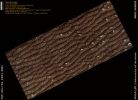
PSP_001736_2605_RED_abrowse.jpgOlympia Undae (Natural Colors; credits for the additional process. and color.: Dr Paolo C. Fienga - Lunexit Team)80 visiteThis observation shows Dark Dunes and light Polygonal Terrain in Olympia Undae, also known as the North Polar Erg.
Two sets of Dunes are obvious. The major set trends North-South, indicating winds from the East or West. Between the crests of these Dunes is a second set oriented mostly East-West.
Zooming in on the Dunes, a rippled texture is apparent, probably due to redistribution of sand at the scale of meters and less. Near the crests of some Dunes are Channel-like features, with some branching downslope. The origin of these Channels is unknown, but they may result from the flow and displacement of sand that was fluidized by sublimating CO2 or water frost.
Bright patches of ground are found in some inter-dune areas, with many having a polygonal texture.
Polygons on Earth form from contraction induced by stresses from dehydration, cooling and other processes, so these features may have a similar origin. The CRISM instrument on MRO and OMEGA on Mars Express indicates that many dunes in Olympia Undae are rich in the mineral Gypsum (---> gesso).MareKromium
|
|
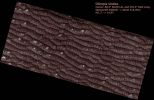
Psp_001736_2605_red.jpgThe Dunes of Olympia Undae (MULTISPECTRUM; credits: Lunexit)77 visiteThis HiRISE image shows dark dunes and light polygonal terrain in Olympia Undae, also known as the North Polar Erg.
Two sets of dunes are obvious. The major set trends ~North-South, indicating winds from the East or West. Between the crests of these dunes is a second set oriented mostly East-West.
Zooming in on the dunes, a rippled texture is apparent, probably due to redistribution of sand at the scale of meters and less. Near the crests of some dunes are channel-like features, with some branching downslope.
The origin of these channels is unknown, but they may result from the flow and displacement of sand that was fluidized by sublimating CO2 or water frost.
Bright patches of ground are found in some inter-dune areas, with many having a polygonal texture. Polygons on Earth form from contraction induced by stresses from dehydration, cooling, and other processes, so these features may have a similar origin.
The CRISM instrument on MRO and OMEGA on Mars Express indicates that many dunes in Olympia Undae are rich in the mineral gypsum. MareKromium
|
|

R-PIA08788-1.jpgOlympia Undae (1)78 visiteThe Compact Reconnaissance Imaging Spectrometer for Mars, a mineral mapping instrument on NASA's Mars Reconnaissance Orbiter (CRISM), began observing Mars after its lens cover was opened on Sept. 27, 2006.
This image shows one of the first regions of Mars measured after CRISM's cover was opened.
CRISM takes images in two basic formats. The first format is a "targeted image" about 10 by 10 Km (about 6 by 6 miles), at about 18 mt (60 feet) per pixel, in 544 colors covering wavelengths of 0,36 to 3,92 micrometers. The second format is a lower-resolution strip 10 Km (about 6 miles) wide and thousands of kilometers long, at 200 mt (660 feet) per pixel, in 72 colors. Many thousands of these "multispectral survey" strips are used to build a global map.
The image is part of the second multispectral survey strip, taken at 22:36 UTC (6:36 p.m. EDT) on Sept. 27, 2006. Only minimal processing of the data has been done at this early point in the MRO's Mission.
The strip crosses part of the north polar region named Olympia Undae, and stretches between 76.7 north latitude, 141.9 east longitude and 85.5 north, 115.8 east. From the top, the northern end of the image crosses layers of dusty and clean ice in the north polar cap. Moving south the image covers dusty sedimentary deposits, dark sand dunes, and outlying polar ice deposits.
|
|

R-PIA08788-2.jpgOlympia Undae (2)81 visiteThis image shows three representations of the 72 colors. The left panel is a nearly true-color composite in which the blue, green, and red planes are 0.44, 0.53, and 0.60 micrometer light -- nearly as the human eye would see. The contrast between the bright ice and dark dunes is so large that the dunes are barely seen. The middle panel is false color constructed from infrared wavelengths just beyond the range of the human eye. The blue, green, and red planes cover 0.80, 0.95, and 1.06 micrometer light. In this rendering of the data the differences between ice- and soil-rich regions are not as apparent because the colors of ice and dust are similar in this wavelength region. The right panel uses 1.15, 1.8, and 2.25 micrometer light in the blue, green and red planes and provides a dramatically different view of the scene. The areas of highest ice content appear in blue, and those with a mix of dust and ice -- most of the scene -- appear yellowish. The dunes are now visible against the ice because of their higher brightness at longer infrared wavelengths, and appear ruddy brown.
|
|
| 8 immagini su 1 pagina(e) |
|

|
|








