| Risultati della ricerca nelle immagini - "Nereid" |

Dunes-Dunefield_in_Nereidum_Montes-20071214a-PCF-LXTT.jpgDark Dunefield in Western Nereidum Montes (Natural Colors; credits for the additional process. and color.: Dr Paolo C. Fienga - Lunexit Team)77 visitenessun commentoMareKromium
|
|

Dunes-Dunefield_near_Nereidum_Montes-AP-20071116a-PCF-LXTT.jpgDunefield near Nereidum Montes (Absolute Natural Colors; credits for the additional process. and color.: Dr Paolo C. Fienga - Lunexit Team)223 visitenessun commentoMareKromium
|
|

ESP_012202_1390_RED_abrowse.jpgDunes in Western Nereidum Montes (Extremely Enhanced Natural Colors; credits: Lunar Explorer Italia)67 visitenessun commentoMareKromium
|
|
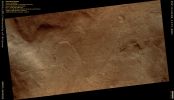
ESP_014298_1375_RED_abrowse.jpgNereidum Montes (Natural Colors; credits: Lunexit)69 visitenessun commentoMareKromium
|
|
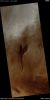
ESP_014312_1320_RED_abrowse.jpgGully in Massif in the Nereidum Montes (Natural Colors; credits: Lunexit)137 visiteSource: NASA/MRO
Coord.: 47,4° South Lat. and 305,3° East Long.
Spacecraft altitude: about 253 Km
M.L.T.: 14:28 (early afternoon)
S.I.A.: 44° (with the Sun about 46° above the Local Horizon)
Credits: NASA/JPL/Univ. of Arizona
Additional process. and color.: LunexitMareKromium
|
|
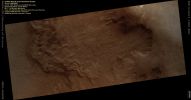
ESP_014325_1400_RED_abrowse.jpgGullied Massif in Nereidum Montes (Natural Colors; credits: Lunexit)65 visitenessun commentoMareKromium
|
|

ESP_020786_1420_RED_abrowse-PCF-LXTT-02.jpgUnnamed Crater with deep-incised Gullies (Absolute Natural Colors; credits for the additional process. and color.: Dr Paolo C. Fienga - Lunexit Team)197 visiteMars Local Time: 15:36 (Middle Afternoon)
Coord. (centered): 37,6° South Lat. and 314,1° East Long.
Spacecraft altitude: 271,7 Km (such as about 169,8 miles)
Original image scale range: 27,2 cm/pixel (with 1 x 1 binning) so objects ~ 54,4 cm across are resolved (with 2 by 2 binning)
Map projected scale: 25 cm/pixel
Map projection: EQUIRECTANGULAR
Emission Angle: 21,4°
Sun-Mars-Spacecraft (or "Phase") Angle: 74,9°
Solar Incidence Angle: 54° (meaning that the Sun is about 36° above the Local Horizon)
Solar Longitude: 209,6° (Northern Fall)
Credits: NASA/JPL/University of Arizona
Additional process. and coloring: Dr Paolo C. Fienga - Lunar Explorer ItaliaMareKromium
|
|

ESP_023173_1405_RED_abrowse-PCF-LXTT.jpgGullies and Lobate Material in an Unnamed Crater located in Nereidum Montes (Absolute Natural Colors; credits for the additional process. and color.: Dr Paolo C. Fienga - Lunexit Team)218 visiteMars Local Time: 14:21 (Early Afternoon)
Coord. (centered): 39,1° South Lat. and 309,0° East Long.
Spacecraft altitude: 260,5 Km (such as about 162,8 miles)
Original image scale range: 26,1 cm/pixel (with 1 x 1 binning) so objects ~ 78 cm across are resolved
Map projected scale: 25 cm/pixel
Map projection: EQUIRECTANGULAR
Emission Angle: 15,4°
Sun-Mars-Spacecraft (or "Phase") Angle: 28,5°
Solar Incidence Angle: 40° (meaning that the Sun is about 50° above the Local Horizon)
Solar Longitude: 323,8° (Northern Winter)
Credits: NASA/JPL/University of Arizona
Additional process. and coloring: Dr Paolo C. Fienga - Lunar Explorer ItaliaMareKromium
|
|

Nereid-CJH.gifNereid66 visiteNereid was discovered in 1949 by astronomer Gerard Kuiper. Nereid is about 340 Km (210 miles) in diameter and is so far from Neptune that it requires 360 days to make one orbit. Voyager's best photos of Nereid were taken from about 4,7 MKM (about 2,9 MMs). The photos show that the moon's surface reflects about 14% of the sunlight that strikes it, making it somewhat more reflective than Earth's Moon and more than twice as reflective as Proteus. Nereid's orbit is the most eccentric in the Solar System. Its distance to Neptune ranges from about 1.353.600 Km (about 841.100 miles) to 9.623.700 Km (such as about 5.980.200 miles).
|
|

Nereid-V2-PIA00054.jpgNereid67 visiteUn'immagine certo non magnifica, ma di grande valore e molto rara: si tratta di Nereide, la seconda delle due Lune Maggiori di Nettuno. I dettagli che possono percepirsi da questa fotografia ottenuta dal Voyager 2 sono troppo indefiniti per poter azzardare delle valutazioni, ma l'ipotesi pių probabile relativamente alle fattezze di Nereide, č che si tratti di un piccolo mondo fatto di roccia e ghiaccio, dalla forma irregolare, ricoperto di crateri da impatto e costellato da crepacci che ne rendono la superficie completamente inospitale.
Forse, come sostengono alcuni Scienziati, si potrebbe trattare di un KBO catturato da Nettuno in tempi assai remoti.
|
|

Nereid-vg2_1138148.jpgNereid (HR)78 visitenessun commento
|
|
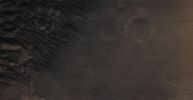
Nereidum_Montes-Dunefield-ESP_029608_1390-PCF-LXTT-IPF-1.jpgDunefield in Nereidum Nontes (CTX Frame - Absolute Natural Colors; credits for the additional process. and color.: Dr Paolo C. Fienga/Lunar Explorer Italia/IPF)67 visiteMars Local Time: 15:43 (Middle Afternoon)
Coord. (centered): 40,495° North Lat. and 309,939° East Long.
Spacecraft altitude: 254,8 Km (such as about 159,3 miles)
Original image scale range: 25,5 cm/pixel (with 1 x 1 binning) so objects ~ 76 cm across are resolved
Map projected scale: 25 cm/pixel
Map projection: EQUIRECTANGULAR
Emission Angle: 1,0°
Phase Angle: 57,3°
Solar Incidence Angle: 56° (meaning that the Sun was about 34° above the Local Horizon at the time the picture was taken)
Solar Longitude: 209,9° (Northern Autumn - Southern Spring)
Credits: NASA/JPL/University of Arizona
Additional process. and coloring: Lunar Explorer ItaliaMareKromium
|
|
| 14 immagini su 2 pagina(e) |
1 |
|





