| Risultati della ricerca nelle immagini - "Mound" |

APOLLO 12 AS 12-46-6731 HR.jpgAS 12-46-6731 - The larger "Mound" (HR)124 visiteOriginal caption:"Rightward of AS 46-6730. Down-Sun view. The larger of the 2 mounds that Conrad and Bean will investigate after deploying the ALSEP is visible at the right side just below the local horizon. (...) The large mound is about 22° North-West, as seen from the LM. At the time Conrad took this picture (about 12:44 GMT on November 19, 1969), the Sun was almost exactly East of the spacecraft and at an elevation of 7,6°. The Northern rim of Head Crater is on a line about halfway between the tip of Conrad's shadow and the mound. (...).
Scan courtesy NASA Johnson SC".
|
|

APOLLO 12 AS 12-46-6822 HR.jpgAS 12-46-6822 (HR) - The "Lunar Mound"158 visiteUna splendida interpretazione dell'outcrop lunare più famoso della Storia delle Missioni Apollo: un'immagine che ci fornisce tutti gli spunti necessari e sufficienti per parlare di possibili simmetrie, regolarità e ripetitività e di tutto quant'altro può trasformare un'Opera della Natura in un (possibile) artefatto.
Dov'é la Verità?
|
|

APOLLO 12 AS 12-46-6830 HR.jpgAS 12-46-6830 - The "Little Mound" (HR)184 visiteForse del "Big Mound" ne erano a conoscenza tutti (o quasi) gli amanti e gli appassionati degli Apollo Days ma...Quanti di Voi erano a conoscenza di quest'altro outcrop il quale venne - diremmo piuttosto giustamente -battezzato "The Little Mound" (il Piccolo Cumulo)?
|
|
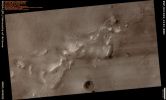
ESP_021919_2135_RED_abrowse.jpgPseudo-Pyramids (Natural Colors; credits for the additional process. and color.: Dr Paolo C. Fienga - Lunexit Team)184 visitenessun commentoMareKromium
|
|

ESP_022592_2140_RED_abrowse-PCF-LXTT.jpgMounds in Northern Chrise Planitia (Absolute Natural Colors; credits for the additional process. and color.: Dr Paolo C. Fienga - Lunexit Team)121 visitenessun commentoMareKromium
|
|

ORIGINAL NASA - APOLLO 12 - AS 12-26-6822.jpgAS 12-46-6822 - The "Lunar Mound"93 visite
|
|
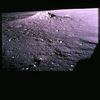
ORIGINAL NASA - APOLLO 12 - AS 12-46-6795.jpgAS 12-46-6795 - The "Lunar Mound"80 visite
|
|
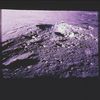
ORIGINAL NASA - APOLLO 12 - AS 12-46-6828.jpgAS 12-46-6828 - The "Lunar Mound", again (2)71 visite
|
|

PHOE-SOL134-lg39407-39408-39409-2.jpgThe Little (Man-Made) Mound near Phoenix - Sol 134 (Superdefinition and possible True Colors; credits: Dr G. Barca)68 visitenessun commentoMareKromium
|
|
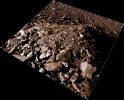
PHOE-SOL134-lg39407-39408-39409-3.jpgThe Little (Man-Made) Mound near Phoenix: perspective View - Sol 134 (Superdefinition and possible True Colors; credits: Dr G. Barca)91 visitenessun commentoMareKromium
|
|
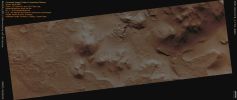
PSP_002478_1770_RED_abrowse-00.jpgEroding Crater Fill (CTX Frame - Natural Colors; credits for the additional process. and color.: Dr Paolo C. Fienga - Lunexit Team) 115 visiteThis image shows the edge of a Mound (----> terrapieno) of sediments in the center of a large Impact Crater near Amenthes Planum.
The Mound probably once filled much more of the Crater, but it is now eroding away. A broad view shows several small plateaus which have likely been preserved by a relatively resistant cap layer, while other levels are exposed elsewhere.MareKromium
|
|
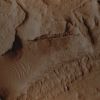
PSP_002478_1770_RED_abrowse-01.jpgEroding Crater Fill (EDM - Natural Colors; credits for the additional process. and color.: Dr Paolo C. Fienga - Lunexit Team)103 visiteThis EDM shows several types of Layers exposed in a Pit. These variations point to a relatively complex geologic history at this site.
Some Layers appear to be fracturing into boulders which roll downslope, while others appear relatively smooth. There are also variations in tone, from light to dark. This diversity may be due to different types of rock, as well as varying strength.
Images such as this one indicate that rocks formed on Mars in a variety of ways, and by careful analysis it may be possible to deduce some of the history that has produced the geology at this site.MareKromium
|
|
| 21 immagini su 2 pagina(e) |
1 |
|








