
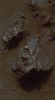
PSP_001415_1875-MF-LXT2.jpg"Marching Together": an unusual Gravity Wasting Phenomenon on the Slopes of Mojave Crater (Natural Colors; credits: Dr M. Faccin - Lunexit Team)75 visite...Curiosissima la "discesa in doppia-coppia, con divisione a mezza corsa" di questi boulders i quali, probabilmente a seguito di un fenomeno di Gravity Wasting o - chissà... - forse perchè scossi da un lieve sisma o da vibrazioni del suolo susseguenti ad un impatto occorso non troppo lontano, hanno (riteniamo contemporaneamente, vista la tessitura delle tracce lasciate al suolo) iniziato a rotolare e quindi, dopo essersi "divisi", una coppia di macigni - quella, riteniamo, formata dai due boulders più grossi e pesanti - ha proseguito nella direzione originaria, mentre un'altra coppia - costituita da due macigni più leggeri e/o meno compatti - ha curiosamente e repentinamente "deviato", disegnando e consegnando alla Storia Geologica di Marte - nonchè alle telecamere della Sonda MRO ed ai nostri occhi -, una FANTASTICA "Coppia di Archi di Parabola"!
Certo, se poi qualcuno volesse fantasticare pensando ad "evidenze di attività superficiale non naturale", può farlo. Ma noi, in questo caso, ne dubitiamo fortemente...
(NOTA: una "dritta" per i più Curiosi. Se volete, andate a guardare le "Boulder Tracks" lasciate su un leggero pendìo situato all'interno del Cratere Lunare "Vitello" - ed usate da molti per ipotizzare lo svolgimento di attività aliene sul nostro Satellite Naturale - e...sbalordite: le tracce del boulder Lunare del Cratere Vitello sono PRATICAMENTE identiche a queste!...)MareKromium
|
|
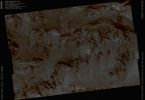
PSP_001415_1875_RED_abrowse.jpgAlluvial Fans in Mojave Crater (Natural Colors; credits: Lunexit)93 visiteAptly-named Mojave Crater in the Xanthe Terra Region has Alluvial Fans that look remarkably similar to landforms in the Mojave Desert of South-Eastern California and portions of Nevada and Arizona.
Alluvial Fans are "fan-shaped deposits of water-transported material" (---> Lat.: alluvium). They typically form at the base of hills or mountains where there is a marked break, or flattening of slope.
They typically deposit big rocks near their Mouths (close to the mountains) and smaller rocks at greater distances. Alluvial Fans form as a result of heavy desert Downpours, typically "Thundershowers" (Nota Lunexit: piogge torrenziali che occorrono durante violenti temporali, per lo più di tipo tropicale).
Because deserts are poorly vegetated, heavy and short-lived Downpours create a great deal of erosion and nearby deposition.
There are Fans inside and around the outsides of Mojave Crater on Mars that perfectly match the morphology of Alluvial Fans on Earth, with the exception of a few small impact craters dotting this Martian Landscape.
Channels begin at the apex of topographic Ridges, consistent with precipitation as the source of water, rather than groundwater. This remarkable landscape was first discovered from Mars Orbital Camera images. Mars researchers have suggested that impact-induced Atmospheric Precipitation may have created these unique landscapes.
This HiRISE image at up to 29 cm/pixel scale supports the Alluvial Fan interpretation, in particular by showing that the sizes of the largest rocks decrease away from the Mouths of the Fans.MareKromium
|
|
PSP_002101_1875_red-01.jpgMojave Crater Floor and Central Uplift (EDM - Natural Colors; credits: Lunexit)66 visiteThis HiRISE sub-image shows a portion of the Central Uplift structure in Mojave Crater.
Central Uplifts are a typical feature of large impact craters on the Earth, the Moon and Mars; craters larger than 6 or 7 Km in diameter on Mars typically form this mountain-like peak in the central portion of the crater interior.
This peak consists of rocks originating from several kilometers beneath the pre-impact surface. Mojave has a very prominent Central Uplift as it has a diameter of approx. 60 Km (about 37 miles).
In this image, Boulders as large as 15 mt (50 feet) across have been eroded from the massive uplifted rock and have rolled downslope.
Fine-grained Debris has also collected in the topographic lows and has been shaped by the wind into Dunes and Ripples. Notably absent from this image are the striking Drainage Channels and Alluvial Fans that are abundant on the Wall-Terraces and Ejecta of Mojave Crater (see PSP_001415_1875).
These features were likely formed by Surface Runoff of liquid water, which may have been released from the Subsurface during the impact event that formed Mojave.
Previously, it had been suggested that a brief, torrential downpour over Mojave Crater delivered the water. However, Mars Orbiter Camera's (MOC) images of Mojave's Central Uplift have previously shown no evidence for Surface Runoff, and the higher resolution of this HiRISE image (2.4 MB) confirms that this part of the Crater appears untouched by liquid water.
So the question remains: by what means was the water, in the form of Runoff, supplied to Mojave? This question, in addition to several others regarding this phenomenon, are currently being investigated by the HiRISE team and their collaborators.MareKromium
|
|
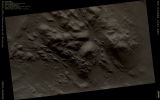
PSP_010888_2030_RED_abrowse.jpgMojave Crater's Floor and Central Uplift (Natural Colors; credits: Dr Paolo C. Fienga - Lunexit Team)74 visiteThis observation shows a portion of the Central Uplift structure in Mojave Crater.
Central Uplifts are a typical feature of large Impact Craters on Earth, Moon and Mars; craters larger than 6 or 7 Km in diameter on Mars typically form this mountain-like peak in the central portion of the crater interior.
This Peak consists of rocks originating from several kilometers beneath the pre-impact surface.
Mojave has a very prominent Central Uplift as it has a diameter of about 60 Km (apprx. 37 miles). In this image, boulders as large as about 15 meters (50 feet) across have been eroded from the massive uplifted rock and have rolled downslope. Fine-grained debris has also collected in the topographic lows, and has been shaped by the wind into Dunes and Ripples.
Notably absent from this image are the striking Drainage Channels and Alluvial Fans that are abundant on the wall-terraces and ejecta of Mojave Crater (see PSP_001415_1875). These features were likely formed by Surface Runoff of liquid water, which may have been released from the Subsurface during the impact event that formed Mojave.
Previously, it had been suggested that a brief, torrential downpour over Mojave Crater delivered the water. However, Mars Orbiter Camera's (MOC) images of Mojave's Central Uplift have previously shown no evidence for Surface Runoff, and the higher resolution of this HiRISE image confirms that this part of the Crater appears untouched by liquid water.
So the question remains: by what means was the water, in the form of Runoff, supplied to Mojave? This question, in addition to several others regarding this phenomenon, are currently being investigated by the HiRISE team and their collaborators.MareKromium
|
|








