| Risultati della ricerca nelle immagini - "Miyamoto" |
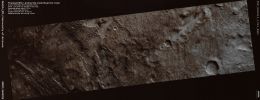
PSP_006913_1765_RED_abrowse-PCF-LXTT-1.jpgPossible MSL Landing Site in Miyamoto Crater (Enhanced Absolute Natural Colors; credits for the additional process. and color.: Dr Paolo C. Fienga - Lunexit Team) 209 visiteMiyamoto Crater is located in the South-Western portion of Meridiani Planum (and to the South-West of the Mars Exploration Rover Opportunity Landing Site). This image shows fairly smooth plains and some areas covered by Windstreaks, suggesting that wind is an active process here, depositing surface material downwind in the form of Streaks.
This possible Landing Site is adjacent to the hematite-bearing plains unit where the Opportunity Rover sits. The CRISM instrument has detected phyllosilicates (clay minerals) at this Site, which scientists believe to have formed in the presence of water. The MSL rover would investigate the mineral diversity here, which includes Phyllosilicates and Sulfates.MareKromium
|
|
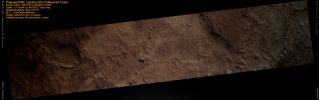
PSP_007124_1765_RED_abrowse~0.jpgProposed MSL Landing Site in Miyamoto Crater (MULTISPECTRUM; credits: Lunexit)65 visiteMiyamoto Crater is located in South-Western Meridiani Planum (and South-West of the Mars Exploration Rover Opportunity Landing Site).
This image shows fairly smooth plains and some areas covered by Windstreaks.
The streaks suggest that wind is an active process here, depositing surface material downwind in this distinctive form. This Landing Site is adjacent to the Hematite-bearing plains unit where the Opportunity Rover sits.
The CRISM instrument has detected Phyllosilicates (Clay Minerals) at this Landing Site, which scientists believe to have formed in the presence of water.
The Mars Science Laboratory rover would investigate the mineral diversity here, which includes Phyllosilicates and Sulfate Minerals.
MareKromium
|
|
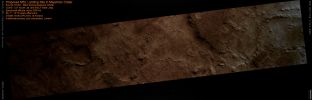
PSP_007704_1765_RED_abrowse~0.jpgProposed MSL Landing Site in Miyamoto Crater (MULTISPECTRUM; credits: Lunexit)78 visiteMiyamoto Crater is located in South-Western Meridiani Planum (and South-West of the Mars Exploration Rover Opportunity Landing Site).
This image shows fairly smooth plains and some areas covered by Windstreaks.
The streaks suggest that wind is an active process here, depositing surface material downwind in this distinctive form. This Landing Site is adjacent to the Hematite-bearing plains unit where the Opportunity Rover sits.
The CRISM instrument has detected Phyllosilicates (Clay Minerals) at this Landing Site, which scientists believe to have formed in the presence of water.
The Mars Science Laboratory rover would investigate the mineral diversity here, which includes Phyllosilicates and Sulfate Minerals.MareKromium
|
|
|
| 3 immagini su 1 pagina(e) |
|








