| |
| Risultati della ricerca nelle immagini - "Limb" |

Martian_Horizon-I28598005_BTR-PCF-LXTT.pngDaedalia Planum and the Atmosphere of Mars (Enhanced Natural Colors; credits for the additional process. and color.: Dr Paolo C. Fienga - Lunexit Team)70 visiteOn May 25, 2008, the Phoenix Lander arrived at Mars and raced to a safe touchdown on the Northern Plains. At the same time, NASA's Mars Odyssey orbiter turned its radio antenna to listen for signals from the Spacecraft and relayed them to mission controllers on Earth.
As an added benefit of the radio monitoring, an instrument aboard Mars Odyssey, the Thermal Emission Imaging System (or THEMIS), got a chance to take an image profiling the Martian Atmosphere as seen above the edge (or limb) of the Planet.
In normal operation, THEMIS points straight down at the ground passing below the orbiter. Scientists term this viewing geometry as "Nadir-looking", referring to the point opposite the Zenith, which is straight overhead.
THEMIS is basically a camera, and its fundamental mission is to image Mars at 10 IR and 5 visual "colors". The visual images map the landforms, while the IR images detect surface temperatures and identify mineral compositions.
To communicate with the Phoenix Lander, the location of Odyssey's antenna required mission control to roll and tilt the entire Spacecraft so the dish pointed at the ground. And THEMIS (which is bolted to the side of Odyssey) rolled and tilted with it, turning its gaze off toward the Limb of Mars, 90° from its usual perspective.
During the roll, THEMIS made this image which sweeps from the cratered surface of Daedalia Planum northward to the visible edge of Mars. It also includes the Atmosphere (seen edge on) and the blackness of space.
"Oblique views like these - which we call 'off-Nadir images' - suggest an additional role for THEMIS", says Philip Christensen of Arizona State University's School of Earth and Space Exploration. A Regents' Professor of Geological Sciences, Christensen is the director of the Mars Space Flight Facility as well as the designer and Principal Investigator for THEMIS.
"We would like to take such oblique views more often in the future", he says, noting they can help out in the study of the Martian Atmosphere. Such studies are crucial for understanding Mars' weather and climate.
Christopher Edwards, a graduate student at the Mars Space Flight Facility, explains, "We can use THEMIS to map relative temperature differences in the Atmosphere, extending from the Surface to Space. Tracked over months and years, these measurements should give us data on the different sizes of particles caught in the air."
Sideways viewing offers additional benefits as well, including letting the THEMIS team fill gaps in the visual coverage of the surface.
The global image map of Mars at visual wavelengths still has many blacked-out sections sprinkled across it, where coverage is incomplete. Also, clouds and haze have obscured the ground at times when the Spacecraft is flying over.
But with THEMIS operating in Nadir-only mode, months or even years may pass before it can re-observe an area on the ground under clear conditions.
"Looking off-nadir - even 20° or less - would make it much easier to fill these gaps", says Christensen.
NASA is considering new mission rules for Mars Odyssey that would allow THEMIS to point away from the nadir as part of routine operations. If enacted, the rules would go into effect after Mars Odyssey finishes its role as radio relay for Phoenix.
In addition, explains Christensen, NASA is also considering another possible modification: "After the Phoenix Mission wraps up this fall, NASA may change the orbit of Mars Odyssey".
This would alter the spacecraft's orbit to pass overhead at 3 p.m. (15:00) instead of the current 5:30 p.m. (17:30) time. The result would give significant benefits for THEMIS and the scientists who use its data.
"Changing the orbit to an earlier time of day magnifies the day-night temperature contrast in the surface rocks", says Christensen. Strong temperature differences make it possible for scientists to detect different kinds of rocks on the surface using THEMIS.
Says Christensen, "This would give us a lot better data to carry out the mineral identification part of THEMIS' mission".MareKromium
|
|

Martian_Limb-MGS-E23-00100_limb-00.jpgMartian Limb and Outer Space (Original NASA/MGS/MSSS b/w Frame)179 visitecaption originale: "The Mars Global Surveyor (MGS) Mars Orbiter Camera (MOC) red and blue wide angle cameras provide daily coverage of the Red Planet "from Limb to Limb." The "Limbs" are the edges of the Planet as seen to the West and East of the spacecraft. Depending on weather conditions, Clouds or Haze can sometimes be seen above the Limb. This picture was taken by the blue camera in December 2002. It is an oblique view looking Westward across heavily Cratered Terrain at High Southern Latitudes. A thin line of Haze, high in the Martian Atmosphere, can be seen above the Planet's Surface. The view of Craters in the foreground is enhanced by the presence of bright, winter-time CO2 Frost. The darkness above the Limb is outer space".
|
|
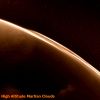
Martian_Limb-Upper_Atmosphere.jpgHigh Altitude Clouds (Contrast Enhanced Natural Colors; credits for the additional process. and color.: Dr Paolo C. Fienga - Lunexit Team)66 visitenessun commento
|
|

ORIGINAL NASA - APOLLO 17 - AS 17-152-23275-A.jpgAS 17-142-23275 - The "Last Rising Earth"68 visite
|
|

ZZ-Mercury-Limb-Flare-Fake-PIA16909-PCF-LXTT-IPF-0.jpgThis is NOT a "Game"!100 visiteThis beautiful and, as you can see, deeply suggestive image has been recently taken by the NASA - MESSENGER Spacecraft, while it was imaging the Limb of the Planet Mercury. What you see here could reasonably be an "Outgassing" - like the controversial ones which, sometimes, have been seen occurring on our Moon (actually, the so-called "Outgassings" are events in which Volatile-rich Materials are vented from deep inside the Lunar Interior, up to the Lunar Surface - specifically, we can think about Elements like Radon, Nitrogen, Carbon Monoxide, and/or Carbon Dioxide - and which might be the visible result of Low Level (---> Residual) Lunar Volcanic and/or Tectonic Activities). These Outgassing Phenomena, as you should know, are commonly put in the Cathegory of the so-called "Transient Lunar Phenomena" (or TLP, for short).-
On the other hand, this "Flare" might also be the result of an extremely unlikely (but yet possible) Residual Active Volcanic Activity (so, in this scenario, we would be looking at an actual Volcanic Plume) which happened on the innermost Planet of the Solar System: a Planet that has always been considered by the Planetary Scientists - as well as by the General Scientific Community -, like a (Geologically speaking) "Completely Dead Celestial Body".
It is also possible (even though we, as IPF, believe that this very last hypothesis is the least likely of the three) that the "Flare-like Light" seen here, on the Mercurian Limb, could be the evidence of an Impact (i.e.: a Meteor Strike) that has just occurred. However, if this hypothesis were true, we could also assume, just by looking at the shapes of both the Main Plume and the Upper Cloud which can be seen right on top of the Plume itself, that the Celestial Object that hit the Surface of Mercury should/must have followed a nearly (---> almost perfectly) Vertical Impact Trajectory (and this is another rather unlikely - better yet: extremely rare - circumstance).
This picture (which is an Original NASA - MESSENGER Spacecraft b/w frame published on the NASA - Planetary Photojournal with the ID n. PIA 16909 - but now, as we wrote herebefore, removed) has been additionally processed and then colorized in Absolute Natural Colors (such as the colors that a human eye would actually perceive if someone were onboard the NASA - MESSENGER Spacecraft and then looked down, towards the Surface of Mercury), by using an original technique created - and, in time, dramatically improved - by the Lunar Explorer Italia Team. Different colors, as well as different shades of the same color, mean, among other things, the existence of different Elements (Minerals) present on the Surface of Mercury, each having a different Albedo (---> Reflectivity) and Chemical Composition.
Important Note for the Readers: the People working at NASA for The MESSENGER Team implied that this picture was (once again, after "Caduceus") some sort of "practical joke", created to celebrate the Worldwide famous "April Fools' Day". Well, we, as IPF, believe that if this picture, as it seems, is actually a "joke" (---> a fake, in this case), it really is a VERY, VERY poor and stupid one. Please, forgive us for being so direct, but even though some People may think that this idea of making a practical joke out of a MESSENGER b/w frame was "funny" and "educational" (and, in a pretty distorted way, it probably was so), we honestly believe that this silly "stunt" only proves, in a LOUD and CLEAR WAY, how easily, once you have the right REPUTATION, skills and means, the original RAW image-data received from Space can be corrupted/tampered with, either by adding or by removing Features.
As you can also easily understand, the implications arising out of this "stunt" are, actually, countless and, in a way (like we already underlined in the past), quite disturbing...
For your reference and information, please visit http://messenger.jhuapl.edu/gallery/sciencePhotos/image.php?gallery_id=2&image_id=1133MareKromium
|
|

ZZ-Mercury-Limb-Flare-Fake-PIA16909-PCF-LXTT-IPF-1.jpgThis is NOT a "Game"!116 visiteFile NASA originale, scaricato dal "NASA - Planetary Photojournal" (ed ora non più esistente). MareKromium
|
|

ZZ-Mercury-Limb-PIA14551-pcf-lxtt.jpgMercurian Limb (Absolute Natural Colors; credits for the additional process. and color.: Dr Paolo C. Fienga - Lunexit Team)134 visiteThe Rays apparent in this spectacular Limb image of Mercury come from Debussy, the sharp Crater near the Terminator. This dominant Crater on Mercury was also a part of MESSENGER's historic image of Mercury- the first image ever to be taken from a spacecraft in orbit about this Planet. Readers may also notice a streak in the blackness of space in the top left corner of the image. This artifact was produced by a Cosmic Ray hitting the camera's CCD detector while the image was being collected.
This image was acquired as part of MDIS's Limb imaging campaign. Once per week, MDIS captures images of Mercury's Limb, with an emphasis on imaging the Southern Hemisphere's Limb. These Limb images provide information about Mercury's shape and complement measurements of topography made by the Mercury Laser Altimeter (MLA) of Mercury's Northern Hemisphere.
Date of acquisition: July, 26th, 2011
Image Mission Elapsed Time (MET): 220137668
Image ID: 550504
Instrument: Wide Angle Camera (WAC) of the Mercury Dual Imaging System (MDIS)
WAC filter: 7 (748 nanometers)
Center Latitude: 27,90° South
Center Longitude: 29,17° East
Resolution: 2783 meters/pixel
Scale: Mercury's radius is approximately 2440 km (about 1515,24 miles)
Solar Incidence Angle: 65,1°
Emission Angle: 48,2°
Sun-Mercury-Spacecraft (i.e.: "Phase") Angle: 95,3°MareKromium
|
|

ZZ-Mercury-Limb-PIA16299-PCF-LXTT-IPF-1.jpgOn the Limb... (Absolute Natural Colors; credits for the additional process. and color. Dr Paolo C. Fienga/Lunar Explorer Italia/Italian Planetary Foundation)85 visiteEven though quite a few Impact Craters are visible in this Absolute Natural Color view of Mercury's Limb, the Crater Degas (whose diameter is approx. 55 Km) gets easily noticed. Located near the center of the image, the distinctive gray color of the Low-Reflectance (---> Albedo) Material associated with Degas Crater (Material that covers most of the Floor, the Inner and Outer Rim, as well as a little bit of the Surface located in close proximity with the Crater itself) makes a clear contrast with the surrounding Terrain and neighboring Craters.
This image was acquired as a Targeted Observation that occurred simultaneously with a measurement carried out by the Mercury Atmospheric and Surface Composition Spectrometer (MASCS). Targeted Observations that involve both MDIS and MASCS, once the data from both instruments are combined, facilitate a better understanding of the color and reflectance of small-scale Geologic Features which are present on the Surface of Mercury.
Date acquired: October, 6th, 2012
Images Mission Elapsed Time (MET): 258052701, 258052721, 258052705
Images ID: 2717216, 2717221, 2717217
Instrument: Wide Angle Camera (WAC) of the Mercury Dual Imaging System (MDIS)
Center Latitude: 35,98° North
Center Longitude: 231,2° East
Center Resolution: 533 meters/pixel
This picture (which is an Original NASA - MESSENGER Spacecraft color frame published on the NASA - Planetary Photojournal with the ID n. PIA 16299) has been additionally processed and then re-colorized in Absolute Natural Colors (such as the colors that a human eye would actually perceive if someone were onboard the NASA - MESSENGER Spacecraft and then looked down, towards the Surface of Mercury), by using an original technique created - and, in time, dramatically improved - by the Lunar Explorer Italia Team. Different colors, as well as different shades of the same color, mean, among other things, the existence of different Elements (Minerals) present on the Surface of Mercury, each having a different Albedo (---> Reflectivity) and Chemical Composition.MareKromium
|
|

ZZ-Mercury-Limb-PIA16398-PCF-LXTT-IPF.jpgMercurian Horizon (Absolute Natural Colors; credits for the additional process. and color.: Dr Paolo C. Fienga/Lunar Explorer Italia/Italian Planetary Foundation)82 visiteIn this image, Mercury's Cratered Surface stretches to the Horizon. Limb images with the Wide Angle Camera (WAC) have been a part of MDIS imaging campaigns since the beginning of orbital operations. A few months ago, in June 2012, NAC images of Mercury's Limb were added to the regular weekly observations, resulting in a few images each week with dramatic views of Mercury's Horizon such as seen here.
This image was acquired as part of MDIS's limb imaging campaign. Once per week, MDIS captures images of Mercury's Limb, with an emphasis on imaging the Limb of the Southern Hemisphere. These Limb images provide information about Mercury's shape and complement measurements of topography made by the Mercury Laser Altimeter (MLA) of Mercury's Northern Hemisphere.
Date acquired: July 17, 2012
Image Mission Elapsed Time (MET): 250986760
Image ID: 2215464
Instrument: Narrow Angle Camera (NAC) of the Mercury Dual Imaging System (MDIS)
Center Latitude: 30,3° South
Center Longitude: 59,4° East
Scale: the bottom of the image is approximately 300 Km (about 190 miles) in lengthMareKromium
|
|

ZZ-Mercury-Limb-PIA16429-PCF-LXTT-IPF.jpgMercurian Horizon (Absolute Natural Colors; credits for the additional process. and color.: Dr Paolo C. Fienga/Lunar Explorer Italia/Italian Planetary Foundation)86 visiteImages of Mercury's Limb provide information about the shape and topography of Mercury, but they also provide a sense of what it would be like to fly over the Innermost Planet, and to look out of the Spacecraft's window and toward the distant Horizon. See anywhere good to land?
Date acquired: July 24, 2012
Image Mission Elapsed Time (MET): 251598850
Image ID: 2258481
Instrument: Narrow Angle Camera (NAC) of the Mercury Dual Imaging System (MDIS)
Center Latitude: 18,25° South
Center Longitude: 353,70° East
Scale: the bottom of this scene is approximately 150 Km (about 93 miles) across, from left to right
Solar Incidence Angle: 58,6° (meaning that the Sun was about 31,4° above the imaged Local Horizon at the time the picture was taken)
Emission Angle: 80,0°
Sun-Mercury-MESSENGER (or "Phase") Angle: 138,6°MareKromium
|
|

ZZ-Mercury-Limb-PIA16820-PCF-LXTT-IPF.jpgSouthern Craters (Absolute Natural Colors; credits for the additional process. and color.: Dr Paolo C. Fienga - Lunar Explorer Italia/Italian Planetary Foundation)86 visiteThe set of 3 (three) frames shown here in Absolute Natural Colors and forming this image mosaic, was acquired by the NASA - MESSENGER Spacecraft as part of a sequence intended to monitor any changes in the calibration of the Multispectral Wide Angle Camera onboard the Spacecraft over time. However, the final result of this "calibration" also gives us a simply beautiful view of a wide portion (the whole scene is approx. 1900 Km - such as a little less of 1180 miles - across) of Mercury's heavily cratered Southern Hemisphere. Furthermore, the Impact Craters Magritte, Neruda, and Sher-Gil can be easily spotted within this scene. North is towards the top-left of the image.
Date acquired: December, 17th, 2012
Images Mission Elapsed Time (MET): 264237810, 264237814, 264237830
Images ID: 3157538, 3157539, 3157543
Instrument: Wide Angle Camera (WAC) of the Mercury Dual Imaging System (MDIS)
Center Latitude: 59,16° South
Center Longitude: 149,3° East
Resolution: 1663 meters/pixel
Solar Incidence Angle: 59,2° (meaning that the Sun, at the time that the pictures were taken, was about 30,8° above the imaged Local Mercurian Horizon)
Emission Angle: 28,8°
Sun-Mercury-Messenger (or "Phase") Angle: 78,1°
This picture (which is an Original NASA - MESSENGER Spacecraft color image mosaic published on the NASA - Planetary Photojournal with the ID n. PIA 16820) has been additionally processed and then re-colorized in Absolute Natural Colors (such as the colors that a human eye would actually perceive if someone were onboard the NASA - MESSENGER Spacecraft and then looked outside, towards the Surface of Mercury), by using an original technique created - and, in time, dramatically improved - by the Lunar Explorer Italia Team. Different colors, as well as different shades of the same color, mean, among other things, the existence of different Elements (Minerals) present on the Surface of Mercury, each having a different Albedo (---> Reflectivity) and Chemical Composition.MareKromium
|
|

ZZ-Mercury-Rupes-Terror_Rupes-PIA17881-PCF-LXTT-IPF-00.jpgTerror Rupes (CTX Frame - Absolute Natural Colors; credits for the additional process. and color.: Dr Paolo C. Fienga/Lunar Explorer Italia/Italian Planetary Foundation)80 visiteThis is certainly not the first time that we can take a look at the Limb of Mercury and, just as usual, we have to underline that these kind of images never fail to showcase the Geological Diversities of the Innermost Planet of the Solar System. This time, something fills the scene with "terror" and that is, to be clear and precise, the "Terror Rupes", such as the long, Cliff-like Landform visible almost at (better yet to say "near"...) the center of the scene. Terror Rupes is one of Mercury's most prominent Lobate Scarps, and it was so named after the HMS (---> Her Majesty's Ship) Terror: an eighteenth-century warship that, later, participated in Scientific Polar Explorations.
Date acquired: February, 4th, 2012
Image Mission Elapsed Time (MET): 236853865
Image ID: 1353252
Instrument: Wide Angle Camera (WAC) of the Mercury Dual Imaging System (MDIS)
Center Latitude: 69,30° South
Center Longitude: 96,00° East
Solar Incidence Angle: 80,3° (meaning that the Sun, at the time that the picture was taken, was about 9,7° above the imaged Local Mercurian Horizon)
Emission Angle: 50,9°
Sun-Mercury-Messenger (or "Phase") Angle: 114,5°
This picture (which is an Original NASA - MESSENGER Spacecraft's b/w and NON-Map-Projected image published on the NASA - Planetary Photojournal with the ID n. PIA 17881) has been additionally processed, contrast enhanced, Gamma corrected, magnified to aid the visibility of the details and then colorized in Absolute Natural Colors (such as the colors that a human eye would actually perceive if someone were onboard the NASA - MESSENGER Spacecraft and then looked outside, towards the Southern Limb of Mercury), by using an original technique created - and, in time, dramatically improved - by the Lunar Explorer Italia Team. Different colors, as well as different shades of the same color, mean, among other things, the existence of different Elements (Minerals) present on the Surface of Mercury, each having a different Albedo (---> Reflectivity) and Chemical Composition.MareKromium
|
|
| 29 immagini su 3 pagina(e) |
1 |
|

|
|








