| Risultati della ricerca nelle immagini - "Lau" |

Craters-Lau_Crater-M07_4748_4749-PCF-LXTT-00.jpgFeatures and Proximities of Lau Crater (CTX Frame - Absolute Natural Colors; credits for the additional process. and color.: Dr Paolo C. Fienga - Lunexit Team) 204 visiteCaption NASA:"The Martian Southern Hemisphere was nearly 2 months into its Spring Season when this picture was taken by the Mars Global Surveyor (MGS) Mars Orbiter Camera (MOC) on September 25, 1999. The scene covers a vast, Frost-coated Plain located South of the martian Antarctic Circle. The icy Terrain in the image has an almost pastel-like character, owing to the mixture of reddish Dust both on, in, and under the white Frost. The Frost - mostly frozen water at this time of year - is left over from Winter, which ended on August 2, 1999. One Martian Year is about 687 Earth days long, thus each of the Planet's 4 seasons are nearly twice as long as seasons on Earth.
The largest Crater visible in the upper left of the frame is Lau Crater, named for the Danish Astronomer, Hans E. Lau (1879-1918). The Dark Spot near the center of the image has no name, and its origin is unknown. The picture covers an area about 1.020 Km across by approximately 1.240 Km down.
The center is located near 76° South Lat. and 97° West Long.; North is toward the upper right. Sunlight illuminates the scene from the upper left".MareKromium
|
|

Craters-Lau_Crater-M07_4748_4749-PCF-LXTT-01.jpgBizarre-looking "Dark Spot" near Lau Crater (EDM - Absolute Natural Colors; credits for the additional process. and color: Dr Paolo C. Fienga - Lunexit Team)210 visiteLa chiazza scura e senza nome che la NASA stessa definisce di "natura sconosciuta" potrebbe essere l'evidenza, secondo alcuni Ricercatori Americani ed Europei, di una minuscola area di Marte con "vegetazione". Si, avete letto bene: vegetazione, di un qualche tipo. In un'altra immagine della stessa zona, la macchia scura appare di colore verdastro e non nero. E' del tutto evidente che i sostenitori dell'idea che si tratti di vegetazione (si, ma che tipo?) ritengono che l'immagine NASA sia manipolata, mentre la NASA sostiene che i colori che vedete sono "almost real" e quindi la macchia scura, comunque, non è (nè potrebbe comunque essere) vegetazione.
Questi sono i dati e le informazioni disponibili: come vedete, c'è materiale su cui riflettere...MareKromium
|
|

Craters-Louth_Crater-FHA00988.jpgLouth Crater (Absolute Natural Colors; credits for the additional process. and color.: Dr Paolo C. Fienga - Lunexit Team)288 visiteLongitude of image center: 257,06° West
Latitude of image center: 70,63° North
Scaled pixel width: 273,95 meters
Scaled image width: 134,00 Km
Scaled image height: 117,89 Km
Solar Longitude (Ls): 111,09°
Local True Solar Time: 14,04 decimal hours
Emission Angle: 9,38°
Incidence Angle: 50,51°
Phase Angle: 44,37°
North Azimuth: 95,79°
Sun Azimuth: 313,34°
Spacecraft Altitude: 429,28 Km
Slant Distance: 434,44 KmMareKromium
|
|

Craters-Louth_Crater-FHA00989.jpgLouth Crater (Absolute Natural Colors; credits for the additional process. and color.: Dr Paolo C. Fienga - Lunexit Team)251 visiteLongitude of image center: 258,32° West
Latitude of image center: 70,58° North
Scaled pixel width: 270,95 meters
Scaled image width: 132,28 Km
Scaled image height: 117,97 Km
Solar Longitude (Ls): 111,09°
Local True Solar Time: 13,96 decimal hours
Emission Angle: 5,68°
Incidence Angle: 50,22°
Phase Angle: 46,39°
North Azimuth: 96,97°
Sun Azimuth: 313,08°
Spacecraft Altitude: 429,28 Km
Slant Distance: 431,16 KmMareKromium
|
|
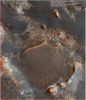
PSP_007454_2020.jpgPossible Phyllosilicates in Mclaughlin Crater (High-Def-3D and Natural Colors; credits: Dr M. Faccin - Lunexit Team)71 visiteAcquisition date: 28 February 2008
Mars Local Time: 14:47 (early afternoon)
Latitude (centered): 21,7° North
Longitude: 337,8° East
Range to target site: approx. 287,5 km (about 179,7 miles)
Original image scale range: 28,8 cm/pixel (with 1 x 1 binning) so objects ~86 cm across are resolved
Map projected scale: 25 cm/pixel and North is up
Map projection: EQUIRECTANGULAR
Emission Angle: 0,2°
Phase (Sun-Target-Spacecraft) Angle: 40,1°
Solar incidence angle: 40° (with the Sun about 50° above the Local Horizon)MareKromium
|
|

Psp_001700_2505_red-00~0.jpgLauth Crater and the Frozen "Pseudo-Lake" of Vastitas Borealis (CTX Frame - Absolute Natural Colors; credits for the additional process. and color.: Dr Paolo C. Fienga - Lunexit Team)344 visiteThe right side of PSP_001700_2505 shows a portion of a Frost Patch on a Mound inside a Northern Hemisphere Crater (unofficially known as "Lauth Crater").
The Frost Patch has remained largely stable at least since the Viking era (late 1970s). The bright Frost Region is bounded by a Dunefield on the North-East. Several sizes of Dunes are visible. The size classes probably represent generations of Dunes that formed under a variety of dominant wind conditions. MareKromium
|
|
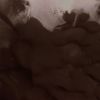
Psp_001700_2505_red-01.jpgLauth Crater and the Frozen "Pseudo-Lake" of Vastitas Borealis (CTX Frame - Absolute Natural Colors; credits for the additional process. and color.: Dr Paolo C. Fienga - Lunexit Team)329 visiteThis EDM shows the Dunes and Frost boundary up-close. The Frost is largely absent over the Dunes and is more stable over the Ground that does not have Dune-shaped Landforms.MareKromium
|
|
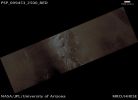
Psp_009453_2500_red.jpgThe Southern Rim of Louth Crater (possible True Colors; credits: Lunar Explorer Italia)77 visiteMars Local Time: 14:57 (early afternoon)
Coord. (centered): 69,9° North Lat. and 103,3° East Long.
Spacecraft altitude: 313,8 Km (such as about 196,1 miles)
Original image scale range: 62,8 cm/pixel (with 1 x 1 binning) so objects ~1,88 mt across are resolved
Map projected scale: 50 cm/pixel
Map projection: EQUIRECTANGULAR
Emission Angle: 0,5°
Phase Angle: 53,1°
Solar Incidence Angle: 53° (meaning that the Sun is about 37° above the Local Horizon)
Solar Longitude: 106,9° (Northern Summer)
Credits: NASA/JPL/University of Arizona
Additional process. and coloring: Lunar Explorer ItaliaMareKromium
|
|
| 8 immagini su 1 pagina(e) |
|








