| Risultati della ricerca nelle immagini - "Lander" |
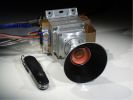
0008-Phoenix-Mike.jpgOne, Two, Three...TESTING!110 visiteThe unmistakable presence of a microphone, next to one of the cameras equipped with the Phoenix Probe, suggests even more interesting scenarios: the Friends of Pasadena don't just want photographs and "cooking" experiments (assuming they can be done, sooner or later...): they also want "sounds" from Mars!
What kind? Perhaps the wind... Maybe other things too.
The Lunexit STAFF's intuition when, years ago, we thought the idea of an "Audio-File" from Mars might even be a good idea.
And if it is, then Phoenix does NOT have exclusive rights to the sound... Believe me!MareKromium
|
|

A-Phoenix-000.jpgThe (fully assembled) Phoenix Mars Lander77 visitenessun commentoMareKromium
|
|
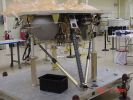
A-Phoenix-001.jpgThe Phoenix Lander: Hot-Fire Test Mock-Up76 visitenessun commentoMareKromium
|
|

A-Phoenix-002.jpgThe Phoenix Lander and its Solar Panels in the "Clean Room"84 visitenessun commentoMareKromium
|
|

Lifeforms-008-lg_27595-lg_27598-2.gifMicroscopic Lifeforms in Motion? (GIF-Movie; credits: Dr G. Barca) 121 visite...Sicuri che si tratti solo di "polveri" smosse dal vento?!?...MareKromium
|
|

Luna-04.jpgThe Chang'e 4 Lander from MRO130 visiteThe Regolith Layer existing on the Surface of the Von Kármán Crater has a thickness of more than 10 meters and below it there is a (rocky) "Multilayer" formed by the Ejecta Material of (other) surrounding Impact Craters, which is as thick as more than about 30 meters. Underneath, we can also find three Basalt Magma Covers.MareKromium
|
|

Luna-10.jpgThe "Dark Side of the Moon": the Surface93 visitePoco più di un anno fa, la sonda cinese Chang'e 4 è diventata la prima ad atterrare sul lato della Luna non visibile dal nostro pianeta: per celebrare questo anniversario, la Cina ha rilasciato una serie di dati scientifici e immagini catturate dal veicolo spaziale. Dal suo atterraggio il Rover ha in realtà percorso poco più di 350 metri studiando le formazioni rocciose del nostro satellite, e grazie a una "Terrain Camera" montata nella parte superiore del Lander ha fornito scatti ad altissima definizione, come potete vedere nelle foto di questa Gallery. La speciale macchina fotografica, morta alla fine del primo giorno lunare (circa 29,5 giorni terrestri), era in grado di ruotare di 360° e ha fornito dettagliati e interessanti materiali di studio per gli scienziati.MareKromium
|
|

Luna-11.jpgThe "Dark Side of the Moon": Rover Tracks105 visitenessun commentoMareKromium
|
|

Luna-12.jpgThe "Dark Side of the Moon": the Chang-e 4 Rover142 visitenessun commentoMareKromium
|
|
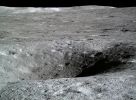
Luna-13.jpgThe "Dark Side of the Moon": relatively small (Secondary) Impact Crater150 visitenessun commentoMareKromium
|
|
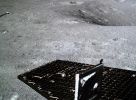
Luna-14.jpgThe "Dark Side of the Moon": approaching the (Relatively small) Impact Crater103 visitenessun commentoMareKromium
|
|

Luna-15.jpgThe "Dark Side of the Moon": Surface and small Craters101 visitenessun commentoMareKromium
|
|
| 115 immagini su 10 pagina(e) |
1 |
 |
|
|
|
|
|
|
|