| Risultati della ricerca nelle immagini - "Knobs" |
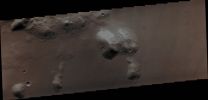
Hills-Tartarus_Colles_Region-PIA15307-PCF-LXTT.jpgHills in Tartarus Colles (Absolute Natural Colors; credits for the additional process. and color.: Dr Paolo C. Fienga - Lunexit Team) 118 visiteOrbit Number: 44484
Latitude: 22,915° North
Longitude: 185,841° East
Instrument: VIS
Captured: December, 25th, 2011MareKromium
|
|
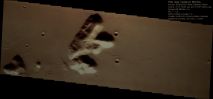
Hills_and_Knobs-Tartarum_Montes-PCF-LXTT.jpgHills and Knobs near Tartarum Montes (Saturated Absolute Natural Colors; credits for the additional process. and color.: Elisabetta Bonora and Paolo C. Fienga - Lunexit Team)76 visitenessun commentoMareKromium
|
|
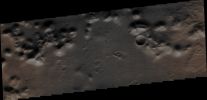
Hills_and_Knobs_in_Amazonis_Planitia-PIA15135-PCF-LXTT.jpgHills and Knobs in Amazonis Planitia (Absolute Natural Colors; credits for the additional process. and color.: Dr Paolo C. Fienga - Lunexit Team)212 visiteOrbit Number: 43710
Latitude: 8,404° North
Longitude: 183,638° East
Instrument: VIS
Captured: October, 22nd, 2011
Mars Local Time (M.L.T.): 09:29 (Morning Hours)
MareKromium
|
|
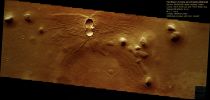
Knobs-20080722a-PCF-LXTT.jpgNorthern Knobs and Ejecta Blanket (Enhanced Natural Colors; credits for the additional process. and color.: Dr Paolo C. Fienga - Lunexit Team)110 visiteCaption NASA:"The ejecta pattern and double crater indicate that 2 impactors hit at the same time. The ejecta pattern and doublet crater look like a fancy butterfly flying West".
MareKromium
|
|

Knobs-Erebus_Montes.jpgKnobs in Erebus Montes (Absolute Natural Colors; credits: Dr Paolo C. Fienga - Lunexit Team)123 visitenessun commentoMareKromium
|
|

PSP_005924_2210_RED_abrowse.jpgFeatures of Cydonia (MULTISPECTRUM; credits: Lunexit)77 visiteThe Cydonia Region on Mars is located in Arabia Terra at the boundary between the Northern Lowlands and Southern Highlands. This Region gained notoriety when Viking imaged a landform that looked like a face.
The “Face” has subsequently been imaged by many orbiters, including HiRISE ( PSP_003234_2210), showing that it is simply a rocky mound, and the face-like appearance was due to a trick of shadows. This observation was taken of a Region slightly to the South-West of that landform.
This Region is characterized by Knobs and Buttes. Knobs are rounded hills and Buttes are hills with steep vertical sides and a flat top. A butte is similar to a plateau, but smaller in scale. These are features that are resistant to erosion, and there are several ways that such features may become more resistant than the surrounding areas. They can be plutonic intrusions or volcanic rocks that are more resistant rock types than the surrounding sedimentary rock. Alternatively, these Regions may be resistant because they have been cemented by water carrying dissolved ions that precipitate as minerals binding the sediment together.
Either way, they provide important information about the geologic history of the Region.
Of note in this image is the interesting pitted and patterned ground. This pitting may have resulted from the sublimation of interstitial ice. Patterned ground is common throughout the Northern Mid-Latitude Plains.MareKromium
|
|
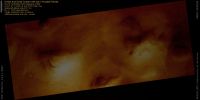
Psp_008210_2415_red~0.jpgKnobs and Small Craters with Ice in Northern Arcadia Planitia (natural colors; credits: Lunexit)78 visitenessun commentoMareKromium
|
|

South_Polar_Regions-Hills_and_Knobs.jpgHills, Knobs and Buried Craters in the South Polar Region (Original NASA/MGS/MSSS b/w Frame)69 visiteOriginal caption:"This MGS-MOC image shows a Summer scene from the South Polar Region of Mars. The circular feature in the North-East (upper right) corner of the image is an old meteor impact crater that has been partially filled and buried. The cone-shaped hill that occurs within the crater on its East (right) side is a remnant of material that once covered and completely buried the crater. Perhaps beneath the surfaces in the rest of the image there are other craters that have been filled and buried such that we cannot know, from an image, that they ever existed. The theme of filled, buried, and exhumed craters is one that repeats itself —over and over again — all over Mars".
Location near: 80,3° South Lat. and 286,1° West Long.
Image width: ~3 Km (~1,9 mi)
Illumination from: upper left
Season: Southern Summer
|
|
| 8 immagini su 1 pagina(e) |
|








