
Kardashev-00.jpgThe Kardashev Scale (Theory) - so named after Nikolaj Semënovič Kardašëv (Семёнович Кардашёв - Москва город, Aпрель 25, 1932 – Москва город, Август 3, 2019)156 visiteThe Kardashev scale (шкала Кардашёва – shkala Kardashova) is a method of measuring a civilization's level of technological advancement based on the amount of energy it is capable of harnessing and using.
The measure was proposed by Soviet astronomer Nikolai Kardashev in 1964, and was named after him.
Kardashev first outlined his scale in a paper presented at the 1964 conference that communicated findings on BS-29-76, Byurakan Conference in the Armenian SSR, which he initiated, a scientific meeting that reviewed the Soviet radio astronomy space listening program.
The paper was titled "Передача информации внеземными цивилизациями" ("Transmission of Information by Extraterrestrial Civilizations").
Starting from a functional definition of civilization, based on the immutability of physical laws and using human civilization as a model for extrapolation, Kardashev's initial model was developed.
He proposed a classification of civilizations into three types, based on the axiom of exponential growth:
• A Type I civilization (planetary) is able to access all the energy available on its planet and store it for consumption.
• A Type II civilization (stellar) can directly consume a star's energy.
• A Type III civilization (galactic) is able to capture all the energy emitted by its galaxy, and every object within it, such as every star, black hole, etc.
Under this scale, the sum of human civilization does not reach Type I status, though it continues to approach it.
Extensions of the scale have since been proposed, including a wider range of power levels (Types 0, IV, and V) and the use of metrics other than pure power, e.g., computational growth or food consumption.
In a second article, entitled "Strategies of Searching for Extraterrestrial Intelligence", published in 1980, Kardashev wonders about the ability of a civilization, which he defines by its ability to access energy, to sustain itself, and to integrate information from its environment.
Two more articles followed: "On the Inevitability and the Possible Structure of Super Civilizations" and "Cosmology and Civilizations", published in 1985 and 1997, respectively; the Soviet astronomer proposed ways to detect super civilizations and to direct the SETI (Search for Extra Terrestrial Intelligence) programs.
A number of scientists have conducted searches for possible civilizations, but with no conclusive results.
However, in part thanks to such searches, unusual objects, now known to be either pulsars or quasars, were identified.
MareKromium
|
|
Kardashev-01.jpgThe Kardashev Scale: the Case of "KIC 8462852" (1)127 visiteSo far, there is no valid scientific explanation for the dimming of a star 1,480 light-years away. Some have advanced the hypothesis of an extraterrestrial system capturing energy. Have you ever heard of a Type II Kardashev civilization? Human civilization has not yet reached Type I (0.73) and will (perhaps) get there in 200-300 years.
A Type II Kardashev civilization is a technologically advanced society capable of harnessing all the energy emitted by its star through enormous orbiting systems. Science fiction?
Great authors such as Isaac Asimov, Carl Sagan, and Arthur C. Clarke have discussed it, among others.
In 1964, Soviet scientist Nikolai Kardashev devised a scale that linked the level of development of potential extraterrestrial civilizations with their ability to harness the entire energy of a planet (type I), a solar system (type II), or an entire galaxy (type III).
An important corollary of his studies is that to find a highly advanced alien civilization, you don't need to try to pick up a radio signal (as the Arecibo radio telescope has been doing for 45 years without—yet—finding anything), but rather observe whether a star's light appears much dimmer than it should be, whether it experiences sudden and inexplicable drops in light energy, or—in extreme cases—whether its light is completely absent. This would mean that "someone" or "something" is "harvesting" the star's energy.MareKromium
|
|

Kardashev-02.jpgThe Kardashev Scale: the Case of "KIC 8462852" (2)105 visiteNow, in an article submitted to the scientific community on September 11th and signed by 29 scientists led by Tabetha Boyajian of Yale University, which will soon be followed by another article by Jason Wright of Penn State University, attention is drawn to the anomalies recorded in observations of the star KIC 8462852 in the constellation Cygnus, about 1,480 light-years away and one and a half times the size of our Sun. KIC 8462852 is a class F5 star (yellow-white dwarf) on the main sequence, invisible to the naked eye (the Sun is a class G2 yellow dwarf) and observable only with very sophisticated instruments.
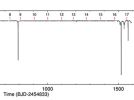
Observations by the Kepler space telescope have shown variations in the star's brightness that cannot be explained by any "natural" hypothesis known to date, except for a highly unlikely swarm of comets, which would in any case be incompatible with the star's age. Two in particular are the "mysterious" episodes: the first with a single 15% dip in brightness (2011), the second about 750 days later (2013) with a series of dips whose maximum was 22%, which would suggest a series of objects transiting in front of the star. A previous episode had been recorded in 2009. The one expected in 2015 was not recorded because Kepler partially malfunctioned (as always, when something "new" is glimpsed).MareKromium
|
|
|








