| Risultati della ricerca nelle immagini - "Hyperion" |
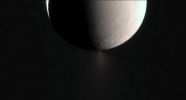
Enceladus-PIA18328-PCF-LXTT-IPF.jpgIn the Saturnshine... (Absolute Natural Colors; credits for the additional process. and color.: Dr Paolo C. Fienga/Lunar Explorer Italia/Italian Planetary Foundation)144 visiteThe Saturnian moon Enceladus looks as if it is half lit by Sunlight in this view from the NASA - Cassini Spacecraft; but looks, as you know, can be (as they often are) deceiving.
In fact, the kind of pinkish area of Enceladus visible on the right (Dx) of the frame, where MANY Surface Features can be made out (---> seen/identified), is actually illuminated by the light reflected off of Saturn (such as the so-called "Saturnshine"). On the other hand, a sliver of the Enceladian Surface that is actually illuminated by direct Sunlight is visible - and also highly overexposed! - on the left (Sx) of the picture. Images like this one are designed to capture the extended Plumes of Icy Materials spraying from huge cracks located the moon's South Polar Region. Such images need to be taken with the NASA - Cassini Spacecraft looking toward the Icy moon's Night Side, since the small particles that form the Plumes (however, just barely visible in this picture) are most easily seen when backlit by the Sun.
This view looks toward the Leading Hemisphere of Enceladus; North is up. The image was taken in Visible Light with the NASA - Cassini Spacecraft's Narrow-Angle Camera on May 10, 2015. Enceladus is roughly 313 miles (such as about 503,72 Km) across. The view was acquired at a distance of approximately 226.000 miles (such as approx. 363.7210,84 Km) from Enceladus and at a Sun-Enceladus-Cassini Spacecraft, or Phase, Angle of 152°. Image scale is roughly 1,4 miles (about 2,2530 Km) per pixel.
This frame (which is an Original NASA - CASSINI Spacecraft's b/w and NON Map-Projected image published on the NASA - Planetary Photojournal with the ID n. PIA 18328) has been additionally processed, contrast enhanced, magnified, in order to allow the vision of the slightest details of the Surface, Gamma corrected and then re-colorized - according to an educated guess (or, if you wish, an informed speculation) carried out by Dr Paolo C. Fienga - in Absolute Natural Colors (such as the colors that a human eye would actually perceive if someone were onboard the NASA - Cassini Spacecraft and then looked outside, toward the Saturnian moon "Enceladus"), by using an original technique created - and, in time, dramatically improved - by the Lunar Explorer Italia Team. Different colors, as well as different shades of the same color, mean, among other things, the existence of different Elements (Minerals) present on the Surface of Enceladus, each having a different Albedo (---> Reflectivity) and Chemical Composition.
Note: it is possible (but we, as IPF, have no way to be one-hundred-percent sure of such a circumstance), that the actual luminosity of Enceladus - as it is in this frame - would appear, to an average human eye, a little bit lower than it has been shown (or, better yet: interpreted) here.MareKromium
|
|

Hyperion from Voyager 1.jpgHyperion from Voyager 165 visitenessun commento
|
|

Hyperion from Voyager 2.jpgHyperion from Voyager 286 visitenessun commento
|
|

Hyperion-MF-PCF-LXTT-1.jpgHyperion and its Surfacing Hydrocarbons (Absolute Natural Colors; credits for the additional process. and color.: Drr Marco Faccin and Paolo C. Fienga)99 visiteNota: questa colorizzazione "Naturale Assoluta" (e cioè che risponde a quello che, a nostro parere, un essere umano vedrebbe se si trovasse a bordo della Sonda CASSINI) è un prodotto UNICO ed ESCLUSIVO del "Lunexit Team". MareKromium
|
|

Hyperion-MF-PCF-LXTT-2.jpgHyperion and its Surfacing Hydrocarbons (Absolute Natural Colors; credits for the additional process. and color.: Drr Marco Faccin and Paolo C. Fienga)81 visiteNota: questa colorizzazione "Naturale Assoluta" (e cioè che risponde a quello che, a nostro parere, un essere umano vedrebbe se si trovasse a bordo della Sonda CASSINI) è un prodotto UNICO ed ESCLUSIVO del "Lunexit Team". MareKromium
|
|

Hyperion-MF-PCF-LXTT-3.jpgHyperion and its Surfacing Hydrocarbons (Absolute Natural Colors; credits for the additional process. and color.: Elisabetta Bonora and Paolo C. Fienga)81 visiteNota: questa colorizzazione "Naturale Assoluta" (e cioè che risponde a quello che, a nostro parere, un essere umano vedrebbe se si trovasse a bordo della Sonda CASSINI) è un prodotto UNICO ed ESCLUSIVO del "Lunexit Team". MareKromium
|
|

Hyperion-MF-PCF-LXTT-4.jpgHyperion and its Surfacing Hydrocarbons (Absolute Natural Colors; credits for the additional process. and color.: Elisabetta Bonora and Paolo C. Fienga)74 visiteNota: questa colorizzazione "Naturale Assoluta" (e cioè che risponde a quello che, a nostro parere, un essere umano vedrebbe se si trovasse a bordo della Sonda CASSINI) è un prodotto UNICO ed ESCLUSIVO del "Lunexit Team". MareKromium
|
|

Hyperion-MF-PCF-LXTT-5.jpgHyperion and its Surfacing Hydrocarbons (Absolute Natural Colors; credits for the additional process. and color.: Elisabetta Bonora and Paolo C. Fienga)74 visiteNota: questa colorizzazione "Naturale Assoluta" (e cioè che risponde a quello che, a nostro parere, un essere umano vedrebbe se si trovasse a bordo della Sonda CASSINI) è un prodotto UNICO ed ESCLUSIVO del "Lunexit Team". MareKromium
|
|
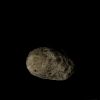
Hyperion-MF-PCF-LXTT-6.jpgHyperion and its Surfacing Hydrocarbons (Absolute Natural Colors; credits for the additional process. and color.: Elisabetta Bonora and Paolo C. Fienga)74 visiteNota: questa colorizzazione "Naturale Assoluta" (e cioè che risponde a quello che, a nostro parere, un essere umano vedrebbe se si trovasse a bordo della Sonda CASSINI) è un prodotto UNICO ed ESCLUSIVO del "Lunexit Team". MareKromium
|
|

Hyperion-N00035353.jpgHyperion, from about 166.000 Km (1)73 visiteIperione, la luna 'rotolante' (--->tumbling moon) - così chiamata a causa del suo procedere caotico il quale la fa assomigliare di più ad un macigno scagliato nello Spazio piuttosto che ad un corpo celeste in orbita regolare attorno ad un Mondo Genitore.
Queste, come ovvio, sono le logiche e scientifiche conclusioni alle quali si arriva interpretando il movimento di alcuni corpi celesti in accordo al nostro 'Sapere Comune'. La congettura di base è che Iperione, come tante altre Lune Minori, non sia altro che una scheggia di roccia (un KBO, p.e.), proiettata verso l'interno del Sistema Solare a causa di un qualche ignoto cataclisma, o di un impatto o, magari, per effetto di impulsi o cicli mareali i quali, più o meno periodicamente, spingono dei corpi rocciosi di dimensioni medio-piccole verso il Sole. Il moto disordinato (ma che cosa è 'disordinato' e che cosa è 'lineare' nell'Universo?) di Iperione potrebbe quindi dipendere da fatto che, durante il suo viaggio, esso è passato accanto ad altri corpi...
|
|

Hyperion-N00035375.jpgHyperion, from about 176.000 Km (2)79 visite...celesti i quali, con i loro campi gravitazionali di diversa intensità e dimensione, ne hanno alterato il moto e la traiettoria originali rendendo altresì la sua rotazione, ai nostri occhi, così enormemente complessa ed inusuale, da giungere a farci congetturare un'intrinseca disomogeneità della medesima.
Un'intrinseca disomogeneità che, tuttavia, nelle logiche dell'Universo, non è altro che una delle infinite forme attraverso le quali si può manifestare quel fenomeno chiamato "movimento".
La corsa di Iperione è terminata, quindi, nel momento in cui l'abbraccio gravitazionale di Saturno si è reso troppo forte da poter resistere e così, dal vagare senza mèta attraverso il Sistema Solare, siamo infine giunti all'orbita lineare, attorno a Saturno.
Certo, la 'cattura' di Iperione da parte del Gigante Anellato non è valsa a modificare la sua 'disomogenea' rotazione ma, secondo Voi, questo fatto cambia qualcosa nei Grandi Equlibri e Disequilibri che governano il moto dei Pianeti e delle loro Lune?
|
|

Hyperion-N00035398.jpgHyperion, from about 202.000 Km (3)62 visiteE' davvero semplice 'caos' quell'estrema complessità che caratterizza il moto di Iperione, così come la struttura di alcuni lontanissimi 'oggetti' di origine forse stellare (quali i Buchi Neri, i Quasar ed i Pulsar etc.), oppure anche questi 'movimenti' e queste 'strutture', così lontane dal nostro pensare e sapere, obbediscono a delle Logiche Maggiori che, oggi, non riusciamo neppure ad immaginare?
Questa piccola diversione filosofica non è, a nostro modo di vedere, un inutile esercizio dialettico: noi siamo sempre più convinti, infatti, che la disarmante 'semplicità' con cui la Scienza Consolidata cerca di spiegare alcuni fenomeni, unita all'estrema - ed inutile - complessità con cui Essa cerca di spiegarne altri, sìano entrambe espressioni di un notevole imbarazzo di fondo il quale si manifesta davanti ad una realtà piuttosto evidente.
Quale? La realtà che l'Universo è ancora molto lontano non solo dall'essere compreso nei suoi meccanismi quanto, addirittura, dall'essere anche solo immaginato...
|
|
| 74 immagini su 7 pagina(e) |
1 |
 |
|
|
|
|





