| |
| Risultati della ricerca nelle immagini - "Hollows" |
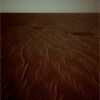
OPP-SOL070-1N134412368EFF0900P1966L0M1.jpgSmall Ripples and Deep Hollows - Sol 70 (Natural Colors; credits: Lunar Explorer Italia)68 visiteOre 15:44:19 MLTMareKromium
|
|

PHOE-SOL031-md_7790-1.jpgHollows, Pebbles and other "Things" near Phoenix - Sol 31 (ctx frame; natural but enhanced colors; credits: Dr M. Faccin)69 visitenessun commentoMareKromium
|
|
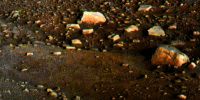
PHOE-SOL031-md_7790-2.jpgHollows, Pebbles and other "Things" near Phoenix - Sol 31 (edm; natural but enhanced colors; credits: Dr M. Faccin)67 visitenessun commentoMareKromium
|
|

ZZ-Mercury-Craters-Unnamed_Crater-CP_and_Hollows-PIA16952-PCF-LXTT-IPF-1.jpgHollowland, again! (Absolute Natural Colors; credits for the additional process. and color.: Dr Paolo C. Fienga/Lunar Explorer Italia/Italian Planetary Foundation)130 visiteThis image - taken by the NASA - MESSENGER Spacecraft - shows us the Hollow-covered Central Peak Structure (a Feature that is also often called Central Uplift) of a Mercurian Northern Hemisphere's Unnamed Impact Crater having a diameter of about 60 Km (such as approx. 37,26 miles). It is now clear that these mysterious Mercurian Surface Features known as "Hollows" are not only related - as it was thought at the beginning - to (relatively) flat surfaces (such as the Floors of a countless number of Impact Craters) or on areas located near or on top of the Rims of said Impact Craters: it has been now visually proven that the Hollows can also be found on highly irregular (---> NOT "flat") and complex rocky structures (---> Central Peaks and, maybe, Hills and Mountains). And, in the meanwhile, the search continues...
Date acquired: March, 24th, 2013
Image Mission Elapsed Time (MET): 6465097
Image ID: 3753557
Instrument: Narrow Angle Camera (NAC) of the Mercury Dual Imaging System (MDIS)
Center Latitude: 36,20° North
Center Longitude: 244,20° East
Resolution: 29 meters/pixel
Solar Incidence Angle: 61,7° (meaning that the Sun, at the time that the picture was taken, was about 28,3° above the imaged Local Mercurian Horizon)
Emission Angle: 21,1°
Sun-Mercury-Messenger (or "Phase") Angle: 65,8°
This picture (which has been cropped from an Original NASA - MESSENGER Spacecraft b/w frame published on the NASA - Planetary Photojournal with the ID n. PIA 16952) has been additionally processed and then colorized in Absolute Natural Colors (such as the colors that a human eye would actually perceive if someone were onboard the NASA - MESSENGER Spacecraft and then looked down, towards the Surface of Mercury), by using an original technique created - and, in time, dramatically improved - by the Lunar Explorer Italia Team. Different colors, as well as different shades of the same color, mean, among other things, the existence of different Elements (Minerals) present on the Surface of Mercury, each having a different Albedo (---> Reflectivity) and Chemical Composition.MareKromium
|
|

ZZ-Mercury-Craters-Unnamed_Crater-PIA18247-PCF-LXTT-IPF.jpgUnnamed Crater with Hollows (Absolute Natural Colors; credits for the additional process. and color.: Dr Paolo C. Fienga/Lunar Explorer Italia/Italian Planetary Foundation)77 visiteThis frame, obtained by the NASA - MESSENGER Spacecraft on Frebruary, 25, 2014, which shows us a Mercurian Northern Hemisphere's Unnamed Impact Crater - approx. 12,5 Km - such as about 7,76 miles in diameter -, suggested a question that we would like to ask you as much as ourselves: do those extremely common and bright (---> highly reflective) Mercurian Surface Features known as "Hollows" form preferentially on those Crater Walls (---> Inner and Outer Slopes as wll as thier Rims) which receive a more direct (---> and therefore intense) Sunlight?
In the Northern Hemisphere of Mercury, the Northern Walls of the Impact Craters are frequently flooded by a very intense Sunlight (meaning that they are almost always VERY well illuminated), while their Southern Walls only receive grazing Sunlight and therefore they are more often in Shadow; on the other hand (and we just say, "obviously"), in the Mercurian Southern Hemisphere, the Impact Craters' Northern Walls are the ones which receive just grazing Sunlight (and therefore are much less illuminated) while the Southern Walls get more direct (and therefore stronger) Sunlight. Said that, Planetary Scientists, on the base of their observations (mostly founded on the NASA - MESSENGER Spacecraft's images), believe that the greater the Solar Heating is experienced by the Walls of any given Impact Crater, the more Hollows will form on its (both Inner and Outer) Slopes and Rims (in other words: the direct Solar Illumination should reasonably be an important - if not decisive - factor in the formation of Hollows on the Walls of the Impact Craters located on both Mercury's Hemispheres).
Images like the one here can help us to answer this question and what we see in today's APOD is found in an area of focus (---> interest) for the current NASA - MESSENGER Spacecraft's Low-Altitude Imaging Campaign. Perhaps, in the (near) future, we may know more about all this: let's just wait an see what happens...
Date acquired: February, 25th, 2014
Image Mission Elapsed Time (MET): 35646241
Image ID: 5828285
Instrument: Narrow Angle Camera (NAC) of the Mercury Dual Imaging System (MDIS)
Center Latitude: 42,92° North
Center Longitude: 330,90° East
Solar Incidence Angle: 43,5° (meaning that the Sun, at the time that the picture was taken, was about 46,5° above the imaged Local Mercurian Horizon)
Emission Angle: 46,1°
Sun-Mercury-Messenger (or "Phase") Angle: 30,1
This picture (which is an Original NASA - MESSENGER Spacecraft's b/w and NON-Map-Projected image published on the NASA - Planetary Photojournal with the ID n. PIA 18247) has been additionally processed, contrast enhanced, Gamma corrected, magnified to aid the visibility of the details and then colorized in Absolute Natural Colors (such as the colors that a human eye would actually perceive if someone were onboard the NASA - MESSENGER Spacecraft and then looked outside, towards the Surface of Mercury), by using an original technique created - and, in time, dramatically improved - by the Lunar Explorer Italia Team. Different colors, as well as different shades of the same color, mean, among other things, the existence of different Elements (Minerals) present on the Surface of Mercury, each having a different Albedo (---> Reflectivity) and Chemical Composition.MareKromium
|
|

ZZ-Mercury-Craters-Unnamed_Crater-PIA18372-PCF-LXTT-IPF.jpgUnnamed Crater with Hollows (Absolute Natural Colors; credits for the additional process. and color.: Dr Paolo C. Fienga/Lunar Explorer Italia/Italian Planetary Foundation)132 visiteAs the NASA - MESSENGER Spacecraft passes progressively closer to the Planet Mercury, we are able to see Always better resolved Surface Features in the images that the Spacecraft returns. Here, in this frame, at a pixel scale of 9 meters, we can see the Eastern Portion of an Unnamed Impact Crater approx. 13 Km (such as about 8,073 miles) in diameter. The Inner Wall of the Crater is replete (---> full of), as you can see, with smaller, superposed Impact Craters, some of which appear elongated (---> ellipsoidal), possibly because they impacted on the larger Crater's inclined Inner Wall.
Interestingly, there are also Bright Spots on the Sunlit Portion of this Unnamed Crater's Wall (Right Side - Dx - of the frame, at about 4 o'clock), and that is exctly the right place where we might reasonably expect to see, in a near future, some new "Hollows" (actually, we, as IPF, do believe that the Surface Features visible in the area indicated by NASA are ALREADY FORMED "Hollows" whose shapes and dimensions, probably, are still in course of modification).
Date acquired: March, 3rd, 2014
Image Mission Elapsed Time (MET): 36136338
Image ID: 5862963
Instrument: Narrow Angle Camera (NAC) of the Mercury Dual Imaging System (MDIS)
Center Latitude: 56,30° North
Center Longitude: 301,60° East
Solar Incidence Angle: 59,3° (meaning that the Sun, at the time that the picture was taken, was about 30,7° above the imaged Local Mercurian Horizon)
Emission Angle: 43,0°
Sun-Mercury-Messenger (or "Phase") Angle: 102,3°
This picture (which is an Original NASA - MESSENGER Spacecraft's b/w and NON Map-Projected image published on the NASA - Planetary Photojournal with the ID n. PIA 18372) has been additionally processed, contrast enhanced, Gamma corrected, magnified to aid the visibility of the details and then colorized in Absolute Natural Colors (such as the colors that a human eye would actually perceive if someone were onboard the NASA - MESSENGER Spacecraft and then looked outside, towards the Surface of Mercury), by using an original technique created - and, in time, dramatically improved - by the Lunar Explorer Italia Team. Different colors, as well as different shades of the same color, mean, among other things, the existence of different Elements (Minerals) present on the Surface of Mercury, each having a different Albedo (---> Reflectivity) and Chemical Composition.MareKromium
|
|

as17-147-22503.JPGAS 17-147-22503 - Signs of Gravity Wasting?74 visiteEVA-1 at the LM. 4 o'clock pan. Near surface. Large boulder track.MareKromium
|
|
|
| 7 immagini su 1 pagina(e) |
|

|
|








