| Risultati della ricerca nelle immagini - "Herschel" |
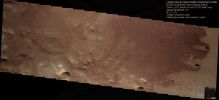
Craters-Herschel_Crater-Dunefield-20080311a-PCF-LXTT.jpgDunefield inside Herschel Crater (Absolute Natural Colors; credits for the additional process. and color.: Dr Paolo C. Fienga - Lunexit Team)103 visitenessun commentoMareKromium
|
|
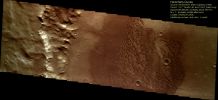
Craters-Herschel_Crater-Dunefield-20080505a-PCF-LXTT.jpgDunefield inside Herschel Crater (Extremely Enhanced Natural Colors; credits for the additional process. and color.: Dr Paolo C. Fienga - Lunexit Team)64 visitenessun commentoMareKromium
|
|
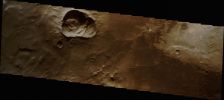
Craters-Herschel_Crater-Dunefield-20090303a-PCF-LXTT.jpgDunefield inside Herschel Crater (Extremely Enhanced Natural Colors; credits for the additional process. and color.: Dr Paolo C. Fienga - Lunexit Team)64 visiteCoord.: 15,5° South Lat. and 131,7° East Long.MareKromium
|
|

Dunes-PIA07152-00.jpgDark Dunes and Yardangs inside Herschel Crater (Original NASA/MGS/MSSS b/w Frame)99 visiteImmagine ripresa dal Mars Global Surveyor (MGS) Mars Orbiter Camera (MOC) che ci mostra Dune di colore scuro, scolpite dal vento, che giacciono sul fondo del Cratere Herschel. La superficie di queste Dune sembra caratterizzarsi per il fatto che ci appaiono - anche da una notevole distanza... - consistenti fessure scavate al loro interno. Questo sta a significare che la sabbia che le forma NON è semplicemente "accatastata" (ma, granuloscopicamente parlando, "libera"), così come accade per la maggior parte delle Dune Terrestri! Questo fenomeno ci dice che la sabbia di queste Dune Marziane è "cementata e compatta", simile a roccia (fragile, ma pur sempre roccia), e l'azione costante dei venti, nel tempo, ha creato, su queste sabbie "indurite", delle particolari "aree erose" che sono conosciute come Yardangs. L'immagine copre un'area di circa 3 Km (1,9 miglia) la quale si trova vicino ai 15,6° di Latitudine Sud ed ai 229,0° di Longitudine Ovest. Il Sole illumina la scena dalla Sn, in alto.
|
|

Dunes-PIA07152-01.jpgDark Dunes and Yardangs inside Herschel Crater (Absolute Natural Colors; credits for the additional process. and color.: Dr Paolo C. Fienga - Lunexit Team)150 visitenessun commentoMareKromium
|
|

Dunes-PIA14877-PCF-LXTT.jpgRippled Dune-Front in Hershel Crater (Enhanced Absolute Natural Colors; credits for the additional process. and color.: Dr Paolo C. Fienga - Lunexit Team)222 visiteThe Eastern Margin of a Rippled Dune located inside Herschel Crater moved an average distance of 3 meters (such as about 3 yards) between March 3rd, 2007 and December 1st, 2010MareKromium
|
|

Dunes-PIA14878-PCF-LXTT.jpgMoving Rippled Dune-Front in Hershel Crater (Enhanced Absolute Natural Colors; credits for the additional process. and color.: Dr Paolo C. Fienga - Lunexit Team)209 visiteA Rippled Dune-Front in Herschel Crater on Mars moved about 2 meters (such as about 2 yards) between March 3rd, 2007 and December 1st, 2010. Herschel Crater is located just South of the Equator in the Cratered Highlands.
This is one of several sites where the orbiter has observed shifting Sand Dunes and Ripples. Previously, scientists thought sand on Mars was mostly immobile. It took the mission's High Resolution Imaging Science Experiment (HiRISE) to take sharp enough images to finally see the movement. While Dust is easily blown around the Red Planet, its thin Atmosphere means that strong Winds are required to move Grains of Sand.MareKromium
|
|

Dunes-PIA14879-PCF-LXTT.jpgMoving Rippled Dune-Front in Hershel Crater (Enhanced Absolute Natural Colors; credits for the additional process. and color.: Dr Paolo C. Fienga - Lunexit Team)212 visiteA Rippled Dune-Front in Herschel Crater on Mars moved an average of about 1 meter (such as about o1 yard) between March 3rd, 2007 and December 1st, 2010. Herschel Crater is located just South of the Equator, in the Cratered Highlands.
This is one of several sites where the MRO has observed shifting Sand Dunes and Ripples. Previously, scientists thought sand on Mars was mostly immobile. It took the mission's High Resolution Imaging Science Experiment (HiRISE) to take sharp enough images to finally see the movement. While Dust is easily blown around the Red Planet, its thin Atmosphere means that strong Winds are required to move Grains of Sand.MareKromium
|
|
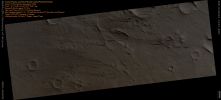
ESP_016916_1655_RED_abrowse-00.jpgLinear Dunes and Sand Sheets inside Herschel Crater (Natural Colors; credits for the additional process. and color.: Dr Paolo C. Fienga - Lunexit Team)130 visitenessun commentoMareKromium
|
|
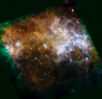
Milky_Way-PIA12251.jpgCold Region in the Milky Way67 visiteSome of the coldest and darkest dust in space shines brightly in this InfraRed image from the Herschel Observatory, a European Space Agency Mission with important participation from NASA.
The image is a composite of light captured simultaneously by two of Herschel's three instruments -- the photodetector array camera and spectrometer, and its spectral and photometric imaging receiver.
The image reveals a cold and turbulent region where material is just beginning to condense into new stars. It is located in the plane of our Milky Way galaxy, 60° from the center. Blue shows warmer material, red the coolest, while green represents intermediate temperatures.
The red filaments are made up of the coldest material pictured here -- material that is slightly warmer than the coldest temperature theoretically attainable in the Universe.
Light captured by the photodetector array camera and spectrometer is colored blue and green (blue represents 70-micron light, and green, 160 micron light). The light detected by the spectral and photometric imaging receiver is colored red (and shows the combined wavelengths of 250, 350 and 500 microns). The image spans a region 2.1 by 2.2 degrees.MareKromium
|
|

NGC-2237-Rosette_Nebula-PIA13028.jpgThe Rosette Nebula84 visite"...If you do not know where to go, you will probably end up somewhere else..."
(Se non sai dove andare, finirai probabilmente in qualche altro posto)
Laurence Johnston Peter
MareKromium
|
|
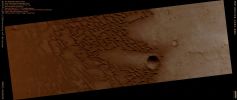
PSP_002728_1645_RED_abrowse.jpgThe Dunes of Herschel Crater (Saturated Natural Colors; credits for the additional process. and color.: Dr Paolo C. Fienga - Lunexit Team)105 visiteThis image shows Dunes on the floor of Herschel Crater. The Steep Faces (a.k.a.: "Slip-Faces") of the Dunes are oriented downwind, in the direction of their motion. One feature of particular interest is the dune-free area downwind of the Crater towards the right side of the frame. Some sand has been trapped in the Crater, but the Crater prevents the Dunes from migrating directly downwind. Sand Dunes form naturally as a result of the transport of sand by the wind.
The Dunes in this image are somewhat crescent-shaped, but are being extended and distorted downwind and merging with nearby Dunes; this complex behavior is common in Dunefields on Earth.
In the left side of the image the sand lies in sheets rather than well-defined Dunes. At high resolution, the Dunes' Surface are covered in small Ripples and Scallops, also shaped by the wind. MareKromium
|
|
| 15 immagini su 2 pagina(e) |
1 |
|








