| Risultati della ricerca nelle immagini - "Hellas" |

Channels-Hellas_Basin-20080415a-PCF-LXTT.jpgFeatures of Hellas Basin (Absolute Natural Colors; credits for the additional process. and color.: Dr Paolo C. Fienga - Lunexit Team)82 visitenessun commentoMareKromium
|
|

Craters-Unnamed_Crater-PCF-LXTT.jpgUnusually-looking Unnamed Crater (Saturated Natural Colors; credits for the additional process. and color.: Dr Paolo C. Fienga - Lunar Explorer Italia)65 visiteCaption NASA:"At one time the Floor of this Unnamed Crater located to the West of Hellas Basin, was completely filled with material from Rim to Rim. As this image shows, part of that fill material is being removed. The hole that is formed shows that the fill material was layered and a very rough surface is located at the bottom of the hole".MareKromium
|
|

Craters-Unnamed_Crater_in_Hellas_Planitia-1-MGS.jpgUnnamed Crater in Hellas Planitia (Absolute Natural Colors; credits for the additional process. and color.: Dr Paolo C. Fienga - Lunexit Team)223 visiteCaption NASA originale:"This MGS-MOC image shows a large crater that formed by meteor impact into the layered material in which the buried crater is encased. The layered rock, in this case, has a light tone similar to the sedimentary rocks being explored by the MER Opportunity, thousands of kilometers away in Sinus Meridiani".
Location near: 24,9° South; 299,3° West
Image width: ~3 Km (~1,9 mi)
Illumination from: upper left
Season: Southern Summer MareKromium
|
|
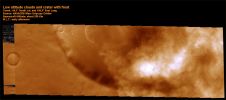
Craters-Unnamed_Crater_with_Frost-00-PCF-LXTT.JPGClouds over "Frosty" Crater (CTX Frame - False Colors; credits for the additional process. and color.: Dr Paolo C. Fienga - Lunar Explorer Italia)66 visiteIl dettaglio della nuvola che scivola sul cratere senza nome situato a Sud-Est del bacino di impatto denominato "Hellas" è molto bello, ma non fermiamoci al dettaglio artistico ed osserviamo il margine interno del cratere posto alla Vostra Sx: le tracce di brina sono evidenti.
E non è tutto: osservate il fondo del cratere. C'è qualcosa che lo "allaga", in parte? Sicuramente non si tratta solo di fango (è l'albedo del dettaglio che ce lo dice).
La nostra prima ipotesi è che, sul fondo di questo cratere senza nome, vi possa essere un discreto quantitativo di ghiaccio d'acqua il quale è talmente trasparente, da permetterci di riuscire a vedere anche i minuscoli crateri che giacciono al di sotto di esso.
La seconda ipotesi, meno immaginifica ma, forse, più realistica, è che sul fondo del cratere vi sia un deposito sottile, ma abbondante, di brina ghiacciata.
Caption NASA:"The dust storm season in the Southern Hemisphere of Mars is well underway. This image of an unnamed crater South-East of Hellas Basin shows the encroachment of a storm in the region".MareKromium
|
|
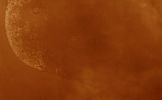
Craters-Unnamed_Crater_with_Frost-01-PCF-LXTT.jpgClouds over "Frosty" Crater (EDM - Enhanced Natural Colors; credits for the additional process. and color.: Dr Paolo C. Fienga - Lunar Explorer Italia)69 visiteDettaglio del "laghetto" (di ghiaccio d'acqua o di brina...) che ci sembra individuabile sul fondo di questo cratere senza nome.
Le Vostre opinioni al riguardo, se ci fossero, saranno gradite.MareKromium
|
|
Dunefields-Hellas_Planitia-PCF-LXTT.jpgDunefield in Hellas Planitia (Absolute Natural Colors; credits for the additional process. and color.: Dr Paolo C. Fienga - Lunexit Team)78 visitenessun commentoMareKromium
|
|
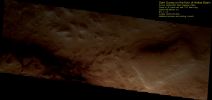
Dunes-Dunefield_in_Hellas_Basin-20080118a-PCF-LXTT.jpgDark Dunefield in Hellas Basin (Darkened Natural Colors; credits for the additional process. and color.: Dr Paolo C. Fienga - Lunexit Team)67 visitenessun commento
MareKromium
|
|
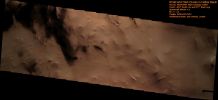
Dunes-Hellas_Planitia-20080324a-PCF-LXTT.jpgFeatures of Hellas Planitia: Dark Dunes and Windstreaks (Darkened Natural Colors; credits for the additional process. and color: Dr Paolo C. Fienga - Lunexit Team)134 visitenessun commentoMareKromium
|
|
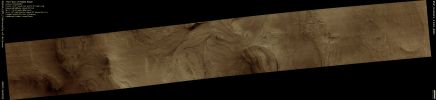
ESP_016022_1420_RED_abrowse-00.jpgThe Floor of Hellas Basin (CTX Frame - Natural Colors; credits: Dr Paolo C. Fienga - Lunexit Team)69 visiteHiRISE images are revealing some very strange landforms on the Floor of Hellas. Materials appear to have flowed in a viscous manner, like ice.
Viscous flow features are common over the Middle Latitudes of Mars, but those in Hellas are often distinctive for unknown reasons.
MareKromium
|
|
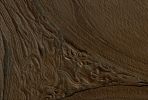
ESP_016022_1420_RED_abrowse-01.jpgThe Floor of Hellas Basin (EDM - Natural Colors; credits: NASA/JPL and Dr Paolo C. Fienga - Lunexit Team)68 visitenessun commentoMareKromium
|
|
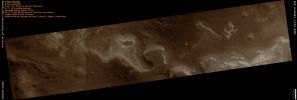
ESP_018487_1470_RED_abrowse.jpgHellas Planitia (Natural Colors; credits for the additional process. and color.: Dr Paolo C. Fienga - Lunexit Team)65 visitenessun commentoMareKromium
|
|

ESP_019596_1365_RED_abrowse-PCF-LXTT.jpgOn the Edge of Hellas Planitia (Absolute Natural Colors; credits for the additional process. and color.: Dr Paolo C. Fienga - Lunexit Team)134 visitenessun commentoMareKromium
|
|
| 43 immagini su 4 pagina(e) |
1 |
 |
|








