| Risultati della ricerca nelle immagini - "Fluvial" |

ESP_014159_1670_RED_abrowse-02.jpg"Worm-like" Surface Feature in the Southern Highlands (EDM n. 2 - False Colors; credits: Dr G. Barca)78 visiteRingraziando gli Amici di Lunexit per gli interessanti commenti, dobbiamo precisare (onde evitare l'insorgere di spiacevoli malintesi) che, a nostro parere, questa Surface Feature non possiede nulla di "Biogenico".
Si tratta, sempre a nostro modo di vedere, del letto asciutto di un antichissimo torrente (o forse anche un laghetto, le cui acque erano comunque soggette a deboli correnti).
L'apparenza - da svariate centinaia di Km di altezza - è quella di un grosso "vermone", ma la sostanza ci dice che siamo davanti ad un antico rilievo di presumibili origini fluviali, sinuoso e (ovviamente) prosciugato, sul quale si elevano delle bizzarre (e sempre affascinanti) "ripples".
Relativamente a queste ripples, da notare la loro albedo (elevata) e la loro forma a "scafo", la cui origne, con ogni probabilità, può essere fatta risalire all'azione congiunta di correnti d'aria persistenti e periodicamente contrapposte.
La loro consistenza, a nostro parere, dovrebbe rendere queste ripples simili in tutto e per tutto a quei rilievi rocciosi - ma fragili - che prendono il nome di "yardangs".MareKromium
|
|
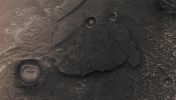
ESP_024887_2155_RED-PCF-LXTT-00.jpgFluvial "Fan" On an Unnamed Crater Floor (CTX Frame - Absolute Natural Colors; credits for the additional process. and color.: Dr Paolo C. Fienga - Lunexit Team)150 visiteMars Local Time: 14:34 (early afternoon)
Coord. (centered): 35,2° North Lat. and 304,5° East Long.
Spacecraft altitude: 296,1 Km (such as about 185,1 miles)
Original image scale range: 29,6 cm/pixel (with 1 x 1 binning) so objects ~ 89 cm across are resolved
Map projected scale: 25 cm/pixel
Map projection: EQUIRECTANGULAR
Emission Angle: 8,9°
Sun - Mars - MRO (or "Phase") Angle: 33,2°
Solar Incidence Angle: 41° (meaning that the Sun is about 49° above the Local Horizon)
Solar Longitude: 31,0° (Northern Spring)
Credits: NASA/JPL/University of Arizona
Additional process. and coloring: Lunar Explorer ItaliaMareKromium
|
|
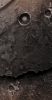
ESP_024887_2155_RED-PCF-LXTT-01.jpgFluvial "Fan" On an Unnamed Crater Floor (EDM - Enhanced Absolute Natural Colors; credits for the additional process. and color.: Dr Paolo C. Fienga - Lunexit Team)142 visiteMars Local Time: 14:34 (early afternoon)
Coord. (centered): 35,2° North Lat. and 304,5° East Long.
Spacecraft altitude: 296,1 Km (such as about 185,1 miles)
Original image scale range: 29,6 cm/pixel (with 1 x 1 binning) so objects ~ 89 cm across are resolved
Map projected scale: 25 cm/pixel
Map projection: EQUIRECTANGULAR
Emission Angle: 8,9°
Sun - Mars - MRO (or "Phase") Angle: 33,2°
Solar Incidence Angle: 41° (meaning that the Sun is about 49° above the Local Horizon)
Solar Longitude: 31,0° (Northern Spring)
Credits: NASA/JPL/University of Arizona
Additional process. and coloring: Lunar Explorer ItaliaMareKromium
|
|
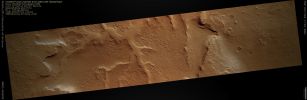
PSP_007394_1750_RED_abrowse~0.jpgInverted Fluvial Channels and Craters with Ejecta Rays (natural colors; credits: Lunexit)66 visiteThe lower part of this image shows well-defined overlapping channels, which have inverted topography (i.e.: they were once low spots that have been filled in with sediments and now eroded in a such a way that they appear as topographically high regions).
The channels have a winding and intersecting geometry indicating the shifting of the channels over time, a feature consistent with the flow of water in rivers. The channels have small craters that have excavated the channel materials and ejected them to form well-defined rays. There are dark slope streaks (toward the top of the image) showing transport of fine dust down the slope of an eroded bedrock terrain.MareKromium
|
|
| 4 immagini su 1 pagina(e) |
|








