| Risultati della ricerca nelle immagini - "Flows" |
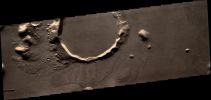
Crater-Unnamed_Crater_and_Lava_Flows_in_Amazonis_Planitia-PCF-LXTT.jpgUnnamed Crater and Lava Flows in Amazonis Planitia (Absolute Natural Colors; credits for the additional process. and color.: Drr Gianluigi Barca and Paolo C. Fienga - Lunexit Team)193 visitenessun commentoMareKromium
|
|

Craters-Unnamed_Crater-PIA11793-PCF-LXTT.jpgLobate and Chevron Flows (possible Natural Colors; credits: Dr Paolo C. Fienga - Lunar Explorer Italia)63 visiteCaption NASA:"The lower portion of this image from the Thermal Emission Imaging System camera (THEMIS) on NASA's Mars Odyssey Orbiter shows a Crater about 16 Km (approx. 10 miles) in diameter with features studied as evidence of deposition or erosion.
The Crater is centered at 40,32° South Lat. and 132,5° East Long., in the eastern portion of the Hellas basin on Mars. It has Gullies and Arcuate Ridges on its North, pole-facing interior wall.
This Crater is in the center of a larger (60-Km or aaprox. 37-mile diameter) crater with lobate flows on its North, interior wall. The image, number V07798008 in the THEMIS catalog, covers a swath of ground of about 17,4 Km (such as approx. 10,8 miles) wide".
Nota Lunexit: c'è un'indicazione NASA che abbiamo barrato con un "NO" poichè essa indica (e quindi definisce) come "Lobate" un rilievo che è invece - a nostro parere - caratterizzato da una configurazione superficiale a "Chevron".
Verificate Voi stessi.
A titolo di annotazione personale, ci sembra davvero strano che un Addetto NASA (sulla cui competenza non discutiamo) possa incorrere in una simile svista.
Inoltre, sempre con riguardo a questo rilievo a "Chevron", siamo anche dubbiosi sul fatto che esso possa essere definito come "Flow" (ossìa "flusso", evidenza di una "colata").
Più che altro, il rilievo in questione ci SEMBRA una sorta di doppia-cresta del terreno la quale è stata - parzialmente - sepolta a seguito di un fenomeno alluvionale (per i più "Immaginosi" fra i nostri Lettori, poi, vi è anche la possibilità che si possa trattare di una struttura più complessa e "meno naturale" di una semplice increspatura del suolo la quale, sempre a seguito di un evendo alluvionale, è stata quasi completamente sepolta da fango e detriti, poi solidificatisi).MareKromium
|
|

Daedalia_Planum-PIA14154-PCF-LXTT.jpgFeatures of Daedalia Planum (Natural Colors; credits: Dr Paolo C. Fienga - Lunexit Team)325 visitenessun commentoMareKromium
|
|
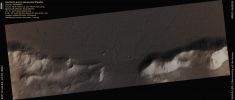
ESP_014184_2070_RED_abrowse.jpgLava Flows in Amazonis Planitia (Absolute Natural Colors; credits for the additional process. and color.: Dr Paolo C. Fienga - Lunexit Team)217 visitenessun commentoMareKromium
|
|
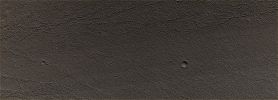
ESP_017546_1965_RED_abrowse-PCF-LXTT.jpgFeatures of Amazonis Planitia (Absolute Natural Colors; credits for the additional process. and color.: Dr Paolo C. Fienga - Lunexit Team)198 visiteMars Local Time: 15:10 (early afternoon)
Coord. (centered): 16,1° North Lat. and 205,7° East Long.
Spacecraft altitude: 283,3 Km (such as about 177,0 miles)
Original image scale range: 56,7 cm/pixel (with 2 x 2 binning) so objects ~ 1 mt and 70 cm across are resolved
Map projected scale: 50 cm/pixel
Map projection: EQUIRECTANGULAR
Emission Angle: 2,3°
Phase Angle: 47,3°
Solar Incidence Angle: 45° (meaning that the Sun is about 45° above the Local Horizon)
Solar Longitude: 81,9° (Northern Spring)
Credits: NASA/JPL/University of Arizona
Additional process. and coloring: Lunar Explorer ItaliaMareKromium
|
|
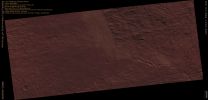
ESP_017888_1950_RED_abrowse.jpgOlympus' Lava Flows (Extremely Enhanced Natural Colors; credits for the additional process. and color.: Dr Paolo C. Fienga - Lunexit Team)86 visiteThe flanks of Olympus Mons are covered with Lava Flows (one on top of the other) Most of these Flows are relatively narrow, with a channel running down the middle. They appear similar to the Lava Flows found on Mt. Etna in Sicily (Italy).
However, in this image, we see these typical Flows partially covered by another, more recent one. This last one also shows a Central Channel, and it is about 10 times wider than the more typical Lava Flows. At the center of the HiRISE image the Channel disappears.
This is probably because the Channel was blocked here and Lava spilled out of it and covered a broad, fan-shaped, area. The eruption that produced this unusual flow was probably more vigorous and perhaps lasted longer than the more common ones.MareKromium
|
|
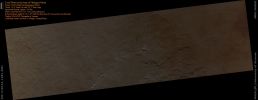
ESP_018534_1985_RED_abrowse-PCF-LXTT1.jpgLava Flows at the base of Olympus Mons (Absolute Natural Colors; credits for the additional process. and color.: Dr Paolo C. Fienga - Lunexit Team)117 visitenessun commentoMareKromium
|
|

ESP_020580_2035_RED_abrowse-00.jpgLava Flow constricted between Topographic Obstacles (CTX Frame - Absolute Natural Colors; credits for the additional process. and color.: Dr Paolo C. Fienga - Lunexit Team)257 visiteMars Local Time: 15:35 (Middle Afternoon)
Coord. (centered): 23,1° North Lat. and 172,8° East Long.
Spacecraft altitude: 288,7 Km (such as about 180,4 miles)
Original image scale range: 57,8 cm/pixel (with 2 x 2 binning) so objects ~ 1 mt and 73 cm across are resolved
Map projected scale: 50 cm/pixel
Map projection: EQUIRECTANGULAR
Emission Angle: 4,3°
Sun-Mars-Spacecraft (or "Phase") Angle: 57,4°
Solar Incidence Angle: 61° (meaning that the Sun is about 29° above the Local Horizon)
Solar Longitude: 199,9° (Northern Winter)
Credits: NASA/JPL/University of Arizona
Additional process. and coloring: Dr Paolo C. Fienga - Lunar Explorer ItaliaMareKromium
|
|

ESP_020580_2035_RED_abrowse-01.jpgLava Flow constricted between Topographic Obstacles (EDM - Absolute Natural Colors; credits for the additional process. and color.: Dr Paolo C. Fienga - Lunexit Team)252 visiteMars Local Time: 15:35 (Middle Afternoon)
Coord. (centered): 23,1° North Lat. and 172,8° East Long.
Spacecraft altitude: 288,7 Km (such as about 180,4 miles)
Original image scale range: 57,8 cm/pixel (with 2 x 2 binning) so objects ~ 1 mt and 73 cm across are resolved
Map projected scale: 50 cm/pixel
Map projection: EQUIRECTANGULAR
Emission Angle: 4,3°
Sun-Mars-Spacecraft (or "Phase") Angle: 57,4°
Solar Incidence Angle: 61° (meaning that the Sun is about 29° above the Local Horizon)
Solar Longitude: 199,9° (Northern Winter)
Credits: NASA/JPL/University of Arizona
Additional process. and coloring: Dr Paolo C. Fienga - Lunar Explorer ItaliaMareKromium
|
|

ESP_020827_1595_RED_abrowse-PCF-LXTT.jpgOlivine-rich Terrain (Absolute Natural Colors; credits for the additional process. and color.: Dr Paolo C. Fienga - Lunexit Team)119 visitenessun commentoMareKromium
|
|
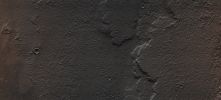
ESP_024572_1900-PCF-LXTT-2.jpgLava Flows (Absolute Natural Colors; credits for the additional process. and color.: Dr Paolo C. Fienga - Lunexit Team)195 visiteMars Local Time: 14:28 (early afternoon)
Coord. (centered): 10,0° North Lat. and 267,5° East Long.
Spacecraft altitude: 270,1 Km (such as about 168,8 miles)
Original image scale range: 27,0 cm/pixel (with 1 x 1 binning) so objects ~ 81,0 cm across are resolved
Map projected scale: 25 cm/pixel
Map projection: EQUIRECTANGULAR
Emission Angle: 2,0°
Phase Angle: 34,6°
Solar Incidence Angle: 37° (meaning that the Sun is about 53° above the Local Horizon)
Solar Longitude: 19,7° (Northern Spring)
Credits: NASA/JPL/University of Arizona
Additional process. and coloring: Lunar Explorer ItaliaMareKromium
|
|
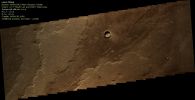
LavaFlows-ArsiaMons-20091127a.jpgLava Flows (False Colors; credits: Lunexit)84 visitenessun commentoMareKromium
|
|
| 49 immagini su 5 pagina(e) |
1 |
 |
|
|








