| Risultati della ricerca nelle immagini - "Field" |
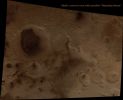
Craters-Crater_Field-h1640_0000_nd3.jpgHeavily Cratered Region and Candidate Migrating Dunefields (Natural Colors; credits for the additional process. and color.: Dr Paolo C. Fienga - Lunexit Team)85 visitenessun commentoMareKromium
|
|

Craters-Crater_Field_in_Terra_Sabaea-PIA08623-1.jpgCrater Field in Terra Sabaea (Natural Colors; credits for the additional process. and color.: Dr Paolo C. Fienga - Lunexit Team)209 visiteImage information: VIS instrument;
Latitude: 36,8° North;
Longitude: 42,7° East;
Resolution:19 meter/pixel.MareKromium
|
|
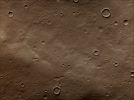
Craters-Crater_Field_in_Terra_Sabaea-PIA08623-2.jpgCrater Field in Terra Sabaea (Natural Colors; credits for the additional process. and color.: Dr Paolo C. Fienga - Lunexit Team)192 visiteImage information: VIS instrument;
Latitude: 36,8° North;
Longitude: 42,7° East;
Resolution:19 meter/pixel.MareKromium
|
|

Craters-Unnamed_Crater_Field_in_Ares_Vallis-MGS.JPGSecondary Craters' Field in Ares Vallis (Original NASA/MGS/MSSS b/w Frame)66 visiteOriginal caption:"This MGS-MOC image shows a Field of Secondary Craters located on the Plains located North of Ares Vallis, roughly 30 or 35 Km (such as about 19–22 miles) North-East of the Mars Pathfinder LS. These Craters did not form directly by individual meteor impacts: they resulted from the impact of material ejected from a much larger meteor impact that might have occurred somewhere to the South of the Region".
Nota: per i professionisti di Scienze Planetarie, suggeriamo di portare il frame sino al full-size e quindi esaminare, campionando, almeno 10/12 crateri secondari agendo sull'intera area ripresa. Noi lo abbiamo fatto e le forme che abbiamo individuate NON supportano - a nostro parere - la caption NASA. In particolare: se questa zona è effettivamente ricoperta da crateri secondari, allora dovremmo ipotizzare, dopo aver valutato le diverse angolazioni dei rilievi, che questi ejecta sono arrivati da almeno 2 (se non 3) impatti diversi e sensibilmente distanziati nel tempo.
L.N.: 19.9° N and 33,3° W
|
|

ESP_011896_1570_RED_abrowse.jpgSouthern Crater Field (Natural Colors; credits: Lunar Explorer Italia)67 visitenessun commentoMareKromium
|
|

ESP_020922_1635_RED_abrowse.jpgProximities of Gratteri Crater (Absolute Natural Colors; credits: Dr Paolo C. Fienga - Lunexit Team)277 visiteCaption NASA:"Gratteri Crater, located about 150 Km to the South-East, ejected rocks that created millions of Secondary Craters over a Region at least 500 Km wide.
Many of these Secondary Craters are concentrated in "Rays", or lines extending radially from the Primary Impact Area (such as the "Gratteri Crater" Area).
Crater Rays on the Moon are typically bright at visible wavelengths, but on Mars they are often best seen in the Thermal InfraRed wavelengths, from temperature contrasts. This image confirms that this Ray contains many Secondary Craters (they are the small, sharp-rimmed Craters). Since millions of Secondary Craters form at once, they all have the same age and same degree of modification over time. Understanding the distribution of secondary craters provides information about impact processes, including escape of rocks that could become Martian meteorites on Earth".MareKromium
|
|
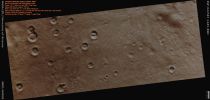
ESP_022587_1445_RED_abrowse-PCF-LXTT.jpgCrater Field (Enhanced Natural Colors; credits for the additional process. and color.: Dr Paolo C. Fienga - Lunexit Team)129 visitenessun commentoMareKromium
|
|

IMAGE070.jpgMartian "Rocky Traditions"... - di Alessio Feltri (1)188 visiteNon mi stancherò mai di ripetere che non è tanto importante trovare stranezze nelle foto NASA, quanto piuttosto il cercare forme ripetute, in luoghi e tempi diversi, perché solo attraverso questo metodo si possono mettere alla prova teorie ed impressioni. Eccone un esempio, tratto dal confronto di alcuni gusci marziani (e se siete tra i pochi ancora convinti che siano pietre, potete evitare di leggere il resto). Le foto 3D si riferiscono a 3 formazioni reperite in Gusev da Spirit e ad una (molto conosciuta) ripresa in Utopia Planitia dal Viking Lander 2. La somiglianza è sbalorditiva, specie quando si consideri che, mentre i gusci di Spirit sono a poche decine di metri di distanza l'uno dall'altro, quello Viking è di 30 anni fa e in tutt'altro luogo... Anzi, vista la mancanza di fantasia, si potrebbe imputare ai Marziani un atteggiamento tendenzialmente conservatore.
Sotto il profilo tecnico, notare nei 3D il canale cavo di imbocco, sezione a "U" rovesciata squadrata, e la gobba "a dromedario" del corpo principale.
La somiglianza è meno evidente nel guscio di Sol 161 in quanto ripreso dal lato posteriore…
|
|

IMAGE071.jpgMartian "Rocky Traditions"... - di Alessio Feltri (2)185 visiteO SONO I TECNICI NASA AD ESSERE CONSERVATORI?
Naturalmente trovare forme uguali è solo un primo passo. Il secondo è quello di depurare le immagini dalle immancabili sovrapposizioni censorie della NASA, quelle sì alquanto povere di fantasia, visto che si risolvono sempre nel dare ad ogni cosa un aspetto “lapideo”. Ma si sa, nessuno è perfetto, per cui succede, come nel caso del precedente frame Viking, che siano presenti on-line due versioni ufficiali grottescamente divergenti. Nella tavola la foto in alto è quella taroccata, mentre quella in basso è quella (quasi) vera. Anche tenendo conto delle lievi differenze di illuminazione e ripresa, ho segnalato alcuni punti:
1) Uno dei soliti comunissimi ed enigmatici “ombrellini” marziani semitrasparenti è stato coperto con una specie di pietrone informe.
2) Il canale anteriore pentatubolare cavo è stato “saldato” piuttosto goffamente alla formazione sottostante.
3) La complessa inserzione radiale del canale nella “gobba” retrostante è stata impietosamente occultata.
4) La parte posteriore è stata completamente ridisegnata.
A questo punto la domanda è lecita: sono i gusci ad essere uguali o sono i censori a renderli tali? Ai lettori l’ardua sentenza.
|
|

North_Polar_Features-North_Polar_Scarp-MGS-00.jpgNorth Polar Panorama (Original NASA/MGS/MSSS b/w Frame)64 visiteCaption NASA originale:"This MGS-MOC image shows a steep slope in the North Polar Region of Mars. The stripes indicate an exposure of layered material; the variations in brightness among the stripes are the result of varying amounts and textures on seasonal Carbon Dioxide (CO2) frost. At the time the image was acquired - such as in June 2006 -, the Carbon Dioxide frost was beginning to sublime way, leaving a variety of different patterns in frost distribution".
Location near: 85,2° North Lat. and 122,7° West Long.
Image width: ~3 Km (~1,9 mi)
Illumination from: lower left
Season: Northern Spring
|
|

PIA10139-FansField~0.jpgFans Field (MULTISPECTRUM; credits: Lunexit)72 visiteAt the very beginning of Spring in the Southern Hemisphere on Mars the ground is covered with a seasonal layer of CO2 ice.
In this image there are 2 lanes of undisturbed ice bordered by 2 lanes peppered with Fans of dark dust.
When we zoom in to the image, we see that the Fans are seen to be pointed in the same direction, dust carried along by the prevailing wind. The Fans seem to emanate from spider-like features.
Image Data: the image is centered at -86,4° Latitude and 99,1° East Long.
The range to the target site was 276,1 Km (about 172,6 miles). At this distance the image scale is 55,2 cm/pixel (with 2x2 binning) so objects ~166 cm across are resolved.
The image was taken at 16:27 MLT (middle afternoon), with the Sun just 2° above the Local Horizon. MareKromium
|
|

PIA10140-DarkFans~0.jpgBright Streaks and Dark Fans (MULTISPECTRUM; credits: Lunexit)76 visiteIn a Region of the South Pole known informally as "Ithaca", numerous Fans of dark frost form every Spring. HiRISE collected a time lapse series of these images, starting at Ls = 185 and culminating at Ls = 294. "Ls" is the way we measure time on Mars: at Ls = 180 the Sun passes the Equator on its way South; at Ls = 270 it reaches its maximum subsolar latitude and Summer begins.
We believe that the bright streaks are fine frost condensed from the gas exiting the vent. The conditions must be just right for the bright frost to condense. MareKromium
|
|
| 42 immagini su 4 pagina(e) |
1 |
 |
|








