| |
| Risultati della ricerca nelle immagini - "Face" |

Cydonia_Mensae-The_Face-003.jpgThe "Face on Mars" (MULTISPECTRUM; credits for the additional process. and color.: Dr Paolo C. Fienga - Lunexit Team and Keith Laney)157 visiteIl processing adottato dal sempre bravo Keith Laney (su frame MGS) ci ha dato la "base" (in b/n) per poi applicare il nostro MULTISPECTRUM; il risultato finale è qui. Davanti a Voi.
La "Faccia di Marte" o "Sfinge di Cydonia" ci osserva, in questa ripresa che pare essere stata effettuata da una perfetta verticale.
Keith si chiede (e scrive, riteniamo ironicamente, sul frame) "Is The Face An Artifact?" e cioè "La Faccia (di Marte) è un Manufatto?".
Beh, Cari Amici, guardate e decidete Voi...
A nostro parere, se questa "butte" (che Vi ricordiamo significa, tecnicamente, collina "a ceppo") Vi pare artificiale, allora noi siamo in grado di produrVi almeno altri CINQUE rilievi Marziani ripresi dall'orbita (ed ovviamente SCONOSCIUTI al Grande Pubblico poichè non individuati da quel Grande Maestro di PR & furbizia che è il Prof. Hoagland) che sono mille volte più "artificiali" di questo...MareKromium
|
|

Cydonia_Mensae-The_Face-010.jpgTo "Face" or not to "Face"?108 visitePart of Viking image 70a13 showing “Face” at Cydonia. Contrast was adjusted separately on sunlit and shadowed (outlined) sides to bring out details of both at comparable lighting levels. Bright border of outline is an artifact of brightening everything inside the outline.
Uno studio del Dr Tom Van Flandern che pubblichiamo per rendere omaggio ad un notevole sforzo logico, deduttivo e matematico. Leggete e poi, se volete, diteci che cosa ne pensate.
The MGS spacecraft took a high-resolution photo of the “Face on Mars” in April, 1998. That image suffered from four handicaps: a low viewing angle; a low Sun angle from the direction under the “chin”; an almost complete lack of contrast; and enough cloudiness to scatter most of the light and eliminate shadows. To add to these difficult circumstances, JPL-MIPL personnel, apparently judging that the controversy over artificiality would not be ended when the actual photo was released, processed the image through two filters having the effect of flattening and suppressing image details. This step is documented at a JPL web site. Here we do image processing correctly and present the results of computer corrections to compensate for the poor lighting and low viewing angle. The actual image shows clearly the impropriety of the JPL-MIPL actions because the visual impression of artificiality persists. However, appearances after a discovery are not a valid basis for drawing conclusions, but only for forming hypotheses for further testing. This is called the a priori principle of scientific method. The 1976 Viking imagery allowed the formation of competing hypotheses, natural vs. artificial origin, and tests to distinguish them. When applied to the high-resolution MGS image of the Face, all artificiality predictions were fulfilled despite a lack of background noise. The combined a priori odds against a natural origin of the Face on Mars are 1021 to 1.
|
|

Cydonia_Mensae-The_Face-011.jpgTo "Face" or not to "Face"?114 visitePart of MGS image SP1-22003 showing “Face” at Cydonia. Inset locates “facial” features. Contrast is adjusted separately on the two sides, with the sunlit portions outlined. Dark border of outline is an artIfact caused by darkening everything inside the outline to bring out its details.
The “Face” at Cydonia on Mars is shown in 1976 medium resolution Viking spacecraft image 70a13 in Figure 1, and in the Mars Global Surveyor (MGS) spacecraft strip-image SP1-22003 in Figure 2. The mesa is about 2.5 km tall by 2 km wide, and extends several hundred meters above ground level. The appearance is much less face-like in the high-resolution MGS image in Figure 2 than in the original Viking image in Figure 1 for the following reasons:
(1) The MGS spacecraft took its image from a low-perspective angle well to the west, rather than from nearly overhead as in the Viking spacecraft view. Mainly the western half of the “Face” is seen in Figure 2, with the eastern half largely hidden behind the nose ridge.
(2) Sunlight shines on the Face mesa from the low west in the Viking image, but from the low southeast in the MGS image. The latter tends to distort facial features, much like a flashlight held under the chin.
(3) The Viking image had a normal variation of grayscale levels to provide contrast between adjacent features. The range of grayscale levels in the MGS image was inadequate to provide the amount of contrast normally utilized by the human eye.
(4) Following analysis, it became apparent that the major face-like features on the mesa have the characteristic that they cast shadows that enhance the face-like appearance at almost any Sun-angle. For example, the eye socket is a depression that contains the shadow of its walls while the Sun is anywhere but overhead. It is similar for the mouth feature, which casts a shadow into the ravine between the lips at most times of day. The facial appearance is enhanced by such shadows, but is difficult to separate from the background when the shadows are absent. By bad luck, the sunlight was so scattered by thin cloud cover that light on the Face was mainly ambient (omni-directional, shadow-free) light. This partially ameliorates difficulty (2), but creates a greater problem by removing one element important to the perceived appearance of the mesa.
|
|

Cydonia_Mensae-The_Face-012.jpgTo "Face" or not to "Face"?88 visiteHigh-pass-filtered “Face” image released by JPL to the world media.
Photographs of actual human faces and of face sculptures taken under similar viewing perspective and lighting conditions as prevailed for Figure 2 are commonly no longer recognizable as faces. The image in Figure 2 initially leaves the question of the degree to which the mesa resembles a face unresolved. Various features of Figure 2 can be cited on both sides of the issue.
Unfortunately for the objectivity that scientists are supposed to maintain, the Jet Propulsion Laboratory (JPL) apparently was unhappy that the high-resolution image received by its spacecraft did not immediately settle the artificiality controversy. Strong public statements ridiculing the “Face” and the serious scientific investigation thereof had previously been issued by certain scientists working for JPL, Caltech (which owns JPL), and JPL contractors, and by other supporters of robotic space exploration (managed and controlled almost exclusively by JPL) over manned space exploration (for which little science or funding goes to JPL). Indeed, the laboratory and MSSS, its contractor for the MGS imaging mission, initially refused to take the high-resolution images of the “Face” on the stated grounds that it would be a waste of public funds and a slap at the integrity of the scientists in the program. They were ordered to take them anyway by NASA Headquarters.
When the first picture arrived at JPL, its Mission Image Processing Laboratory (MIPL) passed the image through two filters, a low-pass filter and a high-pass filter. It is difficult to see how usage of these filters on this image before release to the media could be scientifically justified. Indeed, usage of the high-pass filter gave an especially damaging impression. From Adobe’s Photoshop software, we find the following description of the function and purpose of this filter:
“High Pass Filter: Retains edge details … and suppresses the rest of the image. … The filter removes low-frequency detail in an image … The filter is useful for extracting line art and large black-and-white areas from scanned images.”
The usage of these filters on the “Face” image is documented on the JPL web site <http://mpfwww.jpl.nasa. gov/mgs/target/CYD1/index.html>. The same day that the raw spacecraft image data was received at MSSS and posted to the Internet, the JPL Public Information Office (PIO) released the MIPL-created, filtered image shown in Figure 3 to the world media.
|
|

Cydonia_Mensae-The_Face-013.jpgTo "Face" or not to "Face"?160 visiteLeft: negative of the Face as seen by the MGS spacecraft in April, 1998. Center: Lighting source switched from SE to NW. Right: Viewing angle switched from 45° west to overhead.
As a direct consequence of this act, it has become extraordinarily difficult to get material on this subject considered in the scientific community. For example, a technical abstract on the subject of Cydonia submitted by this author in the summer of 1998 for oral presentation to the Division of Planetary Science (DPS) of the American Astronomical Society was rejected. This was the only rejection of an abstract by a member in good standing at this meeting, with over 600 other abstracts accepted. Rejection of a member-submitted abstract is a rare event (unprecedented for this author) because presentation of papers before peers is the primary means of getting feedback before submitting written versions of papers to journals for peer review, and because justification of conclusions is not normally provided in an abstract. The DPS abstract review committee based its decision on the evidence they had seen with their own eyes in the image released by JPL-PIO to the media. On appeal, they reversed their decision and accepted the abstract for a late poster paper; but the damage had already been done. The subject matter of Cydonia and the “Face” on Mars was by then on a list of topics not suitable for consideration by certain mainstream technical journals such as Nature magazine. By editorial policy, papers on the subject of the “Face” can no longer receive peer review at that magazine.
Whatever your opinion about the artificiality of the “Face” may be, and whatever the actual merits of the issue may be, it seems beyond dispute that allowing world opinion to be based on the image in Figure 3 was scientifically inappropriate. When considering why this happened, we appear to be left with an unhappy choice between dishonesty and incompetence.
|
|

Cydonia_Mensae-The_Face-020.gifFace it: that thing is NOT a Face! (1) - 3D122 visiteUna serie di contributi da Mars Unearthed - MU - che ci mostrano, usando dei semplici (ma efficacissimi!) 3D, che è davvero molto molto difficile, se non azzardato o, addirittura, temerario supporre che la famosa collinetta di Cydonia sia quanto rimane di una gigantesca scultura.
Secondo noi è una collina che appartiene a quella famiglia di rilievi che vengono conosciuti come "knobs". Ed anche l'idea del "tepe", guardando questi anaglifi, ci sembra tramontare definitivamente.
I Vostri commenti saranno apprezzati.
|
|

Cydonia_Mensae-The_Face-021.gifFace it: that thing is NOT a Face! (2) - 3D77 visitenessun commento
|
|

Cydonia_Mensae-The_Face-022.gifFace it: that thing is NOT a Face! (3) - 3D90 visitenessun commento
|
|

Cydonia_Mensae-The_Face-030.jpgThis "Face" is a "Fake"! (1)114 visiteIn questo frame - come nei 2 che seguono - ciò che si vede è la solita collina conosciuta come "Mars Face", mentre viene illuminata dai raggi radenti del Sole del mattino.
La porzione esposta ai raggi del Sole (e che nei tre frames che Vi proponiamo appare di color bianco con bordi vagamente azzurrini) dovrebbe essere il mero risultato di una sovraesposizione. Il Prof. Hoagland, invece, ritiene che lo splendore del lato illuminato del "Volto di Cydonia" sia una conseguenza del particolare materiale impiegato per realizzare questo manufatto (!) e della sua particolare (ed "aliena" al 100%) natura e struttura.
Ma leggete quello che il Prof- Hoagland dice:"...This last critique obviously represents the folks who, on examining all the scientific evidence developed over these last three decades regarding our “Martian Intelligence Hypothesis” … have come to radically differing conclusions from both the unthinking followers of “mainstream science” … if not the folks at NASA..." (continua)
|
|

Cydonia_Mensae-The_Face-031.jpgThis "Face" is a "Fake"! (2)118 visite"...For NASA, of course, officially maintains that our ideas -- and the decades of accumulated multi-disciplinary evidence presented to support them -- are lacking both in evidence and any “science’ ….
Nothing, of course, could be farther from the truth…as anyone objectively examining just the most recent Cydonia images can easily observe.
This example (frame precedente) was taken by NASA’s Mars Odyssey spacecraft in late 2003: an eastern-illuminated image of the Face (after more than 20 years of only photos taken with the Sun coming from the West) revealing both an astonishing luminosity, as well as remarkable rectilinear geometry…all along the eastern half ….
This pre-sunrise NASA view is such an obvious embarrassment to those who have insisted for so long that this iconic Cydonia feature is “just a natural pile of rocks,” that it has been resolutely ignored by the naysayers ever since its acquisition. This, despite our own publication of a detailed analysis here at Enterprise (“The Light Finally Dawns at Cydonia ….”) for why this “pre-dawn image” is now so scientifically revealing ….
For, such abnormal, selective reflectivity – to say nothing of the obvious regular geometry blatantly visible all across the eastern side, as well as obvious color differences with other features right next door – cannot any longer be “explained” in terms of “natural Martian mesas” ….
When you composite this eastern-illuminated Odyssey image with a black-and-white western-lit Mars Surveyor view (acquired in 2001 -- below), and examine carefully the combined symmetry of the Face “platform,” the aligned nature of the “highly reflective geometry” with the centerline of the larger Face itself, and the repeating symmetry of other key features, east and west -- any further comparisons with “natural mesas” becomes blatantly absurd ….
|
|
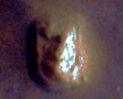
Cydonia_Mensae-The_Face-034.jpgThis "Face" is a "Fake"! (4)105 visite"...This crucial view of the highly-reflective geometry still present on the Face’s Eastern Side was acquired with only 20-mt-per-pixel resolution (~800"). Imagine what the MRO HiRISE camera – at 12" per pixel (!) such as 66 times greater resolution than Mars Odyssey and in color, no less! - could now confirm about this object...".
Qualche nota: le geometrie e le linearità del Volto di Marte, "enfatizzate" dalle luci del Sole del mattino - va detto! - le vede solo il Prof. Hoagland; la ricostruzione di colori e tessitura del Volto di Marte è il prodotto di una speculazione (o, se preferite, di una ricostruzione basata su presupposti insostanziabili); il Modello Frattale proposto dai Drr Carlotto e Stein per la ricerca dei possibili manufatti Iracheni presenti nel Deserto Saudita è molto interessante - oltre che scientificamente accettabile - ma, una volta "espiantato" dal suo contesto originale (il quale poggia, i.a., su una serie di assunzioni relative ai tipici "paesaggi - desertici - terrestri") e trasposto su Marte per individuare le possibili artificialità esistenti nella Regione di Cydonia (la cui morfologia, per definizione, "NON è terrestre"), esso diventa - a nostro parere - un Modello discutibile.
L'originale NASA del frame Odyssey V03814003 è DIVERSO da quello proposto (ed elaborato) da Enterprise Mission.
|
|
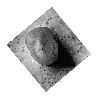
Cydonia_Mensae-The_Face-062.gifAs Time Goes By... (a GIF-Movie by Lorenzo Leone - Lunexit Team)196 visiteDal nostro Amico e Senior Partner, Lorenzo Leone, un bellissimo GIF-Movie che ci racconta, in pochissimi secondi, ben 34 anni di "evoluzione" del rilievo più famoso e controverso di Marte: la "Sfinge" di Cydonia Mensae (nota anche come "The Face On Mars".
Che dire? Il Popolo degli Appassionati si è, da tempo, nettamente diviso: per alcuni (diciamo "I Credenti") la Sfinge è una realtà indiscutibile e la "trasformazione" che ha subìto è il frutto di un processo di cover-up da parte della NASA (e dell'ESA, più di recente); per altri ("Gli Scettici"), la Sfinge esisteva ed esiste ancora, oltre che nella testa del Dr Hoagland e dei suoi Fans, solamente in immagini a bassissima risoluzione, le quali fossero ottenute da grandi distanze ed in condizioni di illuminazione (o, più correttamente, in accordo ad una geometria di illuminazione) del tutto particolari/e.
La posizione di Lunexit al riguardo la conoscete, ma ci fa piacere ricordarla ancora una volta: la Sfinge di Cydonia è un rilievo affascinante il quale, in determinate circostanze ed a determinate condizioni, SEMBRA un qualcosa di artificiale, pur NON ESSENDOLO.
Tuttavia, dato che noi siamo Ricercatori e non "uomini d'affari" (ogni riferimento al Dr Hoagland ed alla sua Enterprise Mission è assolutamente voluto), dobbiamo sottolineare un aspetto controverso e controvertibile di tutta la querelle il quale è splendidamente evidenziato dal GIF-Movie di Lorenzo Leone.
Il paesaggio di Marte, in accordo a quanto ci dice la Scienza Convenzionale e la NASA, tramite le sue missioni ed osservazioni, è sostanzialmente cristallizzato (quasi completamente fermo, insomma) da alcune centinaia di milioni di anni (forse addirittura da un miliardo di anni a questa parte, lustro più, lustro meno). I maggiori (e più irruenti) processi geologici - intendiamo quelli correlati al vulcanismo attivo ed all'azione dei fluidi - sono fermi da ere e l'unico agente modificativo dell'ambiente pare essere il vento (i processi eolici, ci viene detto e scritto, sono gli unici processi ancora attivi su Marte, fatto salvo - FORSE - un minimo di attività sismica residuale).
Eppure, nonostante l'azione - incessante o quasi - dei venti, anche il fenomeno noto come "Dunes' Migration" sembra inidoneo a produrre dei SIGNIFICATIVI (---> percettibili) MUTAMENTI del Paesaggio Marziano.
Noi non discutiamo tutto questo, anzi: potremmo anche essere d'accordo.
Anzi: siamo d'accordo!
Ma in questo scenario di semi-assoluta immobilità, che coinvolge l'intero Pianeta Rosso da Polo a Polo, come facciamo a spiegare l'incredibile cambiamento della "collina di Cydonia" la quale, in solo poco più di trent'anni terrestri, si è quasi completamente livellata, mutando le proprie caratterizzazioni esteriori, la propria texture e, alla fine, la propria immagine vera e propria?
I Processi Fisici (Tettonici, Vulcanici, Meteorologici etc.) che governano la configurazione di un Corpo Celeste sono Processi Complessi e, di regola, Globali.
Essi, in altre parole, non agiscono "a compartimenti" e non si manifestano - se non altro di regola - solo "regionalmente" o "stagionalmente".
Detto e premesso tutto questo, capirete quindi che potrebbe venire piuttosto difficile l'immaginare e l'ammettere che, in uno scenario caratterizzato da una sostanziale "fissità" (salva la creazione di qualche nuovo cratere da impatto, la ciclica recessione per sublimazione dei ghiacci polari e la presenza - sporadica - di fenomeni di seepage o di subsidenza), l'unico rilievo che, nel giro di tre sole decadi, viene a rivoluzionarsi completamente nell'aspetto (forma e texture) sia proprio quello che tanto ha fatto e fa discutere Appassionati, Scienziati e Ricercatori Indipendenti.
Insomma - e per dirla come il nostro Grande Amico Lorenzo Leone - "...forse c'è qualcosa che non va...".
Si, probabilmente c'è qualcosa che ci sfugge. Ma deve essere qualcosa che non riguarda tanto la Sfinge di Marte in sè quanto, piuttosto, la globalità dei dati e delle informazioni che vengono diffuse "ufficialmente" dalla NASA (e dall'ESA) a proposito del Pianeta Rosso.
Concludendo: noi siamo consapevoli che questo approccio ci varrà l'etichettatura di "complottisti", ma la Verità è un'altra: i Signori Complottisti propriamente detti (e cioè quelli che si muovono sull'onda e nello spirito dell'Ing. Kaysing) diffidano dell'esistenza stessa e della bontà intrinseca delle Missioni NASA.
Ma noi no. Noi siamo convinti dell'assoluta bontà delle Missioni Apollo, come di tutte le altre meravigliose imprese del Programma Spaziale NASA.
Il nostro unico (ma fondamentale) "dubbio", se così ci permettete di definirlo, è un altro e lo si può riassumere in questa domanda: premessa la bontà ed esistenza di TUTTE LE MISSIONI NASA destinate all'esplorazione del Sistema Solare, dalla Luna a Plutone ed oltre, siamo proprio certi che il materiale messo a disposizione del Pubblico da parte degli Amici di Pasadena rappresenti l'espressione completa e genuina del materiale raccolto?
Più semplicemente: sulla Luna, Marte ed in giro per il Sistema Solare ci siamo stati e ci siamo, nessuno di noi ne dubita; nulla quaestio al riguardo.
Ma la NASA ha effettivamente messo a disposizione del Pubblico il 100% del materiale raccolto? E' stata "cristal clear" su quanto visto e scoperto?
Noi, come Gruppo di Ricerca Lunar Explorer Italia, riteniamo che la NASA sia la più alta espressione dello Spirito Tecnologico ed Avventuriero del Genere Umano; un Ente che, come scrivemmo in passato, "se non ci fosse, bisognerebbe inventarlo".
E coloro che "fanno" la NASA sono sicuramente dei geni, dei visionari, dei Grandi Uomini di Scienza e (riteniamo) di Fede.
Ma da qui a ritenere che TUTTO quello che fa la NASA sia "immune da peccato" (con ciò intendendosi qualsiasi vizio afferente il materiale da Essa prodotto e diffuso verso l'esterno il quale derivi da errore, omissivo o commissivo, o da dolo vero e proprio - perchè lo Spazio non è di tutti, ma di chi lo conquista, ricordatelo bene!), ce ne passa.
Noi - tanto per essere chiari e cristallini - non condividiamo, nè filosoficamente, nè praticamente, il lavoro svolto da Enterprise Mission nè da alcuna delle Associazioni ad essa collegate o da essa derivate; non condividiamo neppure il "lavoro" svolto da un pletora di più o meno improvvisati Eso-Archeologi (o Archeografi, che dir si voglia), i quali guardano - di regola per un minuto o poco più - delle false immagini oppure dei frames autentici, ma brutti, sfuocati e digitalmente manipolati, e poi vengono a raccontare di "avere la prova inconfutabile" (ma dove???) dell'esistenza, sulla Superficie di Marte, di grandi edifici, di cosmodromi, cave, miniere, scritte ed altre varie baggianate.
Noi, come Gruppo di Lavoro e di Ricerca Lunar Explorer Italia, crediamo in quello che riusciamo a fare e, nei limiti dei nostri (miseri) mezzi, capacità e competenze, a dimostrare.
Sono anni che abbiamo contatti (taluni amichevoli e frequenti, altri meno amichevoli e più sporadici) con innumerevoli Entità che operano nel Campo della Ricerca Spaziale Convenzionale e Borderline, ed attraverso questi contatti abbiamo maturato (in parte) e poi trasferito (in parte), nuove capacità, competenze e conoscenze.
Lunar Explorer Italia può piacere o non piacere: su questo non si discute.
Ma sulla nostra Buona Fede e sulla oggettiva (e riconosciuta) capacità di distinguere le "panzane spaziali" dalle Anomalìe vere e proprie, non c'è nessuno - nè in Italia, nè fuori dai nostri Confini - che può permettersi di esprimere giudizi trancianti, disinformati e/o affrettati.
La nostra "pignoleria" nel trattare un'infinità di problematiche è la prova del nostro approccio completo, pragmatico e possibilistico.
Si, possibilistico. Perchè nel possibilismo e nell'apertura mentale c'è, a nostro parere, il Seme della Crescita.
Una Crescita che passa attraverso decine di migliaia di ore trascorse a raccogliere dati e ad esaminarli. Una Crescita che affonda le proprie radici nel desiderio di creare qualcosa di valido e quindi renderlo duraturo.
Una Crescita che, dagli Apollo Days alle peregrinazioni di Spirit ed Opportunity (passando dalle odissee di innumerevoli Sonde ed Orbiters), vuole portare noi stessi e coloro che ci leggono a raggiungere un minimo di conoscenza, oggettiva e disincantata, di quello che è il Sistema Solare ed il ruolo dell'Uomo nel Sistema Solare.
Perchè, da cinquant'anni a questa parte, le domande ed i (legittimi) dubbi che sono nati sopravanzano di gran lunga le risposte che siamo stati capaci di dare.
Perchè il Futuro del Genere Umano, molto probabilmente, è davvero nel Cosmo. Out There, sulla Luna, Marte e altrove.
Ma per crescere ed arrivare a vedere quel Futuro, lo abbiamo compreso da molto tempo, c'è tanto Lavoro da fare e tanta Consapevolezza da maturare.
E non sempre bastano - purtroppo - i soli Libri o le sole parole dei Saggi e dei Precettori. Ci vuole anche Pazienza, Sacrificio, Consapevolezza,
Tempo e qualche LEGITTIMO DUBBIO.
Perchè - come scrisse l'Ing. De Crescenzo, qualche anno fa - "solo gli imbecilli non hanno mai dubbi".
Noi mettiamo nel nostro Lavoro tutto quello che abbiamo, con Umiltà e Consapevolezza. Se questo Vi basta, bene: siete e sarete sempre i Benvenuti a Bordo.
Se invece il nostro Lavoro ed il nostro Metodo non Vi andassero a genio, nessun problema; il WWW, in fondo, è come la televisione: basta solo cambiare canale.
Sarete più contenti Voi e, certamente, saremo più felici noi.
Un Grazie di Cuore a Lorenzo Leone (a.k.a Anakin) per il Lavoro che ha fatto e che ci ha dato l'occasione di parlare - liberamente - non solo di Marte e dei suoi Misteri, ma anche della Terra, del Genere Umano e di (alcuni dei suoi) costumi e malcostumi (genialità, pazienza, stupidità ed ignoranza incluse).MareKromium
|
|
| 29 immagini su 3 pagina(e) |
1 |
|

|
|





