| Risultati della ricerca nelle immagini - "Euripus" |
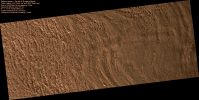
PSP_003639_1345_RED_browse-00.jpgDebris Apron South of Euripus Mons (context image - possible natural colors; elab. Lunexit)66 visiteEuripus Mons is located to the east of Hellas impact basin in the southern mid-latitudes of Mars.
The overall wavy, curved surface pattern of this debris apron suggests that material flowed out from the isolated flat-top ridge. This mass movement of debris probably involved ice flow (possibly forming rock glaciers) and potentially liquid water.MareKromium
|
|
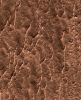
PSP_003639_1345_RED_browse-01.jpgDebris Apron South of Euripus Mons (extra-detail mgnf - possible natural colors; elab. Lunexit)71 visiteA closer view of the upper portion of the image (see here), reveals that rough sharp scalloped ridges are particularly prominent.
This scalloping may have resulted from sublimation of ice below the surface.MareKromium
|
|
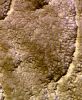
PSP_003639_1345_RED_browse-02.jpgDebris Apron South of Euripus Mons (extra-detail mgnf - possible natural colors; elab. NASA)83 visiteAt full resolution, Polygonal Features can be observed (see here), which are characteristic of Periglacial Terrains. These polygons form by the contraction and expansion of the ground due to freezing and thawing of ice just below the surface during seasonal changes.
All of these features provides evidence that ice was or is present just below the surface at this location. This apron is not pockmarked with craters, suggesting it is relatively young in age.MareKromium
|
|
|
| 3 immagini su 1 pagina(e) |
|








