| Risultati della ricerca nelle immagini - "Enceladus" |

Dione-N00160857-60-EB-LXTT.jpgJust a "Slice" of Dione (Superdefinition and Natural Colors; credits for the additional process. and color.: Elisabetta Bonora - Lunexit Team)73 visitenessun commentoMareKromium
|
|

Dione-PIA10500.jpgCross-Worlds: the Answer!69 visiteRicordate la sequenza (intitolata, appunto, Cross-Worlds) che pubblicammo qualche settimana fa (era il 14 Settembre 2008, per l'esattezza) e che ci mostrava (ovviamente nell'ottica di CASSINI) Dione mentre eclissava un'altra Luna non identificata?
Noi ipotizzammo che si potesse trattare di Mimas o di Encelado. La NASA, oggi, tramite il suo Planetary Photojournal, ci ha risposto: si trattava di Encelado.
Un grazie alla NASA (che, quando vuole, sa anche rispondere) ed un 6+ a noi perchè, anche se non siamo riusciti ad identificare con sicurezza assoluta la seconda luna "misteriosa" in transito, siamo stati comunque abbastanza bravi dal ridurre la rosa dei "candidati" a due soli Corpi Celesti.
Insomma...Non male!MareKromium
|
|

Enceladus and Titan-PIA07787-br500.jpgColors of the Saturnian System: Enceladus and Titan61 visiteMany denizens of the Saturn System wear a uniformly gray mantle of darkened ice, but not these 2 moons: the brightest body in the Solar System, Enceladus, is contrasted here against Titan's smoggy, golden murk. Ironically, what these 2 moons hold in common gives rise to their stark contrasting colors. Both bodies are, to varying degrees, geologically active. For Enceladus, its Southern Polar Vents emit a spray of icy particles that coats the small moon, giving it a clean, white veneer. On Titan, yet undefined processes are supplying the atmosphere with Methane and other chemicals that are broken down by sunlight. These chemicals are creating the thick yellow-orange haze that is spread through the atmosphere and, over geologic time, falls and coats the surface. The thin, bluish haze along Titan's limb is caused when sunlight is scattered by haze particles roughly the same size as the wavelength of blue light, or around 400 nnmts.
|
|

Enceladus from 1.600.000 Km.jpgEnceladus from Cassini-Huygens - app.x 1.600.000 Km away66 visitenessun commento
|
|

Enceladus from Voyager 2.jpgEnceladus from Voyager 284 visiteImmagine Voyager 2 di Enceladus in "natural colors". Anche per questa fotografia il contrasto è stato leggermente esaltato, in maniera tale da rendere visibili i lievi dettagli e le formazioni crateriche e montuose (canali inclusi) che caratterizzano questa "Luna di Ghiaccio".
|
|

Enceladus&C-PIA08216.jpgJewels...77 visiteThe real jewels of Saturn are arguably its stunning collection of icy moons. Seen here with the unlit side of the Rings are Titan (Dx), Tethys (Sx) and Enceladus (Cn) with its fountain-like geysers.
The faint, vertical banding in the image is due to "noise" in the spacecraft electronics. This noise is difficult to remove from an image that has a very wide dynamic range - i.e.: a wide range of brightness levels - as in the difference between gleaming Titan and the faint plumes of Enceladus.
Additionally, a reflection of Titan's light within the camera optics is likely responsible for the faint secondary image of Titan's limb to the left of the giant moon.
The image was taken in visible green light with the Cassini spacecraft narrow-angle camera on June 10, 2006 at a distance of approx. 3,9 MKM (about 2,4 MMs) from Enceladus; 5,3 MKM (about 3,3 MMs) from Titan and 4,4 MKM (such as approx. 2,7 MMs) from Tethys.
The phase angle is 160° on Enceladus.
Image scale is 23 kilometers (14 miles) per pixel on Enceladus, 32 kilometers (20 miles) per pixel on Titan and 26 kilometers (16 miles) per pixel on Tethys.
|
|
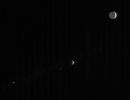
Enceladus&C.-PIA08182.jpgMoons...82 visiteCaption NASA proginale:"Four of Saturn's many and varied moons crowd this single frame from Cassini.
All of the moons are illuminated by the Sun, which is out of the frame to the right. "Saturnshine", or reflected light from the planet (out of frame to the lower left), partly illuminates three of the moons, such as Tethys (1.071 Km, or 665 miles across, at upper right), Janus (181 Km, or 113 miles across, at lower left) and Epimetheus (116 Km, or 72 miles across, below and left of center).
Enceladus (505 Km, or 314 miles across) is much farther in the distance in this view, and shows merely a slim crescent below center.
The image was taken in visible light with the Cassini spacecraft narrow-angle camera on April 17, 2006, at a distance of approx. 3,7 MKM (such as about 2,3 MMs) from Saturn. The image scale is approx. 27 Km (about 17 miles) per pixel on Tethys, 21 Km (13 miles) per pixel on Enceladus, and 22 Km (14 miles) per pixel on Janus and Epimetheus".
|
|

Enceladus&Dione-PIA08150.jpgCrowded Saturnian Skies...61 visiteAs our robotic emissary to Saturn, the Cassini spacecraft is privileged to behold such fantastic sights as this pairing of two moons beyond the Rings. The bright, narrow F-Ring is the outermost ring structure seen here.
In this scene, bright Enceladus begins to slip in front of more distant Dione. Enceladus is closer to Saturn than Dione, and orbits the planet at greater velocity. Thus, the smaller moon eventually passed the larger one, as seen from the Cassini spacecraft, and continued on its way.
The image was taken with the Cassini spacecraft narrow-angle camera on March 3, 2006, using a filter sensitive to wavelengths of ultraviolet light centered at 338 nnmts and at a distance of approx. 2,6 MKM (about 1,6 MMs) from Enceladus and 2,7 MKM (such as about 1,7 MMs) from Dione. The view was taken from a phase angle (Sun-moon-spacecraft angle) of 139°; about the same angle with respect to both moons. Image scale is about 16 Km (roughly 10 miles) per pixel on Enceladus and Dione.
|
|

Enceladus&Rhea-PIA08133.jpgEnceladus and Rhea, divided by the Rings77 visiteCaption originale:"Rhea and Enceladus hover in the distance beyond Saturn's Ring-Plane. Enceladus (left, 505 Km - about 314 miles - wide), bathed in icy particles from Saturn's E-Ring, appears noticeably brighter than Rhea (right, 1528 Km - about 949 miles - wide).
The image was taken in visible light with the Cassini spacecraft narrow-angle camera on Feb. 8, 2006, at a distance of approx. 4,3 MKM (such as about 2,7 MMs) from Enceladus and 4,6 MKM (about 2,9 MMs) from Rhea.
The image scale is approx. 26 Km (roughly 16 miles) per pixel on Enceladus and about 28 Km (roughly 17 miles) per pixel on Rhea.
|
|

Enceladus&Tethys-PIA07664.jpgBrothers in the Night62 visiteThe Cassini spacecraft captures this dual portrait of an apparently dead moon and one that is very much alive. Tethys, in the foreground, shows no signs of recent geologic activity. Enceladus, instead, is covered in fractures and faults - near its South Pole in particular - and spews icy particles into space from active vents. Tethys' giant crater Odysseus lurks in the dark just west of the terminator. North on the moons is up.
The image was taken in visible light with the Cassini spacecraft narrow-angle camera on Nov. 29, 2005 at a distance of app.x 970.000 Km (roughly 600.000 miles) from Tethys and at a Sun-Tethys-spacecraft angle of 122°. Cassini was then 1,1 MKM (700.000 miles) from Enceladus. Image scale is about 6 Km per pixel on Tethys (at left) and 7 Km per pixel on Enceladus (at right).
|
|

Enceladus-00063371.jpgHiding behind the Rings... (3D - credits: Dr M. Faccin)69 visitenessun commentoMareKromium
|
|
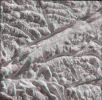
Enceladus-3D-MF.jpgTiger Stripes (High-Def-3D; credits: Dr M. Faccin)64 visiteDa guardare...MareKromium
|
|
| 279 immagini su 24 pagina(e) |
1 |
 |
|
|
|
|
|
|
|
|
|





