| Risultati della ricerca nelle immagini - "Echus" |

Chasma-Echus_Chasma-Fractures-PIA17704-PCF-LXTT-IPF.jpgFeatures of Echus Chasma (EDM - Absolute Natural Colors; credits for the additional process. and color.: Dr Paolo C. Fienga/Lunar Explorer Italia/Italian Planetary Foundation)110 visiteIn this Extra Detail Magnification (or "EDM" for short) - taken from an Original NASA - Mars Reconnaissance Orbiter's False Colors and NON-Map Projected sub-frame -, we can see, with a really great detail, a so-called "Intersection Area" existing between two Fractures (or, perhaps, Fissures and/or Water or Lava-carved narrow Channels) which are both located on the Floor of Echus Chasma (an Equatorial Chasma found in the Lunae Planum High Plateau Region of Mars, slightly to the North of the gigantic Valles Marineris Canyon System, and approx. 100 Km long and 10 Km wide).
Echus Chasma contains several Valleys which range - as far as their depth is concerned - from about 1 to 4 Km, and it is now considered, by Planetary Scientists, to be the Water Source Region that allowed the formation and then the (relevant) water-supply of the Kasei Valles Outflow Channel: a large Valley that extends for thousands of kilometers towards the North of the Red Planet.
Mars Local Time: 14:36 (Early Afternoon)
Coord. (centered): 0,377° North Lat. and 279,483° East Long.
Spacecraft altitude: 269,1 Km (such as about 161,111 miles)
Original image scale range: 53,8 cm/pixel (with 2 x 2 binning) so objects ~ 1 mt and 62 cm across are resolved
Map projected scale: 50 cm/pixel
Map projection: EQUIRECTANGULAR
Emission Angle: 7,7°
Phase Angle: 47,6°
Solar Incidence Angle: 40° (meaning that the Sun was about 50° above the Local Horizon at the time the picture was taken)
Solar Longitude: 27,0° (Northern Spring - Southern Fall)
Credits: NASA/JPL/University of Arizona
Additional process. and coloring: Lunar Explorer Italia
This picture (which is a crop taken from a NASA - Original Mars Reconnaissance Orbiter False Colors and NON-Map Projected sub-frame identified by the serial n. ESP_033591_1805-1) has been additionally processed, magnified, contrast enhanced, Gamma corrected, and then re-colorized in Absolute Natural Colors (such as the colors that a human eye would actually perceive if someone were onboard the NASA - Mars Reconnaissance Orbiter and then looked down, towards the Surface of Mars), by using an original technique created - and, in time, dramatically improved - by the Lunar Explorer Italia Team.MareKromium
|
|

Chasmas-Echus_Chasma-PIA08022-00.jpgDust Avalanches in Echus Chasma (1)63 visiteImage information: VIS instrument;
Latitude: 3,6° North;
Longitude: 280,9° East;
Resolution: 18 meter/pixel.
|
|
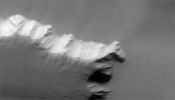
Chasmas-Echus_Chasma-PIA08022-01.jpgDust Avalanches in Echus Chasma (2)64 visitenessun commento
|
|
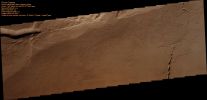
Collapse_Features-Echus_Chasma-PIA13251.jpgEchus Chasma (Enhanced Natural Colors; credits for the additional process. and color.: Dr Paolo C. Fienga - Lunexit Team)63 visitenessun commentoMareKromium
|
|
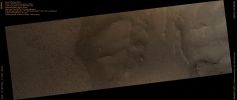
ESP_018796_1790_RED_abrowse.jpgEchus' Floor and Wall (Natural Colors; credits for the additional process. and color.: Dr Paolo C. Fienga - Lunexit Team)109 visitenessun commentoMareKromium
|
|
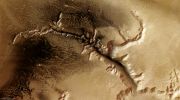
Echus_Chasma-398-260508-2204-6-co-01-H1.jpgEchus Chasma (False Colors)73 visiteThe High-Resolution Stereo Camera (HRSC) on board ESA's Mars Express has returned images of Echus Chasma, one of the largest Water Source Regions on the Red Planet.
The data were acquired on September, 25, 2005.
The pictures are centred at about 1° North and 278° East and have a ground resolution of approx. 17 mt/pixel.
Echus Chasma is an approx. 100 Km long and 10 Km wide incision in the Lunae Planum High Plateau North of Valles Marineris, the "Grand Canyon" of Mars. Echus Chasma is the Water Source Region of Kasei Valles, which extends thousands of Km to the North, and its southern-most part. The images of the Echus Chasma plateau show valleys that are about 10 km long and 1000 m deep. The main valley, Kasei Valles, is about 4 km in depth. The smaller valleys, also called sapping canyons, originate from the discharge of groundwater.
Echus Chasma is bounded to the West by the Echus Chasma Plateau, which lies about 4 Km above Echus' floor. MareKromium
|
|

Echus_Chasma-PIA08022-2-PCF-LXTT.jpgEchus Chasma (Natural Colors; credits for the additional process. and color.: Dr Paolo C. Fienga - Lunexit Team)80 visitenessun commentoMareKromium
|
|

Echus_ChasmaThe_Dust_Lake-M2300040-PCF-LXTT.jpgDust-Lake in Echus Chasma (Natural Colors; credits for the additional process. and color.: Dr Paolo C. Fienga - Lunexit Team)142 visitenessun commentoMareKromium
|
|
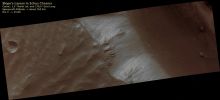
PSP_002472_1810_red_abrowse-PCF-LXTT.jpgSlope Layers in Echus Chasma (Absolute Natural Colors; credits for the additional process. and color.: Dr Paolo C. Fienga - Lunexit Team:)76 visitenessun commentoMareKromium
|
|

Psp_009513_1810_red.jpgEchus Chasma (Enxtrelmely Enhanced Natural Colors; credits for the additional process. and color.: Dr Paolo C. Fienga - Lunar Explorer Italia)73 visiteMars Local Time: 15:28 (early afternoon)
Coord. (centered): 1,1° North Lat. and 278,0° East Long.
Spacecraft altitude: 266,2 Km (such as about 166,4 miles)
Original image scale range: 53,3 cm/pixel (with 1 x 1 binning) so objects ~1,60 mt across are resolved
Map projected scale: 50 cm/pixel
Map projection: EQUIRECTANGULAR
Emission Angle: 2,8°
Phase Angle: 53,0°
Solar Incidence Angle: 55° (meaning that the Sun is about 35° above the Local Horizon)
Solar Longitude: 109,0° (Northern Summer)
Credits: NASA/JPL/University of Arizona
Additional process. and coloring: Lunar Explorer ItaliaMareKromium
|
|
|
|
| 10 immagini su 1 pagina(e) |
|








