| |
| Risultati della ricerca nelle immagini - "Dwarf" |

009-1-Ceres-PIA19884-PCF-LXTT-IPF-1.jpgWhite Unnamed Crater on 1-Ceres (Absolute Natural Colors; credits for the additional process. and color.: Dr Paolo C. Fienga/Lunar Explorer Italia/Italian Planetary Foundation)85 visiteToday's APOD is an Extra Detail Magnification (or "EDM", for short) of yesterday's Contextual (or "CTX", for short) Frame, taken by the NASA - Dawn Spacecraft that shows us a small White Crater (---> also informally known as "White Spot") that is located in the Northern Hemisphere of the Dwarf Planet named 1-Ceres.
Now, we ask you one (extremely complicated, in fact) question that you, however, should try to answer: why, on 1-Ceres, the huge and deep Impact Craters do not show "White Material" inside them, while, on the other hand, the small and shallow ones (Impact Craters) do? Probably because, but we, as IPF, cannot be sure of this (just like everyone else), the White Material, in the end, does not belong to/comes from the Sub-Surface of 1-Ceres (as we thought, at the beginning), but it belongs to/comes from the Impactors. And you, what do you think?...If you want to share your opinion, please, write us at alphacentauri@intercom.it
The picture was taken from an altitude of approx. 915 miles (such as about 1472,5461 Km) from the Surface, with a resolution of roughly 450 feet (such as about 137,16 meters) per pixel, was taken on August 21, 2015.
This image (which is a crop taken from an Original NASA - Dawn Spacecraft's b/w and NON Map-Projected frame published on the NASA - Planetary Photojournal with the ID n. PIA 19884 - Dawn HAMO Image 8) has been additionally processed, extra-magnified to aid the visibility of the details, contrast enhanced and sharpened, Gamma corrected and then colorized (according to an educated guess carried out by Dr Paolo C. Fienga-LXTT-IPF) in Absolute Natural Colors (such as the colors that a normal human eye would actually perceive if someone were onboard the NASA - Dawn Spacecraft and then looked ahead, towards the Surface of 1-Ceres), by using an original technique created - and, in time, dramatically improved - by the Lunar Explorer Italia Team.MareKromium
|
|

010-1-Ceres-PIA19898-PCF-LXTT-IPF.jpgUnnamed Crater on the Terminator of 1-Ceres (Absolute Natural Colors; credits for the additional process. and color.: Dr Paolo C. Fienga/Lunar Explorer Italia/Italian Planetary Foundation)78 visiteThis simply beautiful Contextual (or "CTX", for short) Frame, taken by the NASA - Dawn Spacecraft on August, 26, 2015, shows us, among other interesting things, an Ancient and extremely Complex Unnamed Impact Crater (which seems to be characterized by the presence of an unusually-looking - we would say, as IPF, "columnarly-shaped", maybe? - Central Peak) that is located near the Terminator Line of the Dwarf Planet named 1-Ceres.
If you will pay attention to the frame, you might agree on the fact that the long shadows - which are very well visible all over the picture - make the whole scene - with its deeply complex Surface Details - even more suggestive.
The picture was taken from an altitude of approx. 915 miles (such as about 1472,5461 Km) from the Surface, with a resolution of roughly 450 feet (such as about 137,16 meters) per pixel, was taken on August 21, 2015.
This image (which is an Original NASA - Dawn Spacecraft's b/w and NON Map-Projected frame published on the NASA - Planetary Photojournal with the ID n. PIA 19898 - Dawn HAMO Image 20) has been additionally processed, extra-magnified to aid the visibility of the details, contrast enhanced and sharpened, Gamma corrected and then colorized (according to an educated guess carried out by Dr Paolo C. Fienga-LXTT-IPF) in Absolute Natural Colors (such as the colors that a normal human eye would actually perceive if someone were onboard the NASA - Dawn Spacecraft and then looked ahead, towards the Surface of 1-Ceres), by using an original technique created - and, in time, dramatically improved - by the Lunar Explorer Italia Team.MareKromium
|
|

011-1-Ceres-Full_Rotation.gif1-Ceres: Full Rotation (GIF-Movie - Credits: NASA/JPL)127 visitenessun commentoMareKromium
|
|

012-1-Ceres-PIA19620-PCF-LXTT-IPF.jpgHuge Mountain on 1-Ceres (Absolute Natural Colors; credits for the additional process. and color.: Dr Paolo C. Fienga/Lunar Explorer Italia/Italian Planetary Foundation)103 visiteLocated just on the Limb (obviously, only from our point of view) of the so-called "Dwarf Planet" 1-Ceres, at about 7 o'clock of 1-Ceres' (highly uneven) disk, we can see - once again - the large Flat-Topped Mountain - about 3 miles (such as approx. 4,82802 Km) high, surrounded by (relatively) smooth Terrain - that we have already shown you in yesterday's APOD. Probably it is useless to say - but it is a good thing, in our opinion, as IPF, to underline this specific circumstance - the so-called Emission Angle here is very high. The "new" White Spot, as well as the white Material that we have noticed still in yesterday's APOD, are also clearly visible here, in this picture.
As we have already said in the past, also this specific frame is just one among the first snapshots coming from Dawn's second Mapping Orbit of 1-Ceres, which is carried out from an altitude of approx. 2700 miles (such as about 4345,218 Km). Even in this case, the Resolution is roughly 1400 feet (such as approx. 426,72 meters) per pixel.
The image (which is an Original NASA - Dawn Spacecraft's b/w and NON Map-Projected frame published on the NASA - Planetary Photojournal with the ID n. PIA 19587 - Dawn Survey Orbit Image 19) has been additionally processed, magnified to aid the visibility of the details, contrast enhanced and sharpened, Gamma corrected and then colorized (according to an educated guess carried out by Dr Paolo C. Fienga-LXTT-IPF) in Absolute Natural Colors (such as the colors that a normal human eye would actually perceive if someone were onboard the NASA - Dawn Spacecraft and then looked ahead, towards the Limb and Surface of 1-Ceres), by using an original technique created - and, in time, dramatically improved - by the Lunar Explorer Italia Team.MareKromium
|
|

016-1-Ceres-Occator-Black_Shadow-01.jpgDark "Spot" inside Occator Crater (CTX Frame)129 visiteMareKromium
|
|

017-1-Ceres-Occator-Black_Shadow-02.jpgDark "Spot" inside Occator Crater (EDM)160 visiteMareKromium
|
|

018-1-Ceres-PIA22764.jpgOccator Crater on the Limb...147 visitenessun commentoMareKromium
|
|

020-1-Ceres-PIA22641.jpgUnusually-looking Surface Feature on 1-Ceres131 visiteCaption NASA Originale:"This image was obtained by NASA's Dawn Spacecraft on July 17, 2018 from an altitude of about 25 miles (such as approx. 40,23 Km).
The center of this picture is located at about 31,0° South Latitude and 248,9° East Longitude".MareKromium
|
|
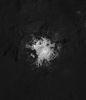
021-1-Ceres-Cerealia_Facula-Occator_Crater-PIA21924.jpgCerealia Facula123 visiteCaption NASA Originale"This mosaic of Cerealia Facula is based on images obtained by NASA's Dawn Spacecraft in its second extended mission, from an altitude as low as about 21 miles (such as approx. 33,79 Km). The contrast in resolution obtained by the two phases is visible here, reflected by a few gaps in the high-resolution coverage. This image is superposed to a similar scene acquired in the low-altitude mapping orbit of the mission from an altitude of about 240 miles (i.e. approx. 386,24 km).
The increased resolution afforded by the low altitude is revealing intimate details about the relationships between bright and dark materials across the Facula (---> Bright Spot), which will help resolve the mystery of its origin.
Cerealia Facula is located at about 19,7° North Latitude and 239,6° East Longitude".MareKromium
|
|

Eris.jpgAnother "Dwarf Planet" with satellite: 136199-Eris and Dysnomia78 visiteDa "NASA - Picture of the Day" del 18 Settembre 2006:"Is Pluto the largest Dwarf Planet? No! Currently, the largest known dwarf planet is 136199-Eris, renamed last week from 2003 UB313. Eris is just slightly larger than Pluto, but orbits as far as twice Pluto's distance from the Sun. Eris is shown above in an image taken by a 10-meter Keck Telescope from Hawaii, USA.
Like Pluto, Eris has a moon, which has been officially named by the International Astronomical Union as (136199) Eris I (Dysnomia). Dysnomia is visible above just to the right of Eris. Dwarf Planets Pluto and Eris are Trans-Neptunian Objects that orbit in the Kuiper belt of objects past Neptune. Eris was discovered in 2003, and is likely composed of frozen water-ice and methane. Since Pluto's recent demotion by the IAU from planet to dwarf planet status, Pluto has recently also been given a new numeric designation: 134340-Pluto.
Currently, the only other officially designated Dwarf Planet is 1-Ceres".
|
|

Orcus-GIF.gif90482 Orcus87 visiteCaption NASA:"A newly discovered object in the Outer Solar System moves like an anti-Pluto. 90482 Orcus was first discovered in 2004 and is slightly smaller than Pluto, although still one of the largest Kuiper Belt objects known.
Orcus may one day have the same IAU designation as Pluto: a dwarf planet.
Orcus and Pluto have similar orbits: each achieves nearly the same maximum and minimum distances from the Sun, each orbits on a similarly shaped ellipse, and each orbital ellipse is tilted toward the other planets' orbital ellipse by roughly the same angle. The great mass of Neptune causes each to circle the Sun twice for every three Neptune orbits.
Orcus is like an anti-Pluto, however, because the two objects always remain across the Solar System from each other. Orcus can be found as the spot near the center of these discovery frames moving slightly down from the top.
Until the end of next week, the discoverers of Orcus ask for your help in naming its newly discovered moon".MareKromium
|
|
|
| 11 immagini su 1 pagina(e) |
|

|
|








