| |
| Risultati della ricerca nelle immagini - "D" |

0-The Solar System.jpgA "New" Solar System (according to IAU)? No, thanks...202 visite"Plutone non è degno di essere considerato un Pianeta": questa, con un pizzico di polemica (da parte nostra) ed in estrema sintesi, la decisione della IAU la quale, dovendo scegliere se portare (o non) da 9 a 12 il numero dei Membri Maggiori del Sistema Solare, ha " elegantemente" pensato e deliberato di ridurli ad 8!
Questa decisione, a parere di Lunar Explorer Italia, costituisce un futile, inutile e villano "sgarbo postumo" nei confronti del grande Astronomo Americano Clyde Tombaugh (lo scopritore di Plutone) e quindi abbiamo deciso, in quanto Gruppo di Ricercatori Indipendenti, di non riconoscere la "IAU Resolution n. 6-A" e pertanto continueremo a considerare il nostro Sistema Solare inclusivo di Plutone (anzi: del Pianeta "Doppio" Plutone-Caronte).
Clyde Tombaugh nacque nel 1906 da una famiglia di agricoltori dell'Illinois. da ragazzo sviluppò un forte interesse per l'osservazione del cielo, incoraggiato sia dal padre che dallo zio. Il primo telescopio con il quale osservò le stelle apparteneva a suo zio. Clyde era insoddisfatto del primo telescopio che aveva comprato in un negozio, così decise di costruirne uno lui stesso. Il padre di Clyde si trovò un secondo lavoro per pagare i materiali necessari. Il telescopio che Clyde costruì nel 1925 fu solo il primo di oltre trenta telescopi che costruì nel corso della sua vita.
Nel 1928 Clyde finì di costruire un telescopio riflettore da 23 cm, molto preciso. La montatura fu costruita con un albero a gomiti, preso da un'automobile Buick del 1910, e da parti di scarto di una macchina agricola! Tuttavia non fu con questo che Clyde compì le osservazioni che gli valsero un'offerta di lavoro dal Lowell Observatory. Clyde fece disegni molto dettagliati delle proprie osservazioni al telescopio di Marte e Giove. Inviò i suoi disegni agli astronomi del Lowell Observatory, chiedendo commenti e suggerimenti. Invece ricevette un'offerta per andare a lavorare all'osservatorio come astronomo praticante. Clyde accettò il lavoro e cominciò a dedicarsi alla ricerca del famoso "Pianeta X" di Percival Lowell, un pianeta ancora sconosciuto che avrebbe dovuto trovarsi oltre Nettuno. Il lavoro di Clyde Tombaugh consisteva nel fotografare un pezzettino di cielo per volta, poi esaminarlo attentamente e confrontare le diverse fotografie per identificarvi eventuali oggetti non identificati in movimento, che avrebbero potuto essere pianeti. Clyde Tombaugh fotografò oltre il 65% del cielo e trascorse migliaia di ore esaminando le immagini. Dopo dieci mesi di durissimo lavoro, spesso lavorando anche la notte in una cupola non riscaldata, Clyde Tombaugh scoprì il pianeta Plutone. Clyde Tombaugh morì all'età di novant'anni, il 17 gennaio 1997.
|
|

00-PhoenixLiftoff.jpgThe beginning...89 visiteCaption NASA:"Can Mars sustain life? To help answer this question, last week NASA launched the Phoenix Mission to Mars. In May 2008, Phoenix is expected to land in an unexplored North Polar Region of Mars that is rich in water-ice. Although Phoenix cannot move, it can deploy its cameras, robotic arm, and a small chemistry laboratory to inspect, dig, and chemically analyze its landing area. One hope is that Phoenix will be able to discern telling clues to the history of ice and water on Mars. Phoenix is also poised to explore the boundary between ice and soil in hopes of finding clues of a habitable zone there that could support microbial life.
Phoenix has a planned lifetime of 3 months on the Martian surface".MareKromium
|
|

000-Kaguya.jpgThe Kaguya (SELENE) Probe78 visiteThe SELenological and ENgineering Explorer "KAGUYA"(SELENE), Japan’s 1st large Lunar Explorer, was launched by the H-IIA rocket on September 14, 2007 (JST). The mission, which is the largest Lunar Mission since the Apollo Program, is being keenly anticipated by many countries.
The major objectives of the Mission are to understand the Moon’s origin and evolution and to observe the Moon in various ways in order to utilize it in the future. The Lunar Missions that have been conducted so far have gathered a large amount of information on the Moon, but the mysteries of its origin and evolution have been left unsolved.
KAGUYA will investigate the entire Moon in order to obtain information on its elemental and mineralogical composition, geography, surface and sub-surface structure, the remnant of its magnetic field and its gravity field.
The results are expected to lead to a better overall understanding of the Moon’s evolution. At the same time, the observation equipment installed on the orbiting satellite will observe plasma, the electromagnetic field and high-energy particles. The data obtained in this way will be of great scientific importance for exploring the possibility of using the moon for human endeavors.MareKromium
|
|
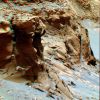
000-OPP-SOL1095-MF-LXT.jpgVictoria's Capes - Sol 1095 (Hi-Def3-D - credits and Copyright: Dr M. Faccin and Lunar Explorer Italia)110 visiteUna "Nuova Visione" di Marte, Made by Lunexit: si tratta di frames processati tridimensionalmente, ma adottando una tecnica ed un processing totalmente innovativi.
Confrontate queste "Visioni di Marte" con i 3D "Standard" NASA e...Vedrete la differenza, e CHE differenza!
Questa tecnica di elaborazione delle immagini (sviluppata da Marco Faccin e Gianluigi Barca, sotto Copyright Lunar Explorer Italia) è il primo passo verso la creazione di frames tridimensionali a colori (non più il "solito" blu/verde e rosso) e ad altissima definizione. Frames che permetteranno a chiunque li guardi (ed anche a persone che hanno problemi di vista) di mettere - letteralmente - gli occhi ed il naso "all'interno del paesaggio ripreso".
Ed ora (e per il momento), indossate gli "occhialini" e...in un istante Vi ritroverete DENTRO e AD UN PASSO dal margine e dai Promontori di Victoria Crater!
MareKromium
|
|

000-P-FILTERS.jpgJust to remember...74 visitenessun commentoMareKromium
|
|

0000a.jpgThe Dawn of "X-Mars": the Dam (ctx frame - High-Def-3D; credits: Dr M. Faccin & Lunar Explorer Italia)167 visitePer gli Appassionati di Misteri e di Eso-Archeografia, apriamo una nuova Sezione di Lunar Explorer Italia che abbiamo deciso di chiamare "X-Mars".
Ma perchè "X-Mars"? Perchè qui troverete i profili ed i rilievi superficiali Marziani più AFFASCINANTI ed INTRIGANTI che sìano mai stati individuati (altro che "Sfinge di Cydonia"...), MA SENZA INDICAZIONE DEL FRAME DI RIFERIMENTO e SENZA INDICAZIONE DEL LUOGO IN CUI ESSI SI TROVANO.
Il motivo di questa - radicale, ma necessaria - scelta è molto semplice: purtroppo abbiamo notato che i Lavori pubblicati sulle nostre pagine vengono - sempre più di frequente - ripresi e riutilizzati in altri Siti (Public Forums inclusi) senza citazione della loro Fonte.
In altre parole: il nostro Lavoro viene prelevato ed usato altrove - e sin qui va bene, anzi: ci ONORA! - MA SENZA CHE CI VENGA MAI DETTO NEPPURE "GRAZIE PER L'AIUTO" - e questo NON va bene e, anzi, ci fa parecchio inquietare... -.
Le informazioni contestuali di riferimento dei singoli frames pubblicati su "X-Mars", ove richieste, verranno comunque comunicate MA IN PRIVATO - rigorosamente - E SOLO in favore dei nostri Iscritti (Amici, Partners, Collaboratori Esterni).
Vedete, cari Amici, la Ricerca Professionale sui frames NASA - ORIGINAL non può essere fatta solamente sulle immagini che vengono - letteralmente - "gettate sulla Rete" a beneficio di semplici curiosi ed appassionati "leggeri": essa DEVE essere operata lavorando sul materiale NASA-RAW, espresso nella sua qualità più elevata.
E questo materiale va cercato (e non solo non è facile ma anzi, talvolta, è pure costoso...), va analizzato (e per farlo ci occorrono softwares appropriati e centinaia di ore di tempo e di fatica) e va processato (perchè se stessimo ad aspettare la NASA...moriremmo di noia e di vecchiaia senza aver visto nulla!) prima di essere divulgato al Pubblico.
I "Maestri" della Ricerca Eso-Archeologica "Commerciale", sia in USA che in Italia ed altrove, come forse già sapete, NON USANO I FRAMES NASA-RAW Original per fare le loro illazioni, bensì le loro versioni compresse o, PEGGIO, le loro versioni "virtualizzate" (note anche come "pseudo-fotografie): versioni queste, non solo SCADENTI (nel 99% dei casi), ma anche FUORVIANTI (nel 100% degli stessi)!
Versioni buone solo per scrivere libelli e per fare conferenze in cui esporre, ad un Pubblico entusiasta, ma assolutamente impreparato, teorie balzane - ma acutamente caratterizzate dal privilegio di essere ASSOLUTAMENTE INDIMOSTRABILI! - e pseudo-scoperte che, in realtà, sono soltanto specchietti per allodole e strumenti di business.
Siamo troppo "duri"? No, Cari Amici, no: credeteci. Siamo solo "adulti e vaccinati".
Facciamo questo Lavoro da anni, lo facciamo no-profit e lo facciamo bene: il nostro Fine Ultimo è FARE DIVULGAZIONE ergo, anche se l'obbiettivo è ambizioso, CREARE CONOSCENZA E CULTURA.
Conoscenza e Cultura prive di sensazionalismi e di isterismi e fatte senza "bussare a quattrini". Il che, a nostro avviso, ci rende davvero UNICI.
Sopravviveremo alla nostra "Politica Idealistica"? Probabilmente no: è solo questione di tempo prima che ci si debba arrendere ai costi, sempre più alti, connessi a questo Lavoro. Prima o poi dovremo "piantarla lì": lo sappiamo.
Ma sino a che quel momento non arriverà, noi continueremo ad offrirVi il meglio dello Spazio e, in questa fattispecie, il meglio che ci giunge da Marte: un Mondo, forse, molto più vivo di quanto si creda e si pensi e, DI CERTO, un Pianeta molto più affascinante di quanto, sino ad ora, si è anche solo potuto immaginare...
Buona Lettura!
Dr Paolo C. Fienga - Lunar Explorer Italia (Presidente e Socio Fondatore)
§§§
In questo frame: un rilievo superficiale MAI INDIVIDUATO PRIMA (e localizzato dal nostro Dr Marco Faccin) il quale si sviluppa in due spettacolari archi concentrici, posizionati sul fianco di un'altura ed al di sopra di una evidente depressione che, un tempo, poteva anche costituire un bacino lacuale.
Che cosa potrebbe essere? Ma è ovvio: una "Diga"! MareKromium
|
|
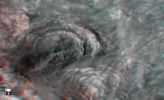
0000b.jpgThe Dawn of "X-Mars": the Dam (edm - High-Def-3D; credits: Dr M. Faccin & Lunar Explorer Italia)276 visiteIn questo extra-detail mgnf (sempre realizzato dal Dr Faccin), la struttura a doppio arco del rilievo si può cogliere in tutta la sua bellezza.
Si tratta di un double-crater ormai in rovina? Secondo noi no. Certo, da qui a dire che si tratta di un rilievo artificiale ci passa la stessa distanza che separa la Terra da Marte, ma un dato a noi pare certo: questa Surface Feature NON E' rappresentativa nè di un cratere "tradizionale" (e cioè "da impatto"), nè di un pozzo da collasso (e cioè il risultato finale di una subsidenza ---> cedimento di una struttura a causa del suo stesso peso).
E' una "Planetary Oddity": una "Stranezza Planetaria", che va osservata e studiata. Tutto qui.MareKromium
|
|

002.jpgSpace Heat-Shields - The Heat-Shield (specs)153 visite2 - LO SCUDO TERMICO
La tesi NASA è che l'oggetto luccicante adagiato sul bordo del Cratere Bonneville - mostratoVi nel frame precedente ed il quale appare completamente deformato (a seguito dell'impatto?) - sarebbe/è l’Heat-Shield della Sonda Spirit (che in questo frame vediamo in una versione "integra").
|
|

009-1-Ceres-PIA19884-PCF-LXTT-IPF-1.jpgWhite Unnamed Crater on 1-Ceres (Absolute Natural Colors; credits for the additional process. and color.: Dr Paolo C. Fienga/Lunar Explorer Italia/Italian Planetary Foundation)85 visiteToday's APOD is an Extra Detail Magnification (or "EDM", for short) of yesterday's Contextual (or "CTX", for short) Frame, taken by the NASA - Dawn Spacecraft that shows us a small White Crater (---> also informally known as "White Spot") that is located in the Northern Hemisphere of the Dwarf Planet named 1-Ceres.
Now, we ask you one (extremely complicated, in fact) question that you, however, should try to answer: why, on 1-Ceres, the huge and deep Impact Craters do not show "White Material" inside them, while, on the other hand, the small and shallow ones (Impact Craters) do? Probably because, but we, as IPF, cannot be sure of this (just like everyone else), the White Material, in the end, does not belong to/comes from the Sub-Surface of 1-Ceres (as we thought, at the beginning), but it belongs to/comes from the Impactors. And you, what do you think?...If you want to share your opinion, please, write us at alphacentauri@intercom.it
The picture was taken from an altitude of approx. 915 miles (such as about 1472,5461 Km) from the Surface, with a resolution of roughly 450 feet (such as about 137,16 meters) per pixel, was taken on August 21, 2015.
This image (which is a crop taken from an Original NASA - Dawn Spacecraft's b/w and NON Map-Projected frame published on the NASA - Planetary Photojournal with the ID n. PIA 19884 - Dawn HAMO Image 8) has been additionally processed, extra-magnified to aid the visibility of the details, contrast enhanced and sharpened, Gamma corrected and then colorized (according to an educated guess carried out by Dr Paolo C. Fienga-LXTT-IPF) in Absolute Natural Colors (such as the colors that a normal human eye would actually perceive if someone were onboard the NASA - Dawn Spacecraft and then looked ahead, towards the Surface of 1-Ceres), by using an original technique created - and, in time, dramatically improved - by the Lunar Explorer Italia Team.MareKromium
|
|

010-1-Ceres-PIA19898-PCF-LXTT-IPF.jpgUnnamed Crater on the Terminator of 1-Ceres (Absolute Natural Colors; credits for the additional process. and color.: Dr Paolo C. Fienga/Lunar Explorer Italia/Italian Planetary Foundation)78 visiteThis simply beautiful Contextual (or "CTX", for short) Frame, taken by the NASA - Dawn Spacecraft on August, 26, 2015, shows us, among other interesting things, an Ancient and extremely Complex Unnamed Impact Crater (which seems to be characterized by the presence of an unusually-looking - we would say, as IPF, "columnarly-shaped", maybe? - Central Peak) that is located near the Terminator Line of the Dwarf Planet named 1-Ceres.
If you will pay attention to the frame, you might agree on the fact that the long shadows - which are very well visible all over the picture - make the whole scene - with its deeply complex Surface Details - even more suggestive.
The picture was taken from an altitude of approx. 915 miles (such as about 1472,5461 Km) from the Surface, with a resolution of roughly 450 feet (such as about 137,16 meters) per pixel, was taken on August 21, 2015.
This image (which is an Original NASA - Dawn Spacecraft's b/w and NON Map-Projected frame published on the NASA - Planetary Photojournal with the ID n. PIA 19898 - Dawn HAMO Image 20) has been additionally processed, extra-magnified to aid the visibility of the details, contrast enhanced and sharpened, Gamma corrected and then colorized (according to an educated guess carried out by Dr Paolo C. Fienga-LXTT-IPF) in Absolute Natural Colors (such as the colors that a normal human eye would actually perceive if someone were onboard the NASA - Dawn Spacecraft and then looked ahead, towards the Surface of 1-Ceres), by using an original technique created - and, in time, dramatically improved - by the Lunar Explorer Italia Team.MareKromium
|
|

011-1-Ceres-Full_Rotation.gif1-Ceres: Full Rotation (GIF-Movie - Credits: NASA/JPL)127 visitenessun commentoMareKromium
|
|

012-1-Ceres-PIA19620-PCF-LXTT-IPF.jpgHuge Mountain on 1-Ceres (Absolute Natural Colors; credits for the additional process. and color.: Dr Paolo C. Fienga/Lunar Explorer Italia/Italian Planetary Foundation)103 visiteLocated just on the Limb (obviously, only from our point of view) of the so-called "Dwarf Planet" 1-Ceres, at about 7 o'clock of 1-Ceres' (highly uneven) disk, we can see - once again - the large Flat-Topped Mountain - about 3 miles (such as approx. 4,82802 Km) high, surrounded by (relatively) smooth Terrain - that we have already shown you in yesterday's APOD. Probably it is useless to say - but it is a good thing, in our opinion, as IPF, to underline this specific circumstance - the so-called Emission Angle here is very high. The "new" White Spot, as well as the white Material that we have noticed still in yesterday's APOD, are also clearly visible here, in this picture.
As we have already said in the past, also this specific frame is just one among the first snapshots coming from Dawn's second Mapping Orbit of 1-Ceres, which is carried out from an altitude of approx. 2700 miles (such as about 4345,218 Km). Even in this case, the Resolution is roughly 1400 feet (such as approx. 426,72 meters) per pixel.
The image (which is an Original NASA - Dawn Spacecraft's b/w and NON Map-Projected frame published on the NASA - Planetary Photojournal with the ID n. PIA 19587 - Dawn Survey Orbit Image 19) has been additionally processed, magnified to aid the visibility of the details, contrast enhanced and sharpened, Gamma corrected and then colorized (according to an educated guess carried out by Dr Paolo C. Fienga-LXTT-IPF) in Absolute Natural Colors (such as the colors that a normal human eye would actually perceive if someone were onboard the NASA - Dawn Spacecraft and then looked ahead, towards the Limb and Surface of 1-Ceres), by using an original technique created - and, in time, dramatically improved - by the Lunar Explorer Italia Team.MareKromium
|
|
| 1842 immagini su 154 pagina(e) |
1 |
 |
|
|
|
|
|
|
|
|
|
|
|





