| Risultati della ricerca nelle immagini - "Cratered" |

50-Smart-1_25_August_1348UTC_H.jpgLunar Limb and Stars83 visiteCaption ESA originale:"This image of the Lunar Surface was taken on 25 August 2006 at 15:48 CEST (13:48 UT) by the star tracker (attitude camera) on board ESA's SMART-1, from a distance of 744 Km above the Moon surface.
The spacecraft was travelling at a speed of 1,6 Km/sec..
Remarkably, at the time the image was taken the star tracker was still producing valid attitude samples based on the few stars that are visible in the image.
This image was taken as a test, meaning that the spacecraft pointing was not optimised for star tracker imaging.
The Moon features on the photo still have to be identified".
|
|

62-smart-1_data1002887_016_H.jpgSmall craters73 visitenessun commento
|
|

63-smart-1_data1002887_024_H.jpgHeavily cratered Lunar Region76 visitenessun commento
|
|

APOLLO 16-4136-A.jpgAS 16-4136 - Cratered Region near Mandel'shtam (1)65 visiteThis view looks southward near Mandel'shtam on the Lunar Far-Side. Most young lunar craters wider than about 40 Km have flows on their rims that resemble lava flows or mud flows on Earth. The unnamed crater near the top is about 14 Km wide and was recognized by H. J. Moore (1972) as being the smallest crater known to have such flows. Flows in the middle of the picture surged downhill off the high rim of the crater making lobes and tongues and leaving behind drained channels with levees.
In the area to the right of the crater, enlarged in the next frame, are some thin lobate flows that apparently rode over small hills, as if these flows were propelled outward from the crater with sufficient velocity to climb the hills. Ejecta deposits farther than about 1 Km from the rim are radially lineated and are smoother than the ground immediately surrounding the crater. The crisp, blocky zone around the crater is typical of many fresh craters.
|
|

APOLLO 16-4136-B.jpgAS 16-4136 - Cratered Region near Mandel'shtam (2)74 visiteThis enlarged view of part of frame AS 16-4136 shows some of the smooth flows that originate near the crest of the crater rim at the left side of photograph. Arrows point to the lower ends of two flows.
The origin of the flow material is controversial.
It was probably molten material generated by shock-wave compression of lunar rocks and ejected at relatively low velocities during the late stages of the formation of the impact crater; or it may have resulted from the flow of rock debris mixed with a fluidizing agent such as gas or water; or it may have been volcanically generated lava.
|
|

AS16M0390.jpgAS 16-m-0390 - metric frames - Highly Cratered Region68 visitenessun commentoMareKromium
|
|

AS16M0392.jpgAS 16-m-0392 - metric frames - Highly Cratered Region66 visitenessun commentoMareKromium
|
|
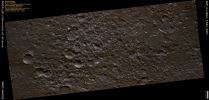
ESP_013810_1485_RED_abrowse.jpgRough and highly cratered Southern Terrain (Natural Colors; credits: Lunexit)65 visitenessun commentoMareKromium
|
|

Mars5-C_Mars05_6_Color2.jpgColor shots from Mars-5 (4 - Natural Colors; credits for the additional process. and color.: Dr Paolo C. Fienga - Lunexit Team)) 108 visiteUn tentativo di colorizzazione naturale, su un frame veramente "difficile" da interpretare.MareKromium
|
|

ORIGINAL NASA - APOLLO 15 - AS 15-96-13048.JPGAS 15-96-13048 - Rimae Prinz Region81 visite
|
|
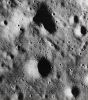
Original lunar orbiter frames-lo2-61h1-002.jpgOriginal Lunar Orbiter - Frame LO2-61h1-00266 visitenessun commento
|
|

Original lunar orbiter frames-lo2-61h1-003.jpgOriginal Lunar Orbiter - Frame LO2-61h1-00364 visitenessun commento
|
|
| 38 immagini su 4 pagina(e) |
1 |
 |
|








