| Risultati della ricerca nelle immagini - "Chrise" |

Aeolian_Features-Windstreaks-Chrise_Planitia-MGS-00.jpgSigns of the wind in Chryse Planitia (Original NASA/MGS/MSSS b/w Frame)68 visiteCaption NASA originale:"This MGS-MOC image shows two Unnamed Impact Craters of nearly equal size, plus their associated Windstreaks. These occur in far Eastern Chryse Planitia. The Wind streaks point toward the South-West, indicating that the responsible Winds blew from the North-East. One of the two craters is shallower than the other and has a suite of large, windblown Ripples on its Floor. The shallower Unnamed Crater with the Ripples is probably older than the other, deeper Unnamed Crater".
Location near: 20,6° North Lat. and 30,1° West Long.
Image width: ~3 Km (~1,9 mi)
Illumination from: lower left
Season: Northern Winter
|
|

Aeolian_Features-Windstreaks-Chrise_Planitia-MGS-01.jpgWindstreaks in Chryse Planitia (Natural Colors; credits for the additional process. and color.: Dr Paolo C. Fienga - Lunexit Team)198 visiteCaption NASA originale:"This MGS-MOC image shows two Unnamed Impact Craters of nearly equal size, plus their associated Windstreaks. These occur in far Eastern Chryse Planitia. The Wind streaks point toward the South-West, indicating that the responsible Winds blew from the North-East. One of the two craters is shallower than the other and has a suite of large, windblown Ripples on its Floor. The shallower Unnamed Crater with the Ripples is probably older than the other, deeper Unnamed Crater".
Location near: 20,6° North Lat. and 30,1° West Long.
Image width: ~3 Km (~1,9 mi)
Illumination from: lower left
Season: Northern Winter MareKromium
|
|
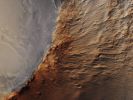
Chrise_Planitia-PIA14462-PCF-LXTT.jpgFeatures of Chrise Planitia (Absolute Natural Colors; credits for the additional process. and color: Dr Paolo C. Fienga - Lunexit Team)196 visiteThe suggested area in this observation is characterized by a group of Cones, such as "shield-like" features, and round Mounds. They are a few hundred meters to kilometers in diameter, but their heights are still unknown.MareKromium
|
|

Collapse_Features-Chrise_Chaos-PIA13325.jpgCollapse Features in Chrise Chaos (Saturated Natural Colors; credits for the additional process. and color.: Dr Paolo C. Fienga - Lunexit Team)95 visitenessun commentoMareKromium
|
|

Craters-Unnamed_Crater_in_Chrise_Planitia-01.jpgUnnamed Crater in Chrise Planitia (Original NASA/MGS/MSSS b/w Frame)94 visiteCaption originale:"This MGS-MOC image shows an impact crater in western Chryse Planitia that is approximately 850 mt (~2790 ft) in diameter, surrounded by a flat plain riddled by hundreds of smaller impact craters".
Location near: 27,6° N; 47,3° W
Image width: ~3 Km (~1,9 mi)
Illumination from: lower left
Season: Northern Winter
Nota: la natura da impatto del cratere ripreso dalla Sonda MGS non può essere, a nostro parere, nè dedotta, nè confutata dalle immagini di cui disponiamo. Ciò che possiamo dire è: qualunque sia l'origine di questo cratere senza nome, come spiegare i curiosi rilievi che sono chiaramente visibili sul suo bordo, ad ore 2, 3 e 6? Si tratta di "gullies"? Diremmo proprio di no. Cedimenti o frane? Difficile dirlo, ma siffatti rilievi, allorchè visti dall'alto, si configurano - di regola - in maniera diversa.
E che dire, in particolare, delle due formazioni oblunghe visibili ad ore 6 (e simili a due craterini ovali...)? Esse sembrano essere il risultato di attività geologicamente "recenti", a nostro avviso, ma la domanda è "quali attività"? Forse nuovi impatti? Certamente no. E allora? E allora noi rilanciamo l'invito, a Studiosi e Ricercatori, affinchè si inizi una radicale riconsiderazione sulla genesi dei crateri: la teoria dell'impatto funziona SOLO sino ad un certo punto. Poi è notte fonda...
|
|

Craters-Unnamed_Crater_in_Chrise_Planitia-PIA07304.jpgUnnamed Crater in Chrise Planitia (Original NASA/MGS/MSSS b/w Frame)149 visiteCaption NASA originale:"This MGS-MOC image shows an impact crater in Chryse Planitia, not too far from the Viking 1 Lander site, that seems to resemble a bug-eyed head. The 2 odd depressions at the north end of the crater (the "eyes") may have formed by wind or water erosion. This Region has been modified by both processes, with water action occurring in the distant past via floods that poured across western Chryse Planitia from Maja Valles, and wind action common occurrence in more recent history. This crater is located near 22.5°N, 47.9°W". Che dire? Forse gli Alieni (diremmo che in questo caso potrebbe trattarsi dei "Grigi"...) non solo posseggono "tecnologia e senso artistico" ma anche un cospicuo "senso dell'umorismo": solo così, infatti, potremmo spiegare un simile "autoritratto"!
Scherzi a parte, in questo MGS frame è ripresa un'opera della Natura davvero incredibile e che, sicuramente, qualcuno interpreterà alla stregua della "Sfinge di Cydonia".
Naturale o Artificiale? That is the question...
|
|

ESP_014417_1975_RED_abrowse-00.jpgChrise Planitia (Natural Colors; credits: Lunexit)77 visitenessun commentoMareKromium
|
|

ESP_022592_2140_RED_abrowse-PCF-LXTT.jpgMounds in Northern Chrise Planitia (Absolute Natural Colors; credits for the additional process. and color.: Dr Paolo C. Fienga - Lunexit Team)121 visitenessun commentoMareKromium
|
|

ESP_023304_1995_RED_abrowse.jpgFeatures of Chrise Planitia: Cones, Shield-like Features and small round Mounds (Absolute Natural Colors; credits for the additional process. and color.: Dr Paolo C. Fienga - Lunexit Team) 217 visiteMars Local Time: 13:59 (Early Afternoon)
Coord. (centered): 19,1° North Lat. and 322,9° East Long.
Spacecraft altitude: 289,9 Km (such as about 181,2 miles)
Original image scale range: 29,0 cm/pixel (with 1 x 1 binning) so objects ~ 87 cm across are resolved
Map projected scale: 25 cm/pixel
Map projection: EQUIRECTANGULAR
Emission Angle: 12,6°
Sun-Mars-Spacecraft (or "Phase") Angle: 53,7°
Solar Incidence Angle: 43° (meaning that the Sun is about 47° above the Local Horizon)
Solar Longitude: 329,5° (Northern Winter)
Credits: NASA/JPL/University of Arizona
Additional process. and coloring: Dr Paolo C. Fienga - Lunar Explorer ItaliaMareKromium
|
|

PSP_006268_1995_RED_abrowse.jpgThe alleged "Bridges" of Chrise Planitia (MULTISPECTRUM; credits: Lunexit)81 visiteThis image shows part of the surface of Chryse Planitia, near the mouth of several of the giant outflow channels carved by massive floods. At this location the channel is much too large to be seen within a HiRISE image, and this shows an area of level plains near the mouth.
Two geologic units are visible at this site: a relatively dark expanse in the southern part of the image (Dx) and a light, slightly higher-standing area along the northern edge. The light unit may be material that has flowed out from below the surface in a process called mud volcanism. However, many aspects of the history of the Northern Plains of Mars remain uncertain.
A few other prominent features are present. A long trough with aeolian ripples runs through the eastern part of the image. This feature likely formed by contraction of the surface layer. This must have occurred after the formation of the light material since it cuts through the light unit in the northwest part of the image.
There is also a large mound which appears to bury part of the trough, and thus is even younger. Alternatively, two troughs could both terminate at the hill.
Despite the resolution of HiRISE, the nature of this mound is still unclear. It has a rugged surface, which might mean that it has been eroded enough to remove indications of its origin.
MareKromium
|
|

SOU-SOL001-1-Pathfinder-LandingSite-Viking1-00.jpgThe Pathfinder Landing Site, from Viking 1 (1)116 visitenessun commento
|
|

ZD-VikingLander1-MF1.jpgChrise Planitia (Natural Colors - Sx - and Natural but enhanced Colors - Dx; credits: Dr M. Faccin - Lunexit Team)87 visitenessun commentoMareKromium
|
|
| 30 immagini su 3 pagina(e) |
1 |
|








